
NFL Free Agency: Day 1 Fantasy Impact
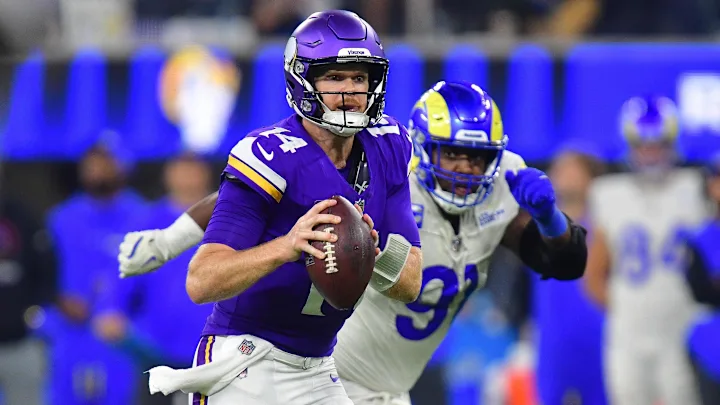
NFL Free Agency: Day 1 Fantasy Impact The NFL free agency tampering period kicked off on March 10, 2025, and Day 1 delivered a flurry of moves that promise to reshape fantasy football rosters for the 2025 season. While contracts can’t be finalized until March 12, teams and players wasted no time agreeing to terms, impacting quarterback, running back, and wide receiver values. FullTime Fantasy‘s NFL Free Agency: Day 1 Fantasy Impact breaks it down. Here’s a fantasy-focused breakdown of the biggest storylines. Also, bookmark our 2025 Free Agency Tracker. 1. Sam Darnold Lands with the Seahawks Sam Darnold, fresh off a 2024 breakout with the Vikings (4,319 yards, 35 TDs), reportedly agreed to a multi-year deal with the Seattle Seahawks, potentially exceeding $100 million (per FTN Fantasy projections). Darnold is younger than Geno Smith and now takes over in Seattle’s re-boot. Fantasy Impact: Darnold’s arrival in Seattle turbocharges the passing game. With Jaxon Smith-Njigba ascending, Darnold could maintain QB1 status. Smith-Njigba emerged as a viable WR1/2 down the stretch and now will be peppered with targets. Look for JSN to be a popular pick in Round 2 or 3. Kenneth Walker III might see fewer carries in a pass-leaning offense, settling as an RB2. 2. Laremy Tunsil Traded to the Commanders The Houston Texans traded LT Laremy Tunsil to the Washington Commanders for draft picks, bolstering protection for QB Jayden Daniels (reported by The Athletic). This move boosts Daniels’s protection, assuring his emergence into the top tier of fantasy signal-callers. Fantasy Impact: Daniels, the 2024 Offensive Rookie of the Year, gets a massive upgrade with Tunsil anchoring his line. Improved pocket time could push Daniels into top-10 QB territory, enhancing his passing and rushing upside. Terry McLaurin re-enters WR1 discussions, and Jahan Dotson’s value ticks up as a flex option. 3. Najee Harris Joins the Chargers Najee Harris, after four straight 1,000-yard seasons with the Steelers, reportedly agreed to a one-year, $9.5 million deal with the Los Angeles Chargers (per The Athletic and ESPN). Harris has been consistent and durable, making him a terrific fit in John Harbaugh’s run-heavy offense. Fantasy Impact: Harris slots into Jim Harbaugh’s run-first scheme, replacing J.K. Dobbins (still a free agent). Paired with Justin Herbert, Harris could see increased receiving work, elevating him to RB1 status in PPR leagues. Herbert benefits with a dependable check-down option, while Ladd McConkey holds steady as a WR2. This also impacts the Steelers backfield where Jaylen Warren becomes the defacto RB1 until they’re able to address this with free agency or the draft. 4. Davante Adams Signs with the Rams Davante Adams, after a 2024 split between the Raiders and Jets, reportedly agreed to a two-year, $26 million guaranteed deal with the Los Angeles Rams (per NBC Sports). The Rams chose to sign the older veteran and will part ways with Cooper Kupp. Fantasy Impact: Adams joining Matthew Stafford, Puka Nacua, and RB Kyren Williams creates a fantasy feast. Adams could reclaim WR1/2 status, Nacua settles in the same area, and Stafford leaps into QB1 contention. 5. DK Metcalf Traded to Pittsburgh It didn’t take long for the Seahawks to find suitors for DK Metcalf. Seattle shipped the star wideout to Pittsburgh for a second-round pick and swap of late-rounders. Subsequently, the Steelers then signed Metcalf to a five-year $150 million extension. Fantasy Impact: Hard to gauge right now, since the Steelers don’t have a starting quarterback. However, with Mike Tomlin still running the show and George Pickens also there to absorb targets, it seems like a lateral move or downgrade for Metcalf’s 2025 fantasy prospects. 6. Chris Godwin Re-Signs with Tampa Bay Chris Godwin, recovering from a 2024 ankle injury, has signed a multi-year deal with the Tampa Bay Buccaneers (per user update). Godwin was a top-10 fantasy wideout before last season’s unfortunate injury. Therefore, it is great to see him re-sign in Tampa and have a chance to pick up where he left off. And this time making a lot more money. Fantasy Impact: Godwin’s return to Tampa locks him in as Baker Mayfield’s top target, assuming Mayfield stays. Post-injury, he’s a high-end WR2 with WR1 upside in PPR formats. Mike Evans, if re-signed, remains a TD-dependent WR2. 7. Aaron Jones Re-Signs with Vikings This was another best-case scenario move. Jones had the most carries of his career last season in Minnesota and stayed healthy for all 17 games. Meanwhile, the Vikings depth chart was topped by Ty Chandler until Jones agreed to return. Fantasy Impact: Kevin O’Connell proved he values Jones. With J.J. McCarthy taking over at quarterback, it was essential to have Jones back. The veteran running back will be a strong RB2 candidate for fantasy managers to target in the middle rounds. 8. Justin Fields Joins the Jets There was speculation that Fields would not attract starting offers. However, the Jets signed Fields to a two-year, $20 million deal that says otherwise. New York has a good ground game that will only be boosted by Fields’s elite running ability. Fantasy Impact: It’s still to be determined if the Jets will be in the QB market with their first-round pick. This move likely means they will go in a different direction. Fields has limited upside as a passer but is one of the top rushers in the league, giving him solid QB2 potential. He also reunites with college teammate Garrett Wilson and currently he’s the only show in town for the Jets. Both the WR and TE room is incredibly thin after losing Adams, Lazard, Conklin and even Mike Williams (last season). Day 1 Winners Jayden Daniels (QB, Commanders): Elite protection amplifies his dual-threat potential. Sam Darnold (QB, Seahawks): Prime weapons keep him in the QB1 mix. Chris Godwin (WR, Buccaneers): Stability in Tampa restores his WR2 floor with WR1 upside. Najee Harris (RB, Chargers): A fresh start maximizes his volume and PPR value. Javonte Williams (RB, Dallas): Nice value, but the Cowboys are still expected to draft a rookie. Day 1
Fantasy Football Draft Strategy: Flex Positions

Fantasy Football Draft Strategy: Flex Positions In the fantasy market, there are all kinds of formats. A fantasy manager needs to start two running backs, three wide receivers, and one, possibly, two flex players in the 12-team high-stakes market. The added length to the starting lineup in the Fantasy Football World Championships (FFWC) requires drafters to be creative when building their roster. In addition, it puts a premium on depth at the wide receiver position. As we worked through the final fantasy points for the top 24 wide receivers and top 48 wide receivers over the previous four seasons, it is pretty easy to see most teams will start wide receivers at the first flex position. Here’s a look at the RB3 and WR4 scores over the last four years just for comparison for the ideal Fantasy Football Draft Strategy: Flex Positions. Also, the 2023 FullTime Fantasy Football Draft Kit is absolutely LOADED with EXCLUSIVE sleepers, fades, breakouts, customized cheat sheets, and tons of valuable content to help you DOMINATE YOUR DRAFT DAY! Recent Flex Success Last year 36 wide receivers outscored the top RB3 option (Raheem Mostert – 170.40 fantasy points). And 54 wideouts had more points than the top TE2 option (Gerald Everett – 139.50). In most PPR leagues, the best team structure is to start two running backs and four wide receivers. You can also add the occasional running back or tight end delivering enough value over the course of the season to be starter worthy at a flex position. The first flex position comes from a mixture of running backs, wide receivers, and tight ends. Each fantasy manager can find short-term options at different times of the year due to injuries. In 2022, there was an even split between running back and wide receiver as the top plays at the first flex position with a high of 170.40 fantasy points and a low of 160.50 fantasy points. The previous year, seven wide receivers, five running backs, and one tight end filled the FLEX1 bucket. Here’s a look at the drop-down if your league uses a second flex position: Adding a Second Flex Spot The goal for a drafter is to find a flex two option that will average over 10.00 fantasy points per week. Also, to attempt to have your top two running backs average close to 30 combined fantasy points per week. In 2022, the top options to start at the second flex position came from wide receivers (8) and running backs (4). When reviewing the data in this series of articles, some fantasy managers may conclude that I’m making the case to be WR-heavy in the early rounds of the draft. However, the history in the high-stakes fantasy market shows winning an overall championship requires two strong running backs plus a third serviceable option. Draft position dictates each team-building opportunity. The change in draft flow from year to year forces drafters to make different decisions. The success, strength, and depth of the running back and wide receiver positions set the foundation for game-planning the following season. In 2023 in the high-stakes market, drafters have focused on wide receivers (10) over the first 14 picks. That is partly due to some cloudiness with multiple running backs and contract uneasiness. Last year, six wideouts scored more than 300 fantasy points in PPR formats compared to only four running backs. The debate/challenge this draft season is when to build running back depth. With many wideouts coming off the board early, there will be buying opportunities in the second and third rounds. If a fantasy manager builds a wide receiver strong roster early, he or she gains strength in two areas. If their players perform up to expectations. First, the fantasy point edge at wideout creates a possibly early lead in the standings. Second, a wide receiver strong team should have fewer lineup decisions in many weeks. To finish this type of game plan, a fantasy manager then needs to hit on at least one RB2 later in the draft. By rostering multiple outs at running back, a drafter will need to negotiate the early weeks of the season until they find a secure starting option. Three-down backs with high-scoring abilities offer the most significant edge in value in the fantasy market. But there are limited options each season. Unfortunately, drafters only see four viable options this season – Christian McCaffrey, Austin Ekeler, Bijan Robinson, and Saquon Barkley. Jonathan Taylor and Josh Jacobs have drama issues, leading to them sliding in drafts until the fantasy market knows their status for 2023. If a fantasy manager decides to draft three running backs early, they need to make sure they don’t end up with three players with league-average value at running back. Their lead running back has to deliver a separator score. And their second option has to beat the second group of WR2s. The team drafting an elite wide receiver in the middle of round one will need to decide the best path to land the highest upside RB/WR combinations over the next three or so rounds. The wide receiver options in 2023 will have a wide range of values and opinions by drafters. So a fantasy manager will need to be quick in his decision-making when on the clock. The front of a draft typically has many outs on the 2/3 and 4/5 turns. Value plays a big part in team building in that area. I see a clear drop-off at running back in the middle of round four. And the wide receiver options on the 4/5 turn feel like coin tosses. This will lead to many drafters gravitating toward quarterbacks and some tight ends in the fifth round. Either way, a fantasy manager in a league with dual flex positions will be required to load up at WR. Even with receiver depth, a team can’t win a championship without building a solid base of RBs. The running back position will be full of ups and downs. That
2023 Fantasy Football Stacks: Ranking all 32 Teams
2023 Fantasy Football Stacks: Ranking all 32 Teams Fantasy football draft season is here and as we all know, stacking can be a critical strategy in this game we all love. Particularly in tournaments and BestBall formats. With just one

2023 Fantasy Baseball Roster Management
Roster management is a crucial tool in fantasy baseball. Unfortunately, one of my weaknesses is not churning my roster. Every year I’m holding a couple of young players that could make a difference later in the year. The longer I keep them and get no production from that roster slot, the more opportunities I miss when valuable players are on the waiver wire. My 2023 Fantasy Baseball Roster Management tips will keep your roster churning and burning. Before we look at 2023 Fantasy Baseball Roster Management tips, please familiarize yourself with my 2023 fade list. Also, my 2023 bounce-back players , deep sleepers, breakout hitter of the year, and extensive preview of all 30 squads are invaluable resources. Finally, our 2023 MLB breakout pitchers list digs deep to give you an edge on draft day. And, of course, read who I picked to be the American League Rookie of the Year. Churn, Baby Churn Some of the best fantasy managers in today’s games are excellent churners of their rosters. They don’t get emotionally tied to any player on their bench. They understand a player’s skill set and know the replacement value on the waiver wire. I’m sure there are times when they drop a player that later becomes a difference-maker. Sometimes they reacquire these players because they are so in tune with the player pool. The baseball season is a marathon. But maximizing your opportunities starting in week one is essential. I’m surprised how many teams take zeros from their pitchers over the first week of the season. This is because they didn’t think far enough ahead. Also, they didn’t take the time to look at the possible starting pitcher rotations before they draft their team. These leagues are often so close that an extra win or a handful of strikeouts can be the difference between winning and losing. In 12-team leagues, the free-agent pool is an extension of my bench if I have the proper roster structure. I can find many helpful outfielders and corner infielders. The backend pitching inventory is deep, but it comes with risk. The goal is to maximize at-bats while continually looking for possible pitching improvements. It is incredibly challenging to carry mediocre injured players. After the season starts, I must review my bench players to see if I need any help. My first goal is to look at the end of each week’s stats and see where I stand as far as at-bats and my pitching goals. Week 1 of the year is challenging to gauge, but I need to know if I have enough depth in my starting rotation. It’s too late to save some of the teams if I made mistakes during the draft. I must live with my draft-day decisions and hope my opinions are correct. There’s nothing worse than dropping the best available free agent for next week’s waiver period, so it is vital to take a deep breath when deciding to release certain players. A player will get hurt or lose playing time each week, opening up more at-bats or innings for other players most likely found on the waiver wire. There are many times during the year when players play well for short periods, while some even develop into substantial contributors to your fantasy team. In 2019, Danny Santana (.283 with 81 runs, 28 home runs, 81 RBIs, and 21 steals) turned into fantasy gold via the free agent pool, which came after four empty seasons. Dominic Smith fell into the category in the short Covid-19 year. In 2021, Adolis Garcia kicked the free agent door in early April to deliver impactful stats (.243 with 77 runs, 31 home runs, 90 RBIs, and 16 stolen bases). Last season, Brandon Drury filled an infield void on fantasy teams (.263/87/28/87/2 over 518 at-bats) from the waiver pool. I’ve been a fantasy snob when looking for a player to upgrade my team in the past. Beggars can’t be choosy during the heat of the season-long battle in baseball. I remember not picking up Ryan Howard in 2005 because I thought his batting average had risk due to his high strikeout rate. He ended up hitting .288 with 22 home runs over 312 at-bats. I overlooked Howard as a difference-maker because of a possible weakness in one category. I can never dismiss talent, and I need to take every at-bat upgrade I can find. Over a short period, any player can hit for a higher average than expected, and sometimes those players stay locked in all year. A fantasy manager needs to evaluate every player and every situation. These decisions are so much easier when my team is playing well. When behind in the league standings, a fantasy manager can make mistakes trying to make things happen. Either they bench a star player that goes off after a slow start to the year, or they cut a player because he’s failed to perform up to expectations. When churning my roster, I’m looking for players with upside who are buy-and-hold candidates. Other times, I need to take a zero to protect a roster spot. I hate to fall further behind, but the player I pick up is not guaranteed to have a good week. Sometimes I have to weather the storm. I never know when a player starts to turn the corner or if a few players will get hot on my team. So I must keep my head down and continuously grind throughout the season. This season I’d like to keep one bench spot to rotate in possible double starting pitcher and another slot on my bench for the “hot hitter of the week.” Everyone plays in different formats with varying league sizes. One decision may work well for one league, and it may be a poor decision for another. Usually, the player pool will answer your questions. However, there is a fine line between patience and churning. Each fantasy manager must find a balance between the two in their quest to win a league championship.
2022 Fantasy Football Stacks
2022 Fantasy Football Stacks: Ranking all 32 Teams The draft season is here, so it’s time to look at the top 2022 fantasy football stacks by ranking all 32 teams in 2022. Stacking, or pairing multiple players from one NFL