
Running Back Regression After Leading the NFL in Rushing
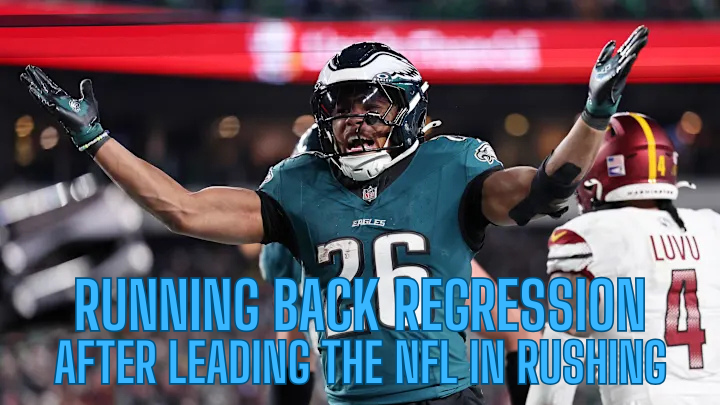
Running Back Regression After Leading the NFL in Rushing Leading the NFL in rushing is a career highlight for most running backs. It also leads to banner fantasy football totals. However, most RBs see a precipitous decline in production the season after topping the league in rushing yards. This running back regression after leading the NFL in rushing has happened in 22 of the past 25 seasons and paints a worrisome fantasy outlook for the league’s reigning rushing king. Many different factors can lead to a sudden dropoff. As my friend Gary Davenport first divulged in his Curse of 370 and revisited for 2025, heavy usage is a key contributor to predicting running back regression. Other variables like coaching changes, strength of schedule, supporting cast, and age also play a role. Before I take a deep dive back through the past 25 seasons, let’s recap all the running backs that have led the NFL in rushing this century and find some key takeaways. NFL Rushing Leaders 2000-2025 Over the past 25 seasons, 20 different running backs led the NFL in rushing yards. Only LaDainian Tomlinson, Adrian Peterson, Ezekiel Elliott, and Derrick Henry have done it more than once. You could also doff your proverbial cap to Edgerrin James, who ascended the leaderboard in 1999, becoming the first player since Eric Dickerson (1983-1984) to lead the league in his first two pro campaigns. In all, league-leading backs averaged 340 carries for 1,716 rushing yards (4.98 yards per carry) and scored 15.7 total touchdowns. That averaged out to just under 349 fantasy points (PPR), or 21.9 points per game. The splits were 15 rushing champs from the AFC, while 10 represented the NFC. The NFC East produced five, while the NFC South is the only division that has not had an NFL rushing champ in the last 25 years, nor has there ever been one from that division. The Saints’ George Rogers led the league with 1,674 yards back in 1981, but New Orleans was then part of the NFC West. Leading the league in rushing is more than an individual honor. Coaching, schemes, quarterbacking, and the offensive line all play a pivotal role. There are also numerous other elements that play a role in a team’s ability to manufacture a rushing leader. Contributing Factors for Success Health One of the most important factors for posting big numbers is staying healthy. From 2000-2015, no running back who led the league in rushing missed a single game. Even the backs who missed one were rested by their team in the season finale. Derrick Henry is the only running back in the last 25 years to lead the league in rushing but miss a game due to injury. Henry missed Week 16 of the 2019 season with a hamstring injury and returned to action in the season finale to rush for a season-high 211 yards to top the league. Every other running back in the past 25 seasons to lead the league in rushing has stayed healthy for every game or sat out the regular-season finale to rest for the playoffs. Winning Team Speaking of playoffs, teams that produced the leading rusher averaged 9.96 wins versus 6.2 losses, making the postseason in 18 of the 25 seasons (72%). However, only three of those teams made the Super Bowl, and the only squad to win is the reigning champions, the 2024 Philadelphia Eagles. Having a winning record also leads to more friendly game scripts for the rushing attack. Teams nursing second-half leads tend to rely on their lead backs to grind down the clock. Age The wear and tear that NFL running backs accumulate takes a toll. 20 of the 25 (80%) rushing leaders were under 28 entering the season in which they finished first. Looking at the averages, RBs had a mean age of 25.4 in those seasons. They also averaged 4.6 years of experience. Only two backs (Curtis Martin in 2004, Adrian Peterson in 2015) were older than 28. No rusher who was 29 when the season started has led the NFL in rushing since Barry Sanders did it back in 1997. NFL RUSHING LEADER AGE DISTRIBUTION AGE OCCURANCES RATE 21-23 6 24% 24-26 10 40% 27-28 7 28% 29+ 2 8% Skill Set & Fantasy Production Volume is king in fantasy, and rushers who accumulate enough touches to post elite numbers are typically three-down workhorses. 24 of the 25 RBs posted top-5 fantasy finishes. The only back who did not, Adrian Peterson in 2008, caught only 21 passes for 125 yards in 16 games. In the other 24 seasons tracked, running backs averaged 44 receptions annually. Derrick Henry is an outlier, but part of the formula for RB success in today’s high-octane NFL is to stay on the field on passing downs. However, the inability to do just that, stay on the field, is one of the main reasons we see noteworthy running back regression the year after they lead the league in rushing yards. Immediate Regression in the Next Season While winning a rushing crown is a notable accomplishment for a pro running back, there is usually a staggering dropoff in play the following season. 88% have seen an immediate dip in effectiveness, and it is usually a significant decline. Only three running backs since the 2000 season have posted better fantasy numbers the year after they led the NFL in rushing yards. As for the other 22, they averaged a 36.8% decline in fantasy points the following season. Notable Declines Running backs have always been a hot commodity on draft day. Particularly three-down workhorse backs coming off a rushing crown who finished the previous campaign at an average rank of RB 2.76. But fantasy draft history is loaded with first-round RB busts who stumbled after they broke out the previous season. Running Backs who led the league in rushing in 2000-2024 finished as the RB 2.7 in PPR leagues, but plummeted to an average of RB22.3 the following season.