
2025 Dynasty Football Stashes
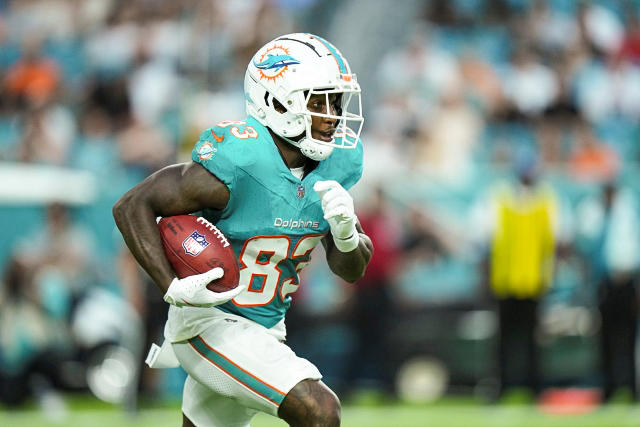
2025 Dynasty Football Stashes Building a successful dynasty football roster takes effort. While other managers tune out in February, dynasty zealots are always active. One of the biggest advantages to be gained before the 2025 NFL Draft is via the waiver wire, where proactive dynasty managers can pick up the top 2025 Dynasty Football Stashes. Additionally, because some league mates are asleep at the wheel, these low-rostered stashes can often be added for free. Whether there is a pending free-agent departure, salary cap casualty, or just a young prospect in a favorable position to emerge next summer, targeting these players is integral to reinforcing a dynasty roster. Here are the top 2025 Dynasty Football Stashes to target this spring. Quarterbacks Tyrod Taylor (New York Jets) – We know Aaron Rodgers won’t be back in New York. The rebuilding Jets desperately need to find a franchise signal caller. However, both Cam Ward and Shedeur Sanders are expected to be gone by the time the club picks at No. 7. That would put Taylor in line to be the team’s opening-day starter. Even if the Jets land a rookie QB, Taylor can again be a bridge starter while the new regime develops the youngster. Taylor is a sneaky add in deeper Superflex formats. Aidan O’Connell/Gardner Minshew (Las Vegas Raiders) – The perpetually retooling Raiders will likely have an open competition between their two veteran incumbents. Additionally, I expect Vegas to be all in on the veteran free agents and possibly an early-round rookie. For now, O’Connell and Minshew are worth speculative adds in Superflex leagues, but I wouldn’t bid more than the minimum. Joe Milton (New England Patriots) – Milton isn’t beating out Drake Maye, but his arm looked outstanding in New England’s finale. Arm talent was never a concern for Milton at Michigan or Tennessee. It may also attract trade interest from other QB-needy teams. Running Backs Antonio Gibson (New England Patriots) – Rhamondre Stevenson’s fumble issues resulted in Gibson earning a bigger role down the stretch last season. With Mike Vrabel now in charge, New England’s backfield is wide-open. Therefore, Gibson could potentially emerge as the team’s starter this summer. Kimani Vidal (Los Angeles Chargers) – Vidal attracted attention as a sleeper last summer. However, Vidal never got more than eight touches in any game. That led to him being dropped in many dynasty leagues. However, with J.K. Dobbins hitting the open market, Vidal ascends the wide-open depth chart. Will Shipley (Philadelphia Eagles) – Kenneth Gainwell is an unrestricted free agent. If Gainwell departs, Shipley offers plus pass-catching ability as the potential change-of-pace option behind Saquon Barkley. Sincere McCormick (Las Vegas Raiders) – Everything will be up for grabs in Las Vegas, including the backfield. McCormick eventually emerged as the Raiders’ starter before incurring a season-ending injury. He averaged 4.7 yards per carry as a rookie. McCormick showed enough to earn some reps this summer, making him worthy of a stash in deeper leagues. With Pete Carroll now in town, McCormick will be given a fair chance to contend for the Raiders’ wide-open starting job. Dameon Pierce (Houston Texans) – Although he looked tremendous in a Week 18 spot start, Pierce wasn’t a good fit in Bobby Slowik’s zone scheme. Perhaps he’ll rekindle some of his rookie magic with Nick Caley now running the offense. Additionally, Pierce could be an attractive trade target after his impressive 176-yard performance to close out the regular season. Wide Receivers Malik Washington (Miami Dolphins) – As a rookie, Washington emerged as Miami’s WR3 down the stretch, averaging five weekly targets from Weeks 15-18. Also, Tyreek Hill is at odds with the team, and Odell Beckham was released. The 23-year-old ran a 4.47, making him a good fit in Mike McDaniel’s scheme. Noah Brown & Olamide Zaccheaus (Washington Commanders) – Washington improved to 17th in passing and 5th in scoring in Jayden Daniels’s first season. Brown (7.8 ppg) and Zaccheaus (7.6 ppg) both had decent showings as the team’s WR3. Both players are unrestricted free agents, but if either re-signs with Washington, they would be on the late-round flier list for 2025. Jordan Whittington (Los Angeles Rams) – For a couple of weeks Jordan Whittington looked like a legit prospect, catching 13-of-18 targets for 151 yards. But just as quickly as he emerged, the 6th-round rookie disappeared. Perhaps the pending departure of Cooper Kupp will lead to Whittington salvaging a role in the Ram’s new-look offense. Also, Tutu Atwell is worth rostering. Jalen Nailor (Minnesota Vikings) – The 2022 6th-rounder emerged as Minnesota’s WR3. Minnesota has ranked 6th, 5th, and 6th in passing in Kevin O’Connell’s three seasons at the helm. Digging Deeper Malik Heath (Green Bay) – Christian Watson will miss most, if not all of 2025 with a knee injury. Heath played 39 snaps and led the Packers in receiving (60) yards in their regular-season finale. He will have a chance to carve out a role this summer. John Metchie (Houston Texans) – An easy kid to root for, Metchie finally got some playing time down the stretch for the Texans. However, it took myriad injuries for him to earn it. With Tank Dell expected to miss 2025 and Stefon Diggs an unrestricted free agent, Metchie has a pre-draft path to a significant role. DeAndre Carter (Chicago Bears) – Keenan Allen is 32 and an unrestricted free agent. While Allen manned the slot over 54% of the time, Carter lined up inside on 69.1% of his snaps as Chicago’s WR4. If Allen departs, as anticipated, Carter could move into the slot full-time. Digging even deeper, teammate Tyler Scott also played predominantly in the slot. Scott also checks the #thirdyearbreakout box. Tight Ends Noah Gray (Kansas City Chiefs) – There’s no denying that Travis Kelce is in decline and there is a chance he retires this offseason. If Kelce does, Gray would instantly contend for TE1 numbers in Kansas City. Theo Johnson (New York Giants) – A 2024 fourth-round selection, Johnson ranked fifth
Introduction to Dynasty Fantasy Football
Introduction to Dynasty Fantasy Football Fantasy football has exploded over the past several years. Even some of the most diehard managers still have not heard about dynasty fantasy football. If you have that itch in March, April, or even May to “tinker” with a lineup or make a trade, then you have come to the right place and a dynasty league is just the thing for you. The goal here is to give you an essential road map for navigating your first-ever dynasty startup draft and all the nuances involved, which you do not necessarily deal with in redraft leagues. FullTime Fantasy has you covered with the latest dynasty football rankings. Also, check out these great dynasty league start-up tips. Finally, don’t miss out on your chance to win the Dynasty Football World Championship. What is a Dynasty League? We will start by defining a dynasty league courtesy of the industry leader in the format DLF (Dynasty League Football). In a dynasty fantasy football league, you retain most or all of your players yearly. This creates an environment quite different from that of a redraft league. It also creates a stronger sense of team pride, enabling managers to keep players and build a team over time. Success is achieved with greater satisfaction. Mistakes or successes in a dynasty league can affect a franchise’s fortunes for years, just like in the NFL. A dynasty league also facilitates trades, including trading draft picks, and encourages a deeper roster pool so young “project” players can be identified and groomed. Read the Fine Print Familiarize yourself with the rules and settings of your leagues just as you would in redraft. Pay extra special attention to roster sizes, IR (injured reserve) slots, whether or not your league allows taxi squads, and whether or not there are any types of contracts or salaries involved. For beginners, we recommend a more simplified league that does not utilize contracts and salaries. Your draft strategy will change depending on whether the league is non-PPR, half-PPR, or full-PPR. You will also be severely pivoting if it is a Superflex (two-quarterback league) or tight end premium (tight ends scoring weighed heavier) because values change dramatically based on the starting lineup allocations and scoring format. Timely Drafting We can understand the urge to draft immediately once you decide to plunge into the dynasty format, but the prudent approach is to wait until peak redraft season. This will allow you to acquire as much information as possible to make educated and informed decisions. This will be beneficial not only to you but also to other managers who may be new to the dynasty format. Next season, you can have your rookie draft right after the NFL draft to feed that craving you are experiencing in the offseason. Be Active Early and Often While you want to be careful not to mortgage the future too much, a good strategy involves acquiring more picks in the first five or six rounds, if possible. This allows you to draft several sure-fire starters for the current and next several seasons if you have done your due diligence. Ensure your contact information is current and you reply to messages or inquiries about potential trades. Interact with other managers and keep communication moving in a positive direction. This will benefit you in the long term in your dealings with others. Remember, you are joining a dynasty league to feed your addiction, which is now year-round. This is not to say that you must log on to your league site daily, but do check back often. You will learn quickly that values change rapidly in this format, and you need to be keen on capitalizing on the current market. Something else to consider, which is very important, is the reliability of the other managers in the league you join. You want others who are as committed as you and will stick with the league through the good and bad times. Like in your redraft league, there is only one champion, meaning there are 11 (or nine, depending on your league size) other losers. The ability to “reset” your team after a bad season does not exist in a dynasty league. Know Your Values Long gone are the days of just using cheat sheets. There are so many more tools at your disposal now. One of the most important in determining the value of dynasty players is ADP (average draft position). Ryan McDowell organizes ADP data from mock drafts of the Startup Dynasty. It is then published on DLF (Dynasty League Football) for consumption. By using ADP instead of rankings, you remove the opinion of just one expert or panel of experts and incorporate the community as a whole, along with the experts, to gather a consensus value of a particular player. Even more important is that these are broken down by league type (one quarterback or Superflex). The other keyword here is current. DLF updates ADP monthly, so you will have the most recent player valuation to work with during your start-up draft. The last thing to touch on concerning value is the ability to determine what future rookie picks are worth. You will want to determine if other managers overvalue future picks. Try to put a name to the picks involved in the deal to give you the proper framework for the deal. For example, you want to trade for a sixth- or seventh-round pick in your current startup draft. Approximate what player you would target in that range, and then carefully calculate who would be available in the rookie draft next year based on the multitude of prospect rankings available. Stick to Your Guns Do not fall into the trap of filling out your lineup a certain way. Doing so causes you to stray from the BPA (best player available) approach and ultimately leads to reaching for a player to fill a spot, thus decreasing the value of the slot you are drafting from. Leagues have been
How to Play Dynasty Fantasy Football

I love playing fantasy football, but I prefer playing dynasty fantasy football. For those of you who are not familiar with dynasty leagues, the concept is very similar to a keeper league, but instead of keeping just one, three, or five players, you’re able to keep all of your players. The reason I play in a dynasty league is because of the additional strategy that is involved in these types of leagues. Many dynasty league players will cite the challenge, as most dynasty leagues have very serious owners. Dynasty leagues are basically a year-round league and are as close to owning an NFL franchise as most of us will ever come close to doing. After your league holds its yearly draft you have to decide whether the players you’ve just drafted are more valuable than those already on your roster because you have to cut players from your roster to get down to the roster limit prior to the first game of the season (or whenever your league has set the deadline). When making your player evaluations for the draft or roster cuts or free agent pickups, you have to be conscious of whether the decision you are making is a short-term solution or a long-term investment and then weigh the consequences of each. You do not want to fill your roster with aging veterans and cripple your team for years to come, (which you can do in a keeper league for instant success and still recover the following year with a good draft). Nor do you want to load up on first and second-year players, as this would hinder you from competing in the upcoming season. You need a nice blend of players that provide the best opportunity to succeed in both the short-term and long-term. You also want to be aggressive in trading away aging players prior to any dramatic decline in their value. And you want to have a continuum of developing players on your bench who can be a bye week fill-in today and potential future studs. It’s not easy to manage a dynasty league team as there are factors, and strategies, that you do not have to consider when making decisions in a keeper or redraft league. Even the best fantasy football players draft a bad team every now and then. While a bad draft often means a losing season in redraft leagues, owners of lousy teams can still build for the future in dynasty and keeper leagues. This article will focus on strategies for managing a dynasty league WIN NOW OR WIN LATER The first thing one must decide when rebuilding a dynasty team is whether to try to win now or later. If your team is loaded with promising rookies and second-year players then you may want to try to package some of those guys in trades with other owners for established stars. This is one obvious way to make your team an instant contender. However, trading away your youth may leave you hurting in future years. More importantly, it is unlikely that a bad team will have enough assets to trade for a solid starting lineup. Winning now is ideal, but it is not always a possibility and owners with truly awful teams are often better served by planning for the future. Losing can be frustrating, but rebuilding a franchise usually requires patience. And just like the NFL, it’s hard to win year in and year out, so you have to rebuild your franchise. PAY ATTENTION TO COLLEGE FOOTBALL AND KNOW THE TOP ROOKIES This is important in identifying which players will help you build your team. You should pay attention to the key players, and huge playmakers each week. By doing this you will have an idea of who the top players are before the NFL draft begins in April. Before the NFL draft actually rolls around, you should already know which players you want to target in your draft (know who are the top QBs, RBs, and WRs coming out). You can search the Internet for draft analysis and rumors, and get information on the top available rookies. Watch the draft or at least study post-draft analysis of where the player was drafted and the impact he will have on the team that drafted him. Having all this data allows you to compare the rookies to those players currently on your roster, and this will assist you in determining which players you might want to target in the draft or attempt trades to get on your team to help build your dynasty. WHEN TO TRADE THEM This is the hardest thing about a dynasty league: knowing when! When do you play for this year, or when do you play for the future? If before the season you think you have a quality team, go ahead and play for now, and if midseason rolls around finding you at the bottom, well it’s time to build for the future! Just the same, if before the season you can tell your team will not be very competitive, well it’s time to trade a few older marquee players for some future younger players or draft picks so you can rebuild for the long term. The first step to rebuilding your dynasty is deciding which players to keep and which players to let go, either by trading them or outright releasing them. It should be easy to identify the star players of your team and once you’ve identified them you’ll need to decide what to do with them. While a guy like Tom Brady, Ezekiel Elliott, Keenan Allen, or Zach Ertz might be nice to have this season, you could be better off trading either of them away for younger players. Why? Although they are great players they are aging players, and it’s unlikely they will be producing a few years down the line when your team is competitive. It is better to trade older guys now while they still have value. Your team