
2025 Fantasy Baseball Auction Strategy

2025 Fantasy Baseball Auction Strategy This Fantasy Baseball Strategy Guide is courtesy of Shawn Childs. Read Shawn’s expert fantasy analysis at his Substack. Fantasy baseball comes in various formats and league sizes, particularly in auctions. Over the years, I’ve competed in American League-only, National League-only, and mixed-league formats with 12 or 15 teams. Some leagues incorporate keepers (players held for multiple seasons) and trading, both of which significantly impact player values during an auction. However, in the high-stakes fantasy market—where I’ve played for over 20 seasons—trading isn’t allowed. This restriction places immense pressure on managers to construct a winning roster before the auction ends. Here’s my 2025 Fantasy Baseball Auction Strategy. The Challenges of a No-Trading Auction League In a no-trade auction league, the margin for error is razor-thin. No other team will bail you out by offering to trade for your surplus closer. If your roster is unbalanced—strong in some categories but weak in others—you can’t swap hitting for pitching or speed for saves. While there are multiple paths to winning an auction, many managers lose before the season even begins due to a flawed strategy or lack of foresight. Each year, the player pool shifts slightly, requiring managers to assess available talent and craft a plan they can execute at the auction table. Success hinges on assembling enough key pieces to manage the season effectively. Regardless of my approach, I must remain flexible. While an auction allows me to target any player, every acquisition comes at a cost. Auction Basics Most fantasy baseball auction leagues allocate each team a $260 budget to assemble a 23-player roster (14 hitters, nine pitchers). Scoring is based on 10 categories: Hitting: Batting average, runs, home runs, RBIs, and steals Pitching: Wins, ERA, WHIP, strikeouts, and saves In a 12-team league, first place in a category earns 12 points, second place gets 11, and so on down to one point for last place. The team with the highest cumulative score across all categories wins the league. Calling Out Players Strategically A common mistake fantasy managers make is waiting too long to nominate key players. While the idea of saving money for later bidding may seem smart, it often backfires. If I sit back while other elite players come off the board, I risk running out of viable options. Instead, I prefer to call out my priority players early. If I believe a particular player is essential to my team’s foundation, I want to know right away if I can get him at a reasonable price—or if I need to pivot to an alternative plan. The sooner I know my roster’s core, the better I can execute my strategy or adjust on the fly. Budgeting for Key Players Using my FPGscores after last season, Shohei Ohtani had a fantasy value of $62.91, contributing 19.55 league points on the hitting side in a 12-team mixed format. If my roster plan was to allocate $180 for hitting and $80 for pitching, Ohtani would be a cornerstone of my offense. Every manager has a different approach to budgeting. Some teams invest heavily in elite bats and “cheat” pitching, while others allocate $100+ to pitching, limiting their ability to compete for top-tier hitters. For example, if I aimed to build my team around Ohtani, expecting him to replicate a strong 2024 season (.310/134/54/130/59) with a $55 target value, I would need a backup plan if I missed out on him. My next tier of power-speed hitters might include José Ramírez (.279/114/39/118/41), who had a $43.66 fantasy value in 2024. If Ramírez gets nominated early and sells for $45 while I wait for Ohtani, I risk losing both. If Ohtani then exceeds my budget, I’m left scrambling for a replacement with fewer options remaining. This scenario forces me to adjust my plan on the fly. If Ohtani sells too high, my fallback could be Aaron Judge ($50.11 value in 2024)—but that weakens my stolen base potential. Alternatively, I could target Bobby Witt Jr. ($45.65 value) to lock in elite steals while maintaining power. The key is being prepared for multiple outcomes. If my top choices are taken, I must adapt while ensuring my team remains well-rounded. Overpaying vs. Letting Go One strategy to avoid missing out on key players is overpaying early, intending to recoup those extra dollars later in the auction. While this can work, it requires discipline to ensure later bargains offset early splurges. Executing a Game Plan A strong auction strategy involves executing my game plan early while ignoring how others are spending. My goal is to establish a solid foundation in hitting and pitching, spending up to $200 of my $260 on my key players. This aggressive approach means I may need to shut down spending mid-auction while waiting for value picks later. Many managers become frustrated when others hold onto their money, fearing late-stage overbidding. But once the auction progresses, everyone will still need players, and competition remains. A team with a large budget late in the auction won’t have unlimited power—they’ll still be competing with other managers for every player. Keeping an Open Mind Some of the best values emerge early in an auction. Recognizing player value in real-time is crucial, as hesitation can mean missing out on bargains. A $33 player may not seem like a steal, but if that same player goes for $38 a few rounds later, I’ve lost out on value. For example, if José Ramírez is nominated early and his price hovers in the mid-30s, it may be smart to buy rather than risk Ohtani and Judge going for premium prices. Avoiding the “Last Top Player” Trap A common mistake in auctions is waiting for the final top-tier player at a position. Late in the draft, managers hesitate to call out the last available elite player, hoping to get them cheap. When that player finally gets nominated, demand spikes, often leading to an overpay. I use this knowledge to my advantage. If I like multiple players at a position,
Fantasy Baseball Pitching Strategy
Fantasy Baseball Pitching Strategy Shawn Childs is a legend in the fantasy baseball world and his advice is invaluable. A member of the NFBC Hall of Fame, Shawn has several top-5 finishes in the National Fantasy Baseball Championship as well

Fantasy Baseball Auction Strategy
Fantasy Baseball Auction Strategy Shawn Childs is a legend in the fantasy baseball world and his advice is invaluable. A member of the NFBC Hall of Fame, Shawn has several top-5 finishes in the National Fantasy Baseball Championship as well as five NFBC auction championship titles under his belt. He also boasts several prominent in the high-stakes market and multiple huge DFS wins. Shawn’s process and evaluation are among the most thorough in the sport and his exclusive FPGscore metric is changing the game. This 2024 Fantasy Baseball Auction Strategy and insight are courtesy of the brilliant mind of one of the sport’s best. This Fantasy Baseball Auction Strategy is courtesy of Shawn Childs. Read Shawn’s expert fantasy analysis at his Substack. Also, check out Shawn’s detailed 2024 Fantasy Baseball Strategy Guide for the most thorough tips and advice that you will find anywhere. Auction Overview The fantasy baseball market has many formats and league sizes, especially in auctions. I’ve played in American and National League formats with 12 teams plus 15-team mixed leagues. Each setup could also have keepers (players held for more than one year) or trading, which changes all players’ value during the auction. Over the last 20+ seasons, I’ve played in the high-stakes fantasy market where there is no trading, which puts pressure on a fantasy manager to develop a winning plan before the auction. When doing an auction league with no trading, a fantasy manager has a small margin for error. No other team will be knocking on your door looking to take your third closer off your hands via a trade. If your roster is out of balance (strong in some categories and weak in others), you can’t trade hitting for pitching or even speed for saves. An auction can be won in many different ways, but many managers can lose the battle during the auction due to a questionable game plan or even a lack of foresight. Every year, the player pool will change slightly. The goal of a manager is to evaluate the inventory and develop a strategy that can be executed at the draft table. If I come away with enough pieces to the puzzle, I can manage my way to a championship. Whatever game plan I decide to use, I must be ready to adjust if I don’t get my key players. A fantasy manager can roster any player they want in an auction, but it comes with a price. In most baseball auction leagues, each team starts with $260 to buy 14 hitters and nine pitchers. The goal is to accumulate the most league points in five hitting (batting average, runs, home runs, RBIs, and steals) and five pitching (wins, ERA, WHIP, strikeouts, and saves) categories. In a 12-team league, a first-place finish in a category would be worth 12 points, second place is 11 points, and so on until reaching 12th place (one point). The winner of each league is determined by adding up all 10 categories. Calling Out Players to Improve Your Team-Building Chances A common mistake fantasy managers make is hoping the players they want don’t get called out early. It sounds good in principle, but the problem is that all the other good players are coming off the board while I sit back, holding my money. If I wait and miss on my targeted players, I will have fewer options to build my team. Getting my key players called out as quickly as possible is essential. For example, if I want a player in the auction and believe he is the key to building my foundation, I would like to call him out on my first opportunity. By doing this, I find out how much he will cost (higher or lower than my predicted price point) or if I need to start looking for someone else to develop my team around. The quicker I know where I stand on critical players, the better my chance of executing my plan or adjusting on the fly. For example, I wanted to build my team around Ronald Acuna, and I believed he could repeat a good portion of his 2023 stats (.337/149/41/106/73) with a target value of $55. If I miss on him, I will need to find another player with a step down in overall expectations. I should have a secondary plan to shift to another player with a similar skill set with less upside, but I would then save some of my spending budget. In this example, my next tier for power and speed could be Julio Rodriguez. If Acuna gets called out early and sells for more than I’m willing to pay, Rodriguez would be attainable if his salary falls within my expected budget and his targeted salary. Suppose Rodriguez gets called out first, and someone buys him for $41 while I sit on Acuna as my first key player. In that case, I will have a further drop-off in the player pool if Acuna is purchased by another manager above my budgeted salary target. The situation worsens if many top players get called out before Acuna, forcing me to shove all in, no matter the cost, or revamp the foundation of my build on the fly. This freelancing style could lead to an imbalance in roster construction in a non-trading format where a trade can’t fix a shortfall in a category. In this example, a detour off of Acuna may push me to Freddie Freeman, putting me in a weaker position in speed but a potentially high floor and ceiling in batting average. This decision would force me to find stolen bases differently and potentially look for another source of high-end power. If the drop-off from Acuna led me to Bobby Witt, I would set a high foundation in steals with 30+ home run power but only a neutral option for batting average. I would then focus on landing another high-average bat with one of my next two core hitters. Again,
Fantasy Baseball Auction Strategy: Pitchers
As I broke down in my fantasy baseball auction overview, auction leagues offer an enhanced strategy and fun element that drafts just can’t match. Following up on my approach for hitters, this Fantasy Baseball Auction Strategy: Pitchers will give you
Fantasy Baseball Auction Strategy: Hitters
A fantasy manager must separate hitting from pitching when starting to gameplan for an auction. Each area is 50% of the game, but finding a blend of spending that fits your game style is necessary. My Fantasy Baseball Auction Strategy:
2023 Fantasy Baseball Auction Overview
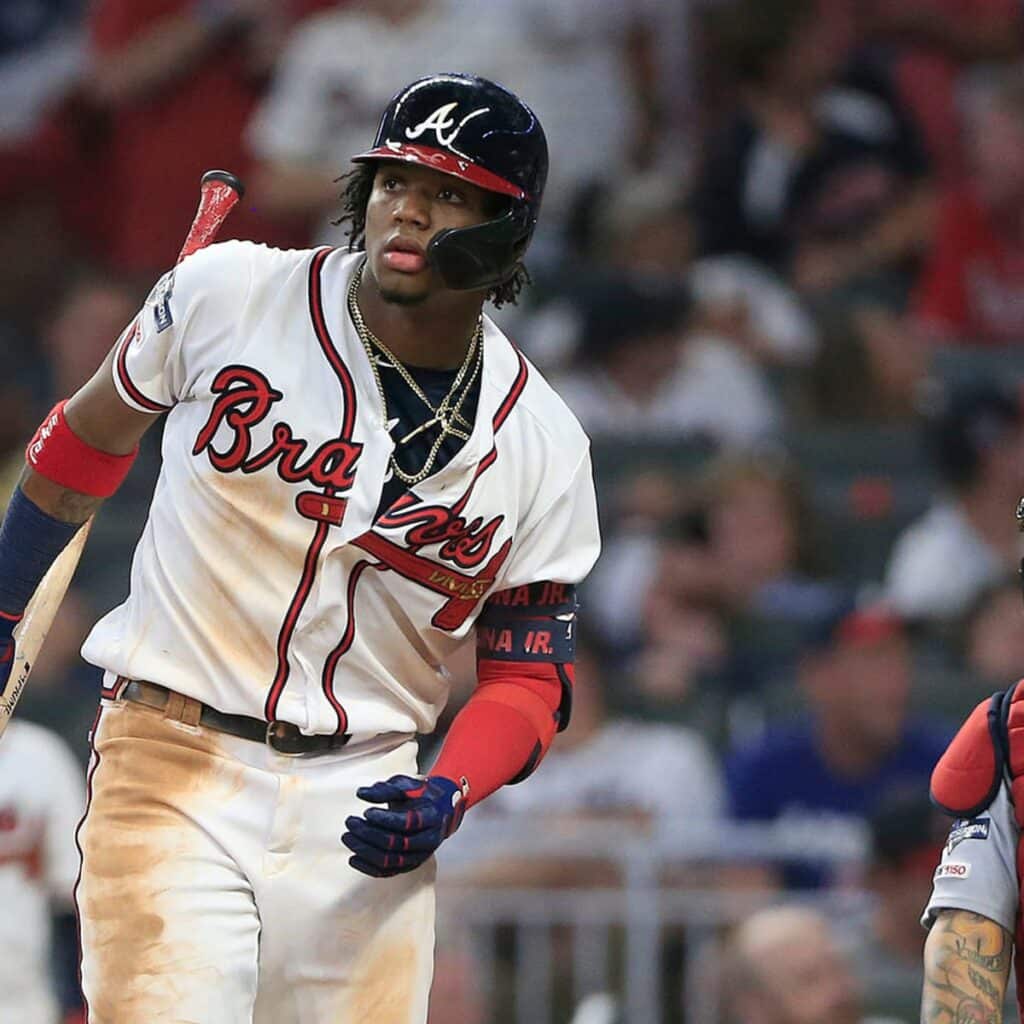
Rotisserie, draft, AL, and NL-only…there are countless formats to enjoy fantasy baseball. Auction leagues are growing in popularity and have strategic and fun advantages other formats don’t provide. Our 2023 Fantasy Baseball Auction Overview is a great start for building a championship roster via your auction. Before entering the 2023 fantasy baseball auction overview, please familiarize yourself with my 2023 fade list. Also, my 2023 bounce-back players , deep sleepers, breakout hitter of the year, and extensive preview of all 30 squads are invaluable resources. Finally, our 2023 MLB breakout pitchers list digs deep to give you an edge on draft day. Auction Overview The fantasy baseball market has many formats and league sizes, especially in auctions. I’ve played in American and National League formats with 12 teams plus 15-team mixed leagues. Each setup could also have keepers (players held for more than one year) or trading, which changes all players’ value during the auction. Over the last 20 seasons, I’ve played in the high-stakes fantasy market where there is no trading, which puts pressure on a fantasy manager to develop a winning plan before the auction. When doing an auction league with no trading, a fantasy manager has a small margin for error. No other team will be knocking on your door looking to take your third closer off your hands via a trade. If your roster is out of balance (strong in some categories and weak in others), you can’t trade hitting for pitching or even speed for saves. An auction can be won in many different ways, but many managers can lose the battle during the auction due to a questionable game plan or even a lack of foresight. Every year the player pool will change slightly. The goal of a manager is to evaluate the inventory and develop a strategy that can be executed at the draft table. If I come away with enough pieces to the puzzle, I can manage my way to a championship. Whatever game plan I decide to use, I must be ready to adjust if I don’t get my key players. A fantasy manager can roster any player they want in an auction, but it comes with a price. In most baseball auction leagues, each team starts with $260 to buy 14 hitters and nine pitchers. The goal is to accumulate the most league points in five hitting (batting average, runs, home runs, RBIs, and steals) and five pitching (wins, ERA, WHIP, strikeouts, and saves) categories. In a 12-team league, a first-place finish in a category would be worth 12 points, second place is 11 points, and so on until reaching 12th place (one point). The winner of each league is determined by adding up all 10 categories. Calling Out Players to Improve Your Team-Building Chances A common mistake fantasy managers make is hoping the players they want don’t get called out early. It sounds good in principle, but the problem is that all the other good players are coming off the board while I sit back, holding my money. If I wait and miss on my targeted players, I will have fewer options to build my team. Getting my key players called out as quickly as possible is essential. For example, if I want a player in the auction and believe he is the key to building my foundation, I would like to call him out on my first opportunity. By doing this, I find out how much he will cost (higher or lower than my predicted price point) or if I need to start looking for someone else to develop my team around. The quicker I know where I stand on critical players, the better my chance of executing my plan or adjusting on the fly. For example, I wanted to build my team around Ronald Acuna, and I believed he could hit over .300 with 30+ home runs and 30+ stolen bases with a target value of $43. If I miss on him, I will need to find another player with a step down in overall expectations. I should have a secondary plan to shift to another player with a similar skill set with less upside, but I would then save some of my spending budget. My next tier for power and speed could be Julio Rodriguez in this example. If Acuna gets called out early and sells for more than I’m willing to pay, Rodriguez would be attainable if his salary falls within my expected budget and his targeted salary. Suppose Rodriguez gets called out first, and someone buys him for $41 while I sit on Acuna as my first key player. In that case, I will have a further drop-off in the player pool if Acuna is purchased by another manager above my budgeted salary target. The situation worsens if many top players get called up before Acuna, forcing me to shove all in, no matter the cost, or revamp the foundation of my team build on the fly. This freelancing style could lead to an imbalance in roster construction in a non-trading format where a trade can’t fix a shortfall in a category. In this example, a detour off of Acuna may push me to Juan Soto, bringing less upside in speed but a potentially high ceiling in batting average. This decision would force me to find stolen bases differently while ensuring not to give away his power edge. If the drop-off from Acuna led me to Trea Turner, I would set my foundation in steals with 25-home run power and strength in batting average. However, my second targeted player should bring more home runs with a chance at hitting for average with a 100/100 type skill set. Again, if Soto, Turner, and Rodriguez get called out in the auction before Acuna, I would need to get more creative with less inventory to build my offense. The other option is not missing your targeted core player or players by overpaying with
MLB Comeback Player of the Year
Betting on veteran players after down seasons due to injuries can sometimes lead to some surprising stats. Many drafters will avoid these types of players while looking for someone with a higher ceiling. A change of scenery or even a
All Fantasy Football Tools

Welcome to FullTime Fantasy Sports. This is a table of contents of our most valuable tools, analysis, player projections and predictions for the upcoming Fantasy Football season!