
2025 Buffalo Bills Fantasy Preview

2025 Buffalo Bills Fantasy Preview After ranking 9th in both passing and rushing last season, the 2025 Buffalo Bills return mostly intact. Most of Buffalo’s offseason changes came on the defensive side of the ball. They released Von Miller, traded Kaiir Elam, and added DE Joey Bosa. Additionally, the first three picks in the 2025 NFL Draft bolstered Sean McDermott’s defense. However, extensions for Josh Allen and Khalil Shakir assure that the Bills should remain a potent offense for years to come. Allen’s numbers dipped a bit in 2024. He had his lowest passing yards (3,731) and touchdown (28) output in five years. However, Allen ran for a dozen scores and finished as a top-3 fantasy quarterback for the fifth consecutive season. He remains an elite option and is one of the safest bets on draft day for fantasy managers willing to secure an elite signal caller early. RB James Cook posted his second-straight 1,000-yard rushing season and tied for the league lead with 16 rushing scores. His overall production was down from 2023, and he is now seeking a long-term extension as he enters the final year of his rookie deal. Seeing such a huge spike in one-year touchdowns and potentially missing offseason reps due to the contract impasse are concerns. But the Bills did not address running back in the draft, making Cook a strong RB2 with RB1 upside. Ray Davis chipped in 631 scrimmage yards and six scores in a secondary role. Depending on how the Cook contract situation plays out, Davis looks like a strong late-round value target. The Bills didn’t add any significant depth at wideout, ignoring the position until the 7th round. Fresh off his extension, Khalil Shakir looks secure as the No. 1 wideout. Shakir had the best season of his career and ranked 12th in the NFL with a 72.1 percent slot rate. But after Shakir, things are less predictable. Speedy Joshua Palmer’s three-year, $29 million deal indicates he is locked into the WR2 role and will act as Allen’s downfield playmaker. Amari Cooper is a free agent, freeing up more potential playing time for Keon Coleman. Curtis Samuel adds depth and could surpass Coleman if the second-year wideout doesn’t become more consistent. After a strong rookie showing, Dalton Kincaid fell off. He missed four games with a knee injury and wasn’t utilized downfield as much. Dawson Knox also remained involved, averaging a career-high 14.1 yards per reception. Kincaid still posted the 13th-best PFF grade for tight ends with more than 30 targets, so there’s reason to think Kincaid can be a borderline TE1 again if he remains healthy. Fantasy Grade: B QB Allen, Josh, BUF [QB1] Josh Allen’s numbers dipped in 2024, yet he still ranked inside the top-3 fantasy signal-callers for the fifth consecutive season and won an NFL MVP. That consistency puts Allen in elite company and is why he’s our top QB in 2025. After surpassing 4,000 passing yards for four straight seasons, Allen slipped to 3,731 with 28 scores last season. However, he supplemented that with elite rushing production, including 12 rushing scores. That dual-threat capability and tremendous durability make Allen one of the safest bets in fantasy. The Bills having a top-5 easiest schedule this year only cements Allen’s elite status. ADVICE: Elite option in every format worthy of an early selection. RB Cook, James, BUF [RB1] After never topping two rushing touchdowns in a season, James Cook exploded for a league-high (tied) 16 scores in 2024 en route to an overall RB8 finish. Cook topped 1,000 rushing yards for the second consecutive season, ranked 3rd in EPA (+40.1), and was top-12 in broken tackle rate (11.1 percent). Understandably, Cook is looking for some long-term security, but as long as he’s back in the lineup for the season opener, he remains a quality RB2 in a potent Buffalo offense that produced an NFL-best 32 rushing touchdowns last season. ADVICE: Last season’s TD output looks like an outlier, which could lead to Cook being overdrafted. RB Davis, Ray, BUF [RB2] In 2024, Ray Davis rushed for 442 yards (3.9 YPC) and three touchdowns on 113 carries, adding three receiving TDs (17 receptions, 5.9 PPG, PPR). His Week 18 start (15/64/1, 2/1/1) and Week 6 outburst (20/97, 3/55) show RB2 upside if James Cook (RB9, 5.2 YPC) misses time. At 5-8 and weighing 211 pounds, with a 4.52 40-yard dash, Davis’s 3.81 yards after contact (751 total) highlight his power. Buffalo was top 10 in rushing and led the NFL in rushing scores, so Davis should be on the fantasy radar as a potentially valuable reserve. ADVICE: Handcuff target who will occasionally post standalone flex numbers. RB Johnson, Ty, BUF [RB3] ADVICE: Buffalo ranked 8th with 28.9 rushes per game. Johnson did see 25 targets last year and averaged over five yards per carry, but he is squarely behind James Cook and Ray Davis in the touch pecking order. WR Shakir, Khalil, BUF [WR1] In his third season, Khalil Shakir topped the Bills’ receivers with 76 receptions, 821 yards, and four touchdowns on 100 targets, ranking 37th in PPR wide receiver scoring (182.5 points). His standout games (nine catches for 107 yards and five catches for 106 yards with a touchdown) showed reliability over explosive plays, surpassing 10 fantasy points in 14 of 18 starts, making him a steady flex option in three-receiver leagues. With seven or fewer targets in 73.7 percent of games, Shakir’s 78.3 percent catch rate highlighted his efficiency. His four-year, $60.2 million extension in February 2025 underscores Buffalo’s confidence in his growth. ADVICE: Reliable WR3 with 1,000-yard potential. WR Palmer, Joshua, BUF [WR2] In 2024, Joshua Palmer underwhelmed in the Chargers’ run-first attack. Palmer had three standout games (4 catches for 63 yards; 2 for 63 yards, 1 TD; 6 for 78 yards) but saw four or fewer targets in 10 of 15 games. His 15.3 yards per catch (15.0 in 2023) highlights his deep-threat role, unlike his 2022 career highs (72 catches,
FFWC High-Stakes Strategy (2025)

Fantasy Football World Championship (FFWC) Strategy for 2025: A Comprehensive Guide The Fantasy Football World Championship (FFWC) is one of the most prestigious high-stakes fantasy football competitions, attracting top-tier players who compete for significant cash prizes and bragging rights. With the 2025 fantasy football season here, crafting a winning strategy requires a blend of preparation, adaptability, and a deep understanding of the FFWC’s unique format. This article delves into detailed strategies for dominating your FFWC drafts and in-season management, leveraging insights from industry experts, recent trends, and the evolving landscape of fantasy football in 2025. Understanding the FFWC Format The FFWC is a high-stakes fantasy football competition with entry fees that can reach four or five figures, making every decision critical. The format typically includes: Scoring: Full-point PPR (points per reception), which emphasizes players with high target volumes, particularly wide receivers and pass-catching running backs. Starting Lineups: 1 QB, 2 RBs, 3 WRs, 1 TE, 1 FLEX (RB/WR/TE), 1 DST, and no kickers. This setup prioritizes depth at skill positions. Draft Structure: 18-round drafts with no in-draft trades, requiring precise player selection and roster construction. Roster Management: Weekly Free Agent Acquisition Budget (FAAB) and First-Come-First-Serve (FCFS) systems for waiver wire pickups. Prizes: League prizes of $500 per league and a grand prize exceeding $150,000, with the Circa Fantasy Football World Championships offering additional live event incentives in Las Vegas from August 10 to September 6, 2025. The FFWC’s high-stakes nature and competitive player pool demand a strategic approach that balances risk and reward while capitalizing on the latest trends in the NFL and fantasy football. Key Trends Shaping 2025 FFWC Strategy Fantasy football in 2025 is markedly different from previous years, driven by shifts in NFL offensive schemes and player usage. Here are the critical trends to consider: The Rise of Dual-Threat Quarterbacks: The 2025 season is described as the “golden age of elite fantasy QBs.” Players like Jalen Hurts, Josh Allen, Lamar Jackson, Jayden Daniels, and Joe Burrow (when healthy) are game-changers due to their rushing upside and passing production. These quarterbacks can single-handedly tilt weekly matchups, making them high-priority targets in FFWC drafts. Evolving Running Back Committees: Backfield committees are increasingly common, with teams splitting carries among multiple running backs. This unpredictability requires drafters to prioritize running backs with defined roles or those in high-volume offenses. Players like James Conner, who has consistently finished as a top-15 PPR running back, remain valuable despite committee concerns. Wide Receiver Depth and PPR Value: The FFWC’s PPR scoring amplifies the value of wide receivers who command high target shares. Players like Calvin Ridley and Jakobi Meyers, who have posted strong PPR numbers despite inconsistent quarterback play, are excellent mid-round targets. The depth at this position allows for flexible draft strategies. Tight End Volatility: The tight end position remains the shallowest in fantasy football, with elite options like Brock Bowers and Trey McBride offering consistency but requiring high draft capital. The gap between top tight ends and the TE12 is smaller than in previous years, making it less critical to invest early in this position. Rookie Impact: The 2025 rookie class is deep at running back and tight end but underwhelming at quarterback. Players like Ohio State’s Quinshon Judkins are emerging as potential RB1s in dynasty and redraft formats, making them key targets for FFWC managers looking for breakout stars. Draft Strategy for FFWC 2025 Early Rounds (1-3): Anchor Your Roster The first three rounds are critical for securing elite talent that can carry your team. Given the FFWC’s PPR scoring and roster requirements, prioritize players who offer high floors and ceilings. Quarterback Strategy: While dual-threat quarterbacks are tempting, the depth at this position in 2025 allows you to wait until rounds 3-5 for players like Jayden Daniels or Joe Burrow. Instead, focus on elite running backs or wide receivers early. If you do target a quarterback, Jalen Hurts or Josh Allen are worth considering for their rushing upside. Running Back Priority: Despite the rise of committees, workhorse running backs remain valuable. Target players like Christian McCaffrey, Breece Hall, or Bijan Robinson, who are likely to see heavy workloads in PPR-friendly offenses. If you miss out on a top-tier RB, consider James Conner in the mid-rounds, who offers RB1 production at a discount (ADP: 54.8, RB19). Wide Receiver Dominance: The PPR format makes wide receivers like CeeDee Lamb, Tyreek Hill, or Justin Jefferson prime first-round targets. Their high target volumes ensure consistent points. Pairing an elite wide receiver with a top running back creates a balanced foundation. Tight End Decision: Avoid reaching for tight ends like Brock Bowers or Trey McBride in the early rounds. The opportunity cost is too high when you can secure elite RBs or WRs. Instead, target value tight ends like Evan Engram or David Njoku later. Mid Rounds (4-8): Build Depth and Value The mid-rounds are where you separate yourself in FFWC drafts by finding players who outperform their ADP. Target High-Upside Running Backs: Look for running backs in committee situations with potential for breakout roles. Examples include players like Zamir White or Tyjae Spears, who could see increased touches in favorable offenses. James Conner, as mentioned, is a steal at RB25 if he falls. Wide Receiver Bargains: Players like Calvin Ridley (ADP: 7.09) and Jakobi Meyers (ADP: 8.03) are ideal mid-round targets. Ridley’s 1,000-yard seasons and Meyers’ consistent top-30 PPR production make them reliable WR2/3 options with upside. Quarterback Value: If you haven’t drafted a quarterback, this is the range to target players like Anthony Richardson or Kyler Murray, who offer dual-threat potential at a lower cost than the elite tier. Tight End Options: If you bypass early tight ends, look for value in players like Jake Ferguson or Kyle Pitts, who have high ceilings but come at a lower ADP. The tight end position’s volatility makes it viable to wait and still secure a starter. Late Rounds (9-18): Upside and Handcuffs The later rounds are for high-upside picks, handcuffs, and
Running Back Regression After Leading the NFL in Rushing
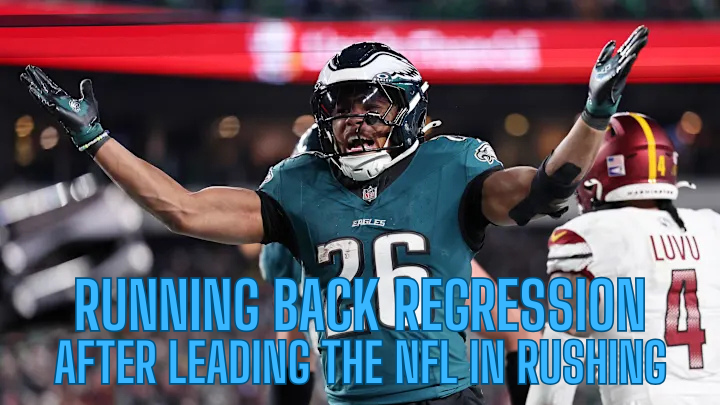
Running Back Regression After Leading the NFL in Rushing Leading the NFL in rushing is a career highlight for most running backs. It also leads to banner fantasy football totals. However, most RBs see a precipitous decline in production the season after topping the league in rushing yards. This running back regression after leading the NFL in rushing has happened in 22 of the past 25 seasons and paints a worrisome fantasy outlook for the league’s reigning rushing king. Many different factors can lead to a sudden dropoff. As my friend Gary Davenport first divulged in his Curse of 370 and revisited for 2025, heavy usage is a key contributor to predicting running back regression. Other variables like coaching changes, strength of schedule, supporting cast, and age also play a role. Before I take a deep dive back through the past 25 seasons, let’s recap all the running backs that have led the NFL in rushing this century and find some key takeaways. NFL Rushing Leaders 2000-2025 Over the past 25 seasons, 20 different running backs led the NFL in rushing yards. Only LaDainian Tomlinson, Adrian Peterson, Ezekiel Elliott, and Derrick Henry have done it more than once. You could also doff your proverbial cap to Edgerrin James, who ascended the leaderboard in 1999, becoming the first player since Eric Dickerson (1983-1984) to lead the league in his first two pro campaigns. In all, league-leading backs averaged 340 carries for 1,716 rushing yards (4.98 yards per carry) and scored 15.7 total touchdowns. That averaged out to just under 349 fantasy points (PPR), or 21.9 points per game. The splits were 15 rushing champs from the AFC, while 10 represented the NFC. The NFC East produced five, while the NFC South is the only division that has not had an NFL rushing champ in the last 25 years, nor has there ever been one from that division. The Saints’ George Rogers led the league with 1,674 yards back in 1981, but New Orleans was then part of the NFC West. Leading the league in rushing is more than an individual honor. Coaching, schemes, quarterbacking, and the offensive line all play a pivotal role. There are also numerous other elements that play a role in a team’s ability to manufacture a rushing leader. Contributing Factors for Success Health One of the most important factors for posting big numbers is staying healthy. From 2000-2015, no running back who led the league in rushing missed a single game. Even the backs who missed one were rested by their team in the season finale. Derrick Henry is the only running back in the last 25 years to lead the league in rushing but miss a game due to injury. Henry missed Week 16 of the 2019 season with a hamstring injury and returned to action in the season finale to rush for a season-high 211 yards to top the league. Every other running back in the past 25 seasons to lead the league in rushing has stayed healthy for every game or sat out the regular-season finale to rest for the playoffs. Winning Team Speaking of playoffs, teams that produced the leading rusher averaged 9.96 wins versus 6.2 losses, making the postseason in 18 of the 25 seasons (72%). However, only three of those teams made the Super Bowl, and the only squad to win is the reigning champions, the 2024 Philadelphia Eagles. Having a winning record also leads to more friendly game scripts for the rushing attack. Teams nursing second-half leads tend to rely on their lead backs to grind down the clock. Age The wear and tear that NFL running backs accumulate takes a toll. 20 of the 25 (80%) rushing leaders were under 28 entering the season in which they finished first. Looking at the averages, RBs had a mean age of 25.4 in those seasons. They also averaged 4.6 years of experience. Only two backs (Curtis Martin in 2004, Adrian Peterson in 2015) were older than 28. No rusher who was 29 when the season started has led the NFL in rushing since Barry Sanders did it back in 1997. NFL RUSHING LEADER AGE DISTRIBUTION AGE OCCURANCES RATE 21-23 6 24% 24-26 10 40% 27-28 7 28% 29+ 2 8% Skill Set & Fantasy Production Volume is king in fantasy, and rushers who accumulate enough touches to post elite numbers are typically three-down workhorses. 24 of the 25 RBs posted top-5 fantasy finishes. The only back who did not, Adrian Peterson in 2008, caught only 21 passes for 125 yards in 16 games. In the other 24 seasons tracked, running backs averaged 44 receptions annually. Derrick Henry is an outlier, but part of the formula for RB success in today’s high-octane NFL is to stay on the field on passing downs. However, the inability to do just that, stay on the field, is one of the main reasons we see noteworthy running back regression the year after they lead the league in rushing yards. Immediate Regression in the Next Season While winning a rushing crown is a notable accomplishment for a pro running back, there is usually a staggering dropoff in play the following season. 88% have seen an immediate dip in effectiveness, and it is usually a significant decline. Only three running backs since the 2000 season have posted better fantasy numbers the year after they led the NFL in rushing yards. As for the other 22, they averaged a 36.8% decline in fantasy points the following season. Notable Declines Running backs have always been a hot commodity on draft day. Particularly three-down workhorse backs coming off a rushing crown who finished the previous campaign at an average rank of RB 2.76. But fantasy draft history is loaded with first-round RB busts who stumbled after they broke out the previous season. Running Backs who led the league in rushing in 2000-2024 finished as the RB 2.7 in PPR leagues, but plummeted to an average of RB22.3 the following season.