
Rookie Scouting Profile: Marvin Harrison Jr.
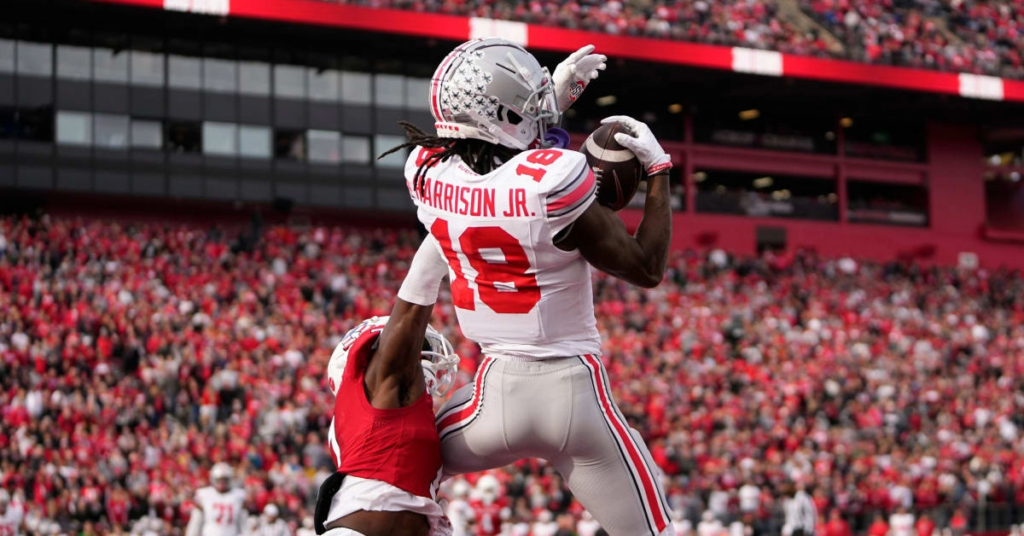
FullTime Fantasy Rookie Scouting Profile: Marvin Harrison Jr. Marvin Harrison Jr. (WR) Ohio State Ht. Wt. 40-Time NFL Draft Dynasty ADP NFL Comp 6-3 209* 4.45* Top 10 1.01 A.J. Green *Estimate College Production A four-star recruit out of St. Joseph’s Prep in Philadelphia, Harrison chose the Buckeyes over numerous over prestige programs that made offers. Made an impact in 2021 as a true freshman, snagging a Rose Bowl record three touchdowns in OSU’s 48-45 win over Utah. As a sophomore was named unanimous All-American First Team and Biletnikoff Award finalist after snagging 77-of-109 targets for 1,263 yards and 14 touchdowns. Won the Biletnikoff award in 2023 with little dropoff in production regardless of new quarterback. Strengths • Fantastic route runner with outstanding technique and footwork. Consistently creates space and leverage. • Downfield playmaker who consistently wins contested-catch battles and keeps the chains moving. • High Football IQ. Great feel for where the first-down marker is. Adept at reeling in sideline throws and getting his feet down in bounds. • Highly productive in both 2022 and 2023 despite losing C.J. Sroud. Durable. • Inside/outside flexibility. His height would make him a problematic matchup as a big slot for slower linebackers and will have an advantage on all defensive backs. • Able to defeat press coverage. • NFL bloodlines and pedigree. Very similar playing style to his father, NFL Hall-of-Famer Marvin Harrison. • Player comps include A.J. Green, Larry Fitzgerald, and his father. Concerns • Does not create a lot of extra yards after catch or force many missed tackles. Forced only five missed tackles in 2023. • 8.2% drop rate in 2023 after dropping just three of 118 targets in 2022. However, the swap of C.J. Stroud to Kyle McCord should be factored in. • Not the strongest guy at shielding off coverage. Needs to improve at fully running back to the ball on comeback routes. • Lacks the top-end speed to run away from NFL defenders. • Did not perform any drills at the NFL Scouting Combine or Ohio State’s Pro Day. Fantasy Outlook When it comes to “can’t miss” prospects, Marvin Harrison Jr. is considered even better than Jaxon Smith-Njigba was last year at this time. His consistent production at an elite program, NFL bloodlines, and body of work would fit on any team. He is widely considered the top wide receiver in this class. Harrison will start on Week 1 and could immediately be a No. 1 wideout. He also could play in the slot and act as a refined possession target who will quickly develop a rapport with his quarterback. A locked-in top-10 prospect, Harrison would be the top wideout right away on New England (3), Arizona (4), or the Giants (6). Harrison is the easy 1.01 in single-QB rookie drafts but is considered such a solid prospect that he warrants top billing even in Superflex formats. Definitely a prospect for fantasy managers to go out of their way to targets. However, it will be expensive. Harrison is already a top-10 dynasty wide receiver. Keep JSN’s relatively quiet rookie campaign in mind before selling the farm if you boast a “win now” dynasty roster. See where Harrison ranks in Jody’s 2024 rookie rankings. JOIN OUR MAILING LIST! GET THE LATEST ARTICLES & UPDATES Subscribe to our FREE newsletter – Breaking Fantasy news & site updates! Like and share our new Facebook page! Be sure to pay attention to our giveaways for your shot at some sweet prizes!
Fantasy Baseball Pitching Strategy
Fantasy Baseball Pitching Strategy Shawn Childs is a legend in the fantasy baseball world and his advice is invaluable. A member of the NFBC Hall of Fame, Shawn has several top-5 finishes in the National Fantasy Baseball Championship as well

Rookie Scouting Profile: Caleb Williams
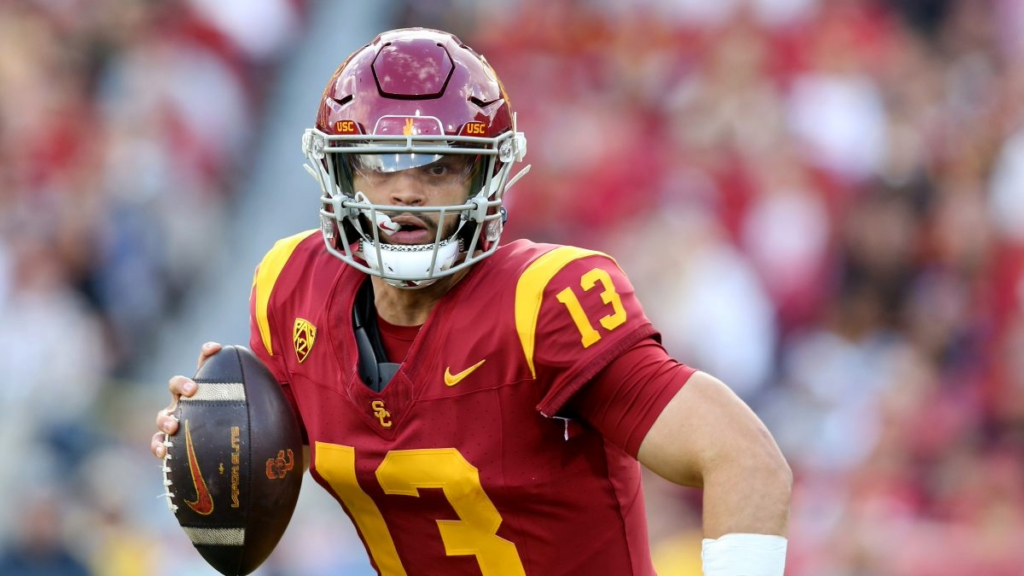
FullTime Fantasy Rookie Scouting Profile: Caleb Williams Caleb Williams (QB) USC Ht. Wt. 40-Time NFL Draft Dynasty ADP NFL Comp 6-0 7/8 217 4.5* 1.01 1.07 Dak Prescott * estimate College Production The top high school recruit in the nation, Williams first enrolled at Oklahoma as the backup to Spencer Rattler. Williams spearheaded the Sooners’ comeback win over Texas and retained the starting job for the rest of the 2021 season. Ended his freshman campaign with 1,912 passing yards, 442 yards rushing, and 27 total touchdowns. In 2022, Williams followed Lincoln Riley to USC. Set the Trojans’ school record with 4,537 passing yards, 42 scores, and total offense en route to Walter Camp, Maxwell Award, Sporting News Player of the Year accolades, and winning the Heisman Trophy. Concluded collegiate career with 41 combined scores and a career-high 170.1 QB Rating. Strengths • Gunslinger who can make all the throws and checks all the boxes to be an elite franchise signal-caller. • Excellent accuracy and timing on short and intermediate routes. Williams has the arm talent to make all the throws, including on anticipatory routes. • Elite runner and thrower who will be a nightmare option in RPO offense. • Superb leader who comes up clutch and wills his teams to victories. • Has excellent instincts to avoid pressure and is more than capable of escaping the pocket and churning out huge chunk plays on the ground. • Good decision-maker who is widely considered one of the best NFL quarterback prospects of the last five years. Concerns • Most of his production came in a single-read, shotgun offense at USC. • Deep-ball accuracy was inconsistent. • Under ideal “prototype” NFL size. (17th percentile height). • Ball security on runs. • Struggled more than expected under pressure. • Aggressive nature could lead to more downfield interceptions against better-quality NFL defensive backs. • Did not run a pro-style offense and still needs to improve going through progressions and hanging tough in the pocket against faster, stronger NFL pass rushers. Fantasy Outlook Considered a “can’t miss” prospect, Williams is polished and a lock to start in the NFL on Day One. Also, he’s been the prohibitive favorite to be selected No. 1 overall for over two years. With Chicago trading Justin Fields to Pittsburgh, it’s all but certain that Williams will open 2024 as the Bears’ long-sought-after starter. Williams isn’t quite the runner that Fields was but will be a top-10 running quarterback. Additionally, he’s far better as a passer than Fields. Matt Eberflus is coaching for his job and will undoubtedly put his prized rookie in a strong position to succeed right away. Chicago made strides in the second half of 2023 and could contend with improved QB play. Williams has the dual-threat capabilities to post QB1 numbers as a rookie. Additionally, the acquisition of Keena Allen gives Williams a pair of elite wideouts to go along with a solid receiving tight end and running back. View Williams as a strong QB2 in redraft formats and a top-8 signal-caller in dynasty. He’s the lock 1.01 in Superflex rookie drafts and is worthy of top-half of Round One attention in single-QB leagues. JOIN OUR MAILING LIST! GET THE LATEST ARTICLES & UPDATES Subscribe to our FREE newsletter – Breaking Fantasy news & site updates! Like and share our new Facebook page! Be sure to pay attention to our giveaways for your shot at some sweet prizes!
Fantasy Baseball Auction Strategy
Fantasy Baseball Auction Strategy Shawn Childs is a legend in the fantasy baseball world and his advice is invaluable. A member of the NFBC Hall of Fame, Shawn has several top-5 finishes in the National Fantasy Baseball Championship as well as five NFBC auction championship titles under his belt. He also boasts several prominent in the high-stakes market and multiple huge DFS wins. Shawn’s process and evaluation are among the most thorough in the sport and his exclusive FPGscore metric is changing the game. This 2024 Fantasy Baseball Auction Strategy and insight are courtesy of the brilliant mind of one of the sport’s best. This Fantasy Baseball Auction Strategy is courtesy of Shawn Childs. Read Shawn’s expert fantasy analysis at his Substack. Also, check out Shawn’s detailed 2024 Fantasy Baseball Strategy Guide for the most thorough tips and advice that you will find anywhere. Auction Overview The fantasy baseball market has many formats and league sizes, especially in auctions. I’ve played in American and National League formats with 12 teams plus 15-team mixed leagues. Each setup could also have keepers (players held for more than one year) or trading, which changes all players’ value during the auction. Over the last 20+ seasons, I’ve played in the high-stakes fantasy market where there is no trading, which puts pressure on a fantasy manager to develop a winning plan before the auction. When doing an auction league with no trading, a fantasy manager has a small margin for error. No other team will be knocking on your door looking to take your third closer off your hands via a trade. If your roster is out of balance (strong in some categories and weak in others), you can’t trade hitting for pitching or even speed for saves. An auction can be won in many different ways, but many managers can lose the battle during the auction due to a questionable game plan or even a lack of foresight. Every year, the player pool will change slightly. The goal of a manager is to evaluate the inventory and develop a strategy that can be executed at the draft table. If I come away with enough pieces to the puzzle, I can manage my way to a championship. Whatever game plan I decide to use, I must be ready to adjust if I don’t get my key players. A fantasy manager can roster any player they want in an auction, but it comes with a price. In most baseball auction leagues, each team starts with $260 to buy 14 hitters and nine pitchers. The goal is to accumulate the most league points in five hitting (batting average, runs, home runs, RBIs, and steals) and five pitching (wins, ERA, WHIP, strikeouts, and saves) categories. In a 12-team league, a first-place finish in a category would be worth 12 points, second place is 11 points, and so on until reaching 12th place (one point). The winner of each league is determined by adding up all 10 categories. Calling Out Players to Improve Your Team-Building Chances A common mistake fantasy managers make is hoping the players they want don’t get called out early. It sounds good in principle, but the problem is that all the other good players are coming off the board while I sit back, holding my money. If I wait and miss on my targeted players, I will have fewer options to build my team. Getting my key players called out as quickly as possible is essential. For example, if I want a player in the auction and believe he is the key to building my foundation, I would like to call him out on my first opportunity. By doing this, I find out how much he will cost (higher or lower than my predicted price point) or if I need to start looking for someone else to develop my team around. The quicker I know where I stand on critical players, the better my chance of executing my plan or adjusting on the fly. For example, I wanted to build my team around Ronald Acuna, and I believed he could repeat a good portion of his 2023 stats (.337/149/41/106/73) with a target value of $55. If I miss on him, I will need to find another player with a step down in overall expectations. I should have a secondary plan to shift to another player with a similar skill set with less upside, but I would then save some of my spending budget. In this example, my next tier for power and speed could be Julio Rodriguez. If Acuna gets called out early and sells for more than I’m willing to pay, Rodriguez would be attainable if his salary falls within my expected budget and his targeted salary. Suppose Rodriguez gets called out first, and someone buys him for $41 while I sit on Acuna as my first key player. In that case, I will have a further drop-off in the player pool if Acuna is purchased by another manager above my budgeted salary target. The situation worsens if many top players get called out before Acuna, forcing me to shove all in, no matter the cost, or revamp the foundation of my build on the fly. This freelancing style could lead to an imbalance in roster construction in a non-trading format where a trade can’t fix a shortfall in a category. In this example, a detour off of Acuna may push me to Freddie Freeman, putting me in a weaker position in speed but a potentially high floor and ceiling in batting average. This decision would force me to find stolen bases differently and potentially look for another source of high-end power. If the drop-off from Acuna led me to Bobby Witt, I would set a high foundation in steals with 30+ home run power but only a neutral option for batting average. I would then focus on landing another high-average bat with one of my next two core hitters. Again,
Fantasy Baseball Strategy Guide

Fantasy Baseball Strategy Guide Shawn Childs is a legend in the fantasy baseball world and his advice is invaluable. A member of the NFBC Hall of Fame, Shawn has several top-5 finishes in the National Fantasy Baseball Championship as well as five NFBC auction championship titles under his belt. He also boasts several prominent in the high-stakes market and multiple huge DFS wins. Shawn’s process and evaluation are among the most thorough in the sport and his exclusive FPGscore metric is changing the game. This 2024 Fantasy Baseball Strategy Guide and insight are courtesy of the brilliant mind of one of the sport’s best. This Fantasy Baseball Strategy Guide is courtesy of Shawn Childs. Read Shawn’s expert fantasy analysis at his Substack. Fantasy Baseball Basics Fantasy baseball is a great game, especially for sports fans who love to watch baseball. A season covers about 180 days or about 26 weeks. Most of my experience in the fantasy baseball market has come in rotisserie-style leagues in the high-stakes market with no trading. Most formats have 10 categories to earn league points, with five for batters and five for pitchers. Roto Categories Batting Average (BA) – Each team adds up their total hits divided by at-bats by their starting hitters to create their overall team batting average. If you have the highest batting average in your league, your team earns first-place points in this category. (Note: The number of teams in each league or competition determines league points. For example, if there are 12 teams in a league, first place is worth 12 points. Second place is worth 11 points, and so on, with the last-place team earning only one point). In a 12-team league, fantasy managers trying to finish in the top 20% in batting average should set a goal of .2630 based on the high-stakes market results in 2023 (2,460 teams). Runs (R) – This is the total of all runs scored by the starting hitters on your team. The goal for runs should be about 1,125 runs in 12-team leagues or 80 runs per player in formats with 14 offensive players. Homeruns (HR) – Each team adds up the number of home runs by their starting hitters. A fantasy manager needed over 320 home runs to finish in the top three in the home run category in 12-team leagues (about 23 home runs per batter). Runs Batted In (RBI) – This is the total of all runs driven in by your starting lineup. In a 12-team league, the target number should be about 1,100 RBIs (about 79 RBIs per batter). Stolen Bases (SB) – Each team adds up the number of steals by their starting players. In 2022, a fantasy manager needed 134 steals to finish in the top 20% or nine steals per hitter. The change in the size of bases, pitch clock, and only two throws to a base led to a spike in stolen bases. The new target for steals for 2024 is 198 to finish in the top 20% (14 per hitter). Wins (W) – This is the total number of wins by your fantasy pitching staff (only players in the starting lineup). Typically, I try to manage my team to get enough starts in the year to earn four wins per week, 104 wins over a 26-week season. In 2023, 94 wins in the high-stakes market placed in the top 20%. Earned Run Average (ERA) – Each team adds up the number of earned runs allowed by their pitching staff divided by the total number of innings pitched times nine innings to determine their team ERA. The goal is to have the lowest ERA in the league. A fantasy team needed an ERA of 3.718 to finish in the top 20%. I typically use a 3.50 as my ERA target in a 12-team format. Walks + Hits/Innings Pitched (WHIP) – This is the trickiest stat for new fantasy managers to get a handle on. WHIP is a way to get the value of each pitcher’s skill set. All hits allowed are added to the total number of walks allowed divided by the total number of innings pitched by your starting pitching staff to come up with each team’s WHIP. The lowest WHIP earns the most league points. A fantasy manager needed a whip of 1.194 in 2023 in 12-team leagues to finish in the top 20%. Strikeouts (K) – Each team adds up the strikeouts from the pitchers in their starting lineup each week. Some pitchers have posted impressive strikeout totals over the last few seasons, raising the bar to compete in this category. In 12-team formats, a fantasy team needed 1,454 strikeouts to finish in the top 20% last year. Saves (SV) – Each team adds up the total number of saves by their pitching staff to compete in this category. A fantasy team will need about 78 saves to be competitive in saves in 12-team leagues. League Structure A standard 12-team Roto league will consist of about 30 rounds. Each team selects a player in each round while filling in their starting line-up, which includes 14 hitters and nine pitchers. The 14 batters consist of two catchers, one first baseman, one second baseman, one shortstop, one third baseman, one middle infielder (second base or shortstop), one corner infielder (first base or third base), five outfielders, and one utility (any batter). Most fantasy managers will draft seven starting pitchers and two closers (pitchers who pitch in close games that earn saves) for their starting pitching lineup. The seven bench spots can consist of any players you desire. In 12-team leagues, having a couple of extra starters and a third pitcher with a chance at saves would make sense. The last four bench slots could look like this: one upside young player with future playing time, one backup outfielder, one backup middle infielder, and one backup corner infielder. Player Pool Once a fantasy manager has a feel for each category on the
NFL Combine Risers & Fallers
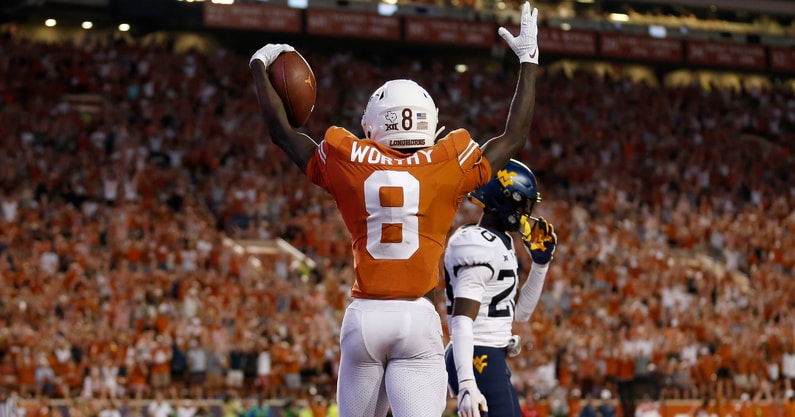
The 2024 NFL Scouting Combine has already occurred for the fantasy-relevant incoming rookies. Before the Combine, dynasty football enthusiasts had only college tape to go by. Now, we have real measurables on an NFL field. With all the skill position events behind us, we can reflect on the 2024 NFL Combine Risers & Fallers. Also, here are some other helpful links for your 2024 fantasy and dynasty football prep work from FullTime Fantasy. 2024 NFL Rookie Rankings 2024 NFL Draft Team Needs Jody’s 2024 Dynasty Rankings Free Agent Rankings for QB, RB, WR, and TE. Stock Up Xavier Worthy (WR) Texas We all knew Worthy was a blazer. However, breaking the 40-yard dash record with a 4.21-second sprint was the biggest highlight of the 2024 NFL Combine. Worthy’s first attempt (4.25) was the fourth-fastest ever. However, the former Longhorn decided to attempt to break John Ross’s record and succeeded. Worthy was already a top-5 wide receiver on many draft boards in a deep 2024 class. However, at just 165 pounds, fantasy managers should approach Worthy with caution. Ladd McConkey (WR) Georgia McConkey displayed his precise route-running and showcased superb hands. Additionally, he ran far after (4.39) than anticipated. At 6-foot and 186 pounds, McConkey bolstered his stock with a strong showing in Indy. Ricky Pearsall (WR) Florida After a strong showing at the Senior Bowl, Pearsall posted a 97th-percentile vert (42″) and ran a strong 4.41 40. Also, he caught the ball consistently and has good size (6-1, 189) and versatility. Few prospects have had a better year for their draft stock than @GatorsFB WR Ricky Pearsall. Elite Combine performance finalizes that 40: 4.41 (82nd percentile) Vert: 42” (97th percentile) Broad: 10’9” (89th percentile) 3-cone: 6.64 (93rd percentile) SS: 4.05 (89th percentile) — Trevor Sikkema (@TampaBayTre) March 3, 2024 Isaac Guerendo (RB) Louisville Prior to Saturday, few casual football fans knew anything about Lousiville’s Issac Guerendo. However, that would change after Guerendo’s head-turning performance on the field. After putting up an impressive 41.5″ vert, Guerendo (6-1, 220) led all running backs with a sizzling 4.33-second 40. Additionally, his vert and broad jump were top-5 marks for running backs who weighed 220-plus pounds in the Combine’s history. Xavier Legette (WR) South Carolina Legette blazed a 4.39 40 after measuring 6-1 and 220 pounds. He also stood out in his other measurables and posted the top weight-adjusted speed score of all wideouts at the 2024 Combine. Xavier Legette is a WR prospect in the 2024 draft class. He scored an unofficial 9.92 #RAS out of a possible 10.00. This ranked 24 out of 3063 WR from 1987 to 2024. Splits Projectedhttps://t.co/mhRpjR2bdC pic.twitter.com/0kP12WFfpF — Kent Lee Platte (@MathBomb) March 2, 2024 Joe Milton (QB) Tennessee After posting very good measurables, Milton turned heads with his arm talent. He led all quarterbacks with a 62 MPH arm and then had this 70-plus yard moon shot. Here is my angle of Joe Milton’s deep ball to Lideatrick Griffin. Per @NextGenStats this throw traveled 73.5 air yards. For reference, the longest throw by air yards in the NFL over the last seven years was Josh Allen to Gabe Davis for 69.3 air yards in 2022. Unreal arm talent pic.twitter.com/MD96LfTvpk — Brett Kollmann (@BrettKollmann) March 3, 2024 Other Risers: Brian Thomas Jr. (WR) LSU, Ben Sinnott (TE) Kansas State, Trey Benson (RB) FSU, Devin Leary (QB) Kentucky, Jaylen Wright (RB) Tennessee Stock Down Bucky Irving (RB) Oregon At just 5-9 and 192 pounds, Irving needed to run a sub-4.4 40 to be considered a top-5 back in this thin class. Instead, Irving posted an unimpressive 4.55. Also, Irving’s vert (29.5) and broad jump (9’7″) aren’t indicative of an explosive player. Finally, Irving’s 3.71 RAS was very disappointing. Keon Coleman (WR) Florida State After consistently being mocked as a potential first-round selection, Coleman ran a disappointing 4.61 40-yard dash. His route running also didn’t stand out. However, it should be noted that Coleman did run the fastest gauntlet drill, so his lack of straight-line sprinting might not be as impactful to NFL personnel as it is to fantasy zealots. Ainias Smith (WR) Texas A&M It was revealed that Smith is dealing with a stress fracture in his left shin and was unable to do any on-field drills. In a Combine where many other wide receivers turned heads, Smith was likely surpassed by several players in this deep and talented incoming class of pass catchers. Dillon Johnson (RB) Washington Johnson posted a poor vert (31.5) and then slumbered to a 4.68-second 40. He was productive at Washington but at 5-11 and 217 pounds, Johnson’s lack of speed and explosiveness likely dropped him into Day 3 of the 2024 NFL Draft. Audric Estime (RB) Notre Dame Estime has drawn comparisons to Kryen Williams but his 4.71-second 40 likely dropped him into Day 3. Estime’s broad and vert were fine. But that lack of top-end speed and slower splits hurt. I dropped Estime out of my top-5 running backs and wouldn’t be surprised to see him slide in the upcoming draft. The 2024 NFL off-season is underway but it’s not too late to get access to the best help out there! All FullTime Fantasy members get exclusive access to our 24/7 Chat Room on Discord! All morning on Sunday, Senior Analyst Jody Smith will be standing by to answer all your crucial fantasy questions and keep you updated with all the latest news and injury updates. JOIN OUR MAILING LIST! GET THE LATEST ARTICLES & UPDATES Subscribe to our FREE newsletter – Breaking Fantasy news & site updates! Like and share our new Facebook page! Be sure to pay attention to our giveaways for your shot at some sweet prizes!
2023 Fantasy Football Draft Kit
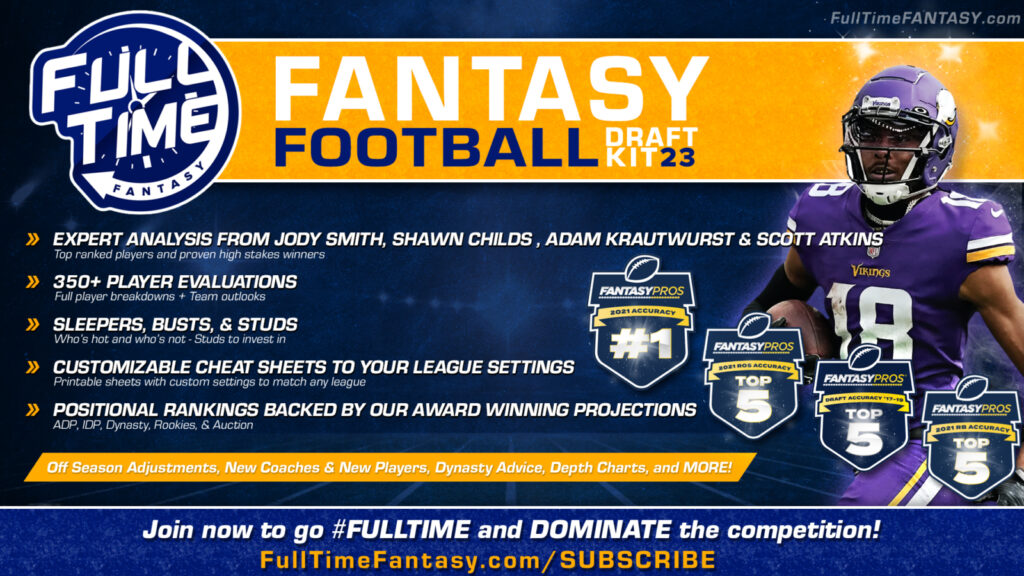
FullTime Fantasy presents our 2020 Fantasy Football Draft Kit that will have you DOMINATING your competition all season long!
Top 5 Breakout Wide Receivers

Top 5 Breakout Wide Receivers The wide receiver position in fantasy football tends to be the most challenging to manage. In the high-stakes fantasy market, many top players want to be strong at wideout to eliminate decision-making from week

Def vs WR Matchups Report
This Fantasy Football tool shows you how well (or how poorly) each pass defense is performing against each position this NFL season.

Def vs WR Matchups Report
This Fantasy Football tool shows you how well (or how poorly) each pass defense is performing against each position this NFL season.