
2025 New York Jets Fantasy Preview
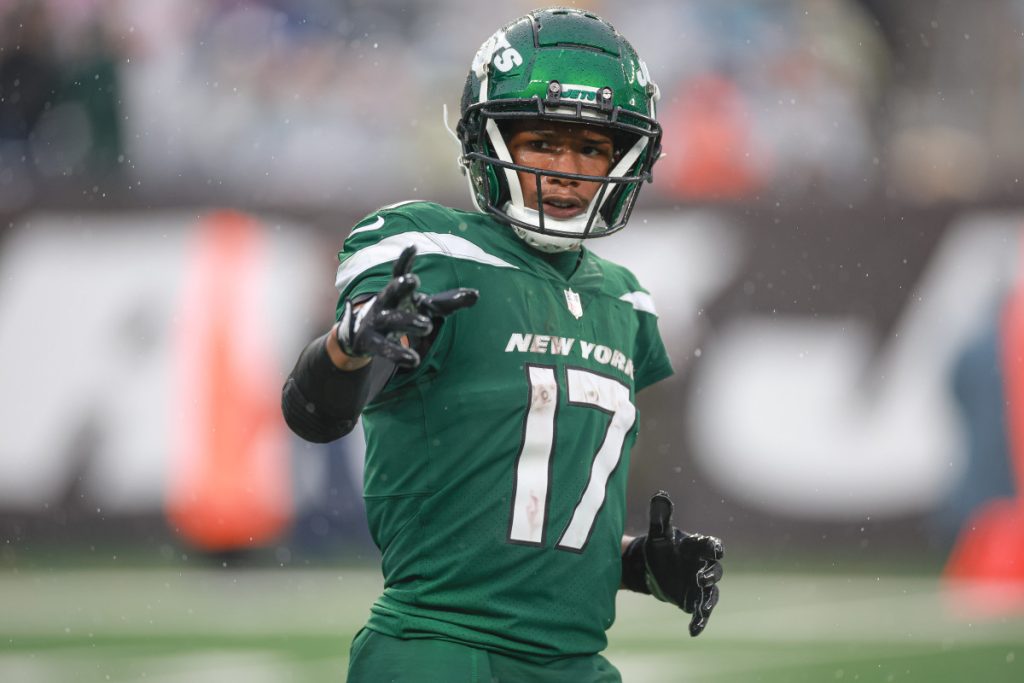
2025 New York Jets Fantasy Preview The New York Jets entered the 2025 offseason aiming to rebuild after a disastrous 5-12 season in 2024, marked by the failure of the Aaron Rodgers experiment and the longest active playoff drought in American professional sports (14 years). Under new head coach Aaron Glenn and general manager Darren Mougey, the Jets adopted a measured approach, focusing on youth, depth, and fortifying the offensive line while addressing defensive and skill-position needs. Priority One for the Jets was to get younger and more athletic and quarterback. Enter Justin Fields, who signed a two-year, $40 million deal. Fields may not be the long-term answer to a fan base that has mostly never experienced a franchise signal caller. Still, he can be a formidable running weapon who offers enough potential as a passer to contend for QB1 numbers. In six starts for Pittsburgh a year ago, Fields averaged 18.9 fantasy points per game, which would have ranked seventh at the position. However, much of Fields’s production is based on his elite rushing upside. The Jets have a surplus of young running backs and lack proven pass catchers. That relegates Fields to QB2 territory, but one that has a high ceiling, particularly in best ball formats. Speaking of New York’s backfield, the club ranked 31st in rushing behind a line that ranked 28th in run-block win rate and allowed 48 sacks (27th). New offensive coordinator Tanner Engstrand will employ a run-heavy, play-action scheme that the additions of first-round OT Armand Membou and veteran RT Chukwuma Okorafor will reinforce. Breece Hall’s numbers fell off after breaking out in 2023. Selected in the first round of many fantasy drafts, Hall declined to 876 rushing yards and 56 receptions. He still averaged 15.3 fantasy points per game, but the new regime has talked up using a three-man backfield this season. That and Fields’s presence keep Hall in RB2 territory. Braelon Allen and Isaiah Davis will also be involved, but should be viewed only as handcuffs to Hall. No. 1 wideout Garrett Wilson was tied for 4th in targets (153) and ranked 9th with 253.3 PPR points. While Wilson is reportedly excited to be reunited with his former Ohio State teammate at quarterback, Fields has never attempted more than 370 passes in the NFL. Aaron Rodgers threw 584 last season. For Wilson to earn a similar target number this season, he would have to command an impossible 41.3 percent target share. Wilson is an elite wideout, but regression is in order. New York has little depth after Wilson. Allen Lazard and fourth-round rookie Arian Smith will vie for targets in an offense that projects to be bottom-10 in passing attempts. Second-round LSU tight end Mason Taylor takes over for Tyler Conklin and could be heavily involved from Day One. Taylor (6-5, 255 pounds) set an LSU record for tight ends with 129 catches. Taylor was the youngest player in the 2025 NFL Draft, has NFL bloodlines, and the skill set to make an immediate fantasy impact. Fantasy Grade: C QB Fields, Justin, NYJ [QB1] Sleeper Justin Fields has dealt with plenty of adversity, from a lame-duck head coach, revolving door of offensive coordinators, lack of talent, and a porous offensive line. Yet, Fields posted two top-10 showings in fantasy points per game while starting in Chicago. Most of that boils down to Fields being an elite runner, but his passing numbers and ability to lead an offense were enough for the QB-starved Jets. New York is similar to those Bears squads in employing a lack of receivers and a poor offensive line. But maybe that’s just what Fields needs to resurrect his career- and fantasy value. ADVICE: Elite rushing upside puts Fields in QB1/2 territory. QB Taylor, Tyrod, NYJ [QB2] The Jets signed Justin Fields to a 2-year deal. But Fields has never played a full season in the NFL. New York also wisely secured Taylor, a veteran backup who is more than capable of running Tanner Engstrand’s offense. Both players ran a 4.51 40 (99th percentile) at their respective NFL Combines. Taylor has been a solid veteran for over a decade and has slightly higher career completion and QB ratings than Fields. If Fields has another injury, which happens frequently with his style, Taylor can be more than capable of chipping in weekly QB2 stats. ADVICE: Justin Fields handcuff to consider in deeper Superflex leagues. RB Hall, Breece, NYJ [RB1] Hall did not live up to his first-round ADP, but it wasn’t a total loss. Hall led all running backs with 423 routes run and was 4th in receptions (57) and receiving yards (483). However, Hall wasn’t as effective as a runner. His breakaway rate declined by 35 percent, his yards after contact per attempt dropped from 3.41 to 3.04, and he fumbled six times. New head coach Aaron Glenn has stated that Hall could be put into a three-man committee. ADVICE: Still plenty of big-play potential, but there is some boom-or-bust potential with targeting Hall as an RB2. RB Allen, Braelon, NYJ [RB2] Braelon Allen posted a 96th-percentile Speed Score at the 2024 NFL Combine, but that didn’t translate onto the field. Allen averaged a meager 3.6 yards in his 92 carries as a rookie. He fared better as a receiver, snagging 19 balls for 148 yards and a score. New head coach Aaron Glenn plans to use multiple backs for the Jets, but Allen is clearly behind Breece Hall. Allen (6-1, 235) has the size to be a factor in short-yardage situations, so that role is worth monitoring. He’s an RB4/5 in his sophomore season. ADVICE: RB4/5 that could see his role grow with New York’s new staff. RB Davis, Isaiah, NYJ [RB3] ADVICE: In one of Aaron Glenn’s press conferences at the NFL Combine, he said, “I would say that we have three running backs on this team that we’re gonna utilize as much as possible.” That could be coach speak, but Davis averaged 5.8 yards
2025 New England Patriots Fantasy Preview
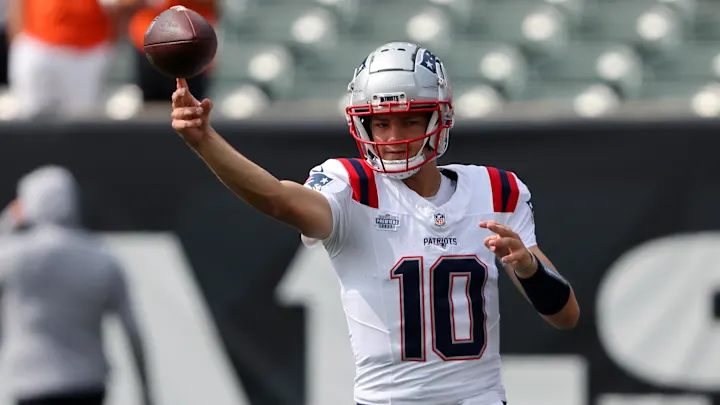
2025 New England Patriots Fantasy Preview The New England Patriots entered the 2025 offseason with a clear mandate to rebuild around second-year quarterback Drake Maye after consecutive 4-13 seasons in 2023 and 2024. With new head coach Mike Vrabel, the most cap space in the NFL ($120 million), and nine draft picks, the Patriots focused on bolstering the offensive line, adding playmakers for Maye, and reinforcing the defense. Maye far exceeded expectations in Year One. Despite playing behind the second-worst pass-blocking line and a questionable group of pass-catchers, Maye showed real promise. In 10 starts where Maye attempted 20-plus passes, he averaged 223.1 passing yards with 15 TD passes and 10 interceptions. He also chipped in another 41 yards with two more scores on the ground. That’s a 17-game pace of 3,793 passing yards, 697 rushing yards, and 29 total touchdowns. Even better, GM Eliot Wolf invested the No. 4 pick on OT Will Campbell, the premier tackle in the 2025 NFL Draft. Additional reinforcements and the arrival of Vrable bring a renewed sense of optimism to New England for the first time in three years. Second-round RB TreVeyon Henderson is one of those upgrades for a Patriots’ offense that ranked 31st in 2024. New England’s rushing attack ranked 26th in yards per carry (4.0) and 28th in EPA per rush (-0.08). Henderson’s 8.1 percent explosive run rate complements Rhamondre Stevenson (6-0, 227 lbs, 4.2 YPC) and Antonio Gibson (6-0, 228 lbs, PFF grade: 75.4), forming a dynamic backfield. Henderson is an excellent blocker and offers three-down potential in an ascending offense. Another significant addition for the club was signing WR Stefon Diggs to a three-year deal. Diggs is coming off a torn ACL but is expected to be ready for Week 1. Diggs brings slot/perimeter flexibility and an alpha mentality to a unit that sorely needed a veteran infusion. Third-round rookie WR Kyle Williams boasts 4.4 speed and excellent downfield ball skills. Williams also scored 14 touchdowns for Washington State and provides much-needed speed on the perimeter. With Diggs and Williams outside, Demario Douglas will remain a consistent source of targets in the slot. Douglas should be a reliable, high-floor source of targets. Maye relied on his tight ends a ton last year. New offensive coordinator Josh McDaniels prefers versatile tight ends, which bodes well for Hunter Henry, who is coming off a TE11 finish. Henry will likely see more in-line snaps, where he can’t be put in favorable mismatches. New England also re-signed Austin Hooper, who caught 45 balls for 476 yards and three scores last season. Fantasy Grade: C QB Maye, Drake, NE [QB1] There is a lot of hype around Drake Maye after a rookie season that resulted in 17 total touchdowns and 10 interceptions. Maye made a mark as a runner, where he led the league with 7.8 yards per rush. He wasn’t as effective as a passer. In 10 full games, Maye topped 250 yards only twice. He also ranked 30th in adjusted yards per attempt (5.7) and 28th in air yards (190.8/game). But the additions of veteran WR Stefon Diggs and a pair of rookies (RB TreVeyon Henderson, WR Kyle Williams) will help. ADVICE: Rushing upside puts him in upside QB2 range. QB Dobbs, Joshua, NE [QB2] After trading Joe Milton, the Patritos signed journeyman Josh Dobbs as a mentor and insurance for Drake Maye, who missed four games in his rookie season with separate hand and head injuries. Dobbs was decent with extended playing time in 2023 and boasts a 103.4 Athletic Score. He performs well as a runner but is more limited than Maye as a passer. If a Maye injury occurs, Dobbs has some QB2 streaming appeal. But he is better off left on the waiver wire. ADVICE: Potentially a streamer if Drake Maye is injured. RB Henderson, TreVeyon, NE [RB1] Sleeper TreVeyon Henderson dazzled in his freshman year, with 184 carries for 1,255 yards and 15 touchdowns. He added 27 catches for 312 yards and four scores. Injuries and sharing carries with Quinshon Judkins later curbed his role, but his career 77 catches for 853 yards and six touchdowns on 95 targets, paired with a 4.43 40-yard dash, and 91st-percentile Speed Score, showcase his potential. Unfortunately, the presence of Rhamondre Stevenson complicates Henderson’s early role. However, he’s a better runner than Stevenson and had no fumbling issues at Ohio State. ADVICE: Potential three-down speedster is the most explosive back in New England. High-upside RB3. RB Stevenson, Rhamondre, NE [RB2] New England wanted to add speed to their backfield and did so by adding TreVeyon Henderson with the 38th pick of the 2025 NFL Draft. Stevenson has regressed for two consecutive years. He ranked 39th in yards per touch (4.0) last season, led all running backs with seven fumbles, and ranked 140th with a (-39.1) EPA. Mike Vrabel will likely start with a committee, but Henderson checks all the boxes to emerge as New England’s best back. That makes Stevenson a change-of-pace option with some plus pass-catching and red-zone value. ADVICE: More likely to be New England’s 1B than 1A, Stevenson has middling RB3 value. RB Gibson, Antonio, NE [RB3] Gibson was in and out of the starting lineup last season. Overall, he compiled 744 scrimmage yards and a single score on 143 touches (RB47). However, with TreVeyon Henderson now in the fold, it will be hard for Gibson to command enough touches to be fantasy-relevant. WR Diggs, Stefon, NE [WR1] Diggs saw a 52.8 percent slot rate last season in Houston before he tore his ACL. Now 31 and coming off a major knee injury, that inside usage makes sense for the Patriots, who desperately needed wide receiver help. Diggs posted top-20 weekly numbers in four of his eight games last season, catching four-plus balls in every game. Sans much established target competition in New England, Diggs will be the team’s No. 1 wideout. Reportedly, Diggs is running ahead of pace in his recovery, putting him tentatively in
2025 Miami Dolphins Fantasy Preview
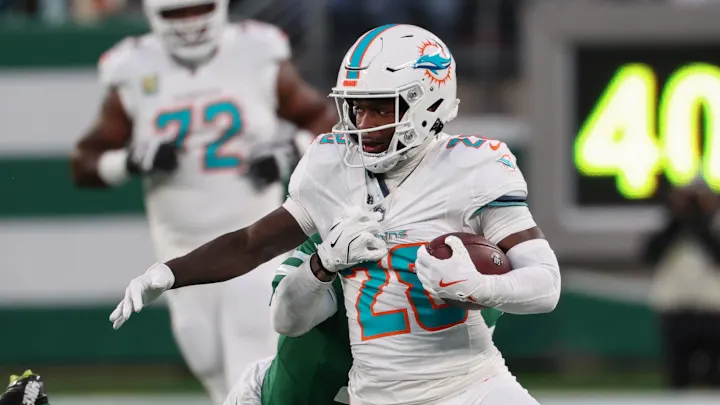
2025 Miami Dolphins Fantasy Preview Despite having the easiest schedule in the NFL in the last 25 years, the Miami Dolphins sputtered to an 8-9 record and missed the playoffs. Now, pressure may be mounting for GM Chris Grier and head coach Mike McDaniel, who must quickly rebuild the trenches on both sides and navigate injury and off-the-field woes. The chief concern for the Dolphins is keeping QB Tua Tagovailoa healthy. Tagovailoa has a well-chronicled concussion history and can ill afford to put himself in a position to take another big hit. Worse, a Dolphins’ offensive line that ranked 20th in pass protection also lost LT Terron Armstead, who retired. Tagovailoa has missed 3-plus games in four of his five seasons and ranked just 16th in fantasy points per game last season. There is too much risk to consider Tagovailoa anything more than an adequate fantasy QB2 with modest week-to-week streaming appeal. A popular breakout pick last summer, RB De’Von Achane stayed healthy and lived up to those lofty expectations. The second-year dynamo ranked 5th in PPR scoring and led all running backs in receptions (78) and touchdown grabs (6). Raheem Mostert departed in free agency, leaving Jaylen Wright and Alexander Mattison as the only competition for touches. Achane should be viewed as an elite fantasy option who will command a second-round price tag in redraft formats. Miami led the league with 401.3 yards of offense per game in 2023 but fell to 20th last year, averaging 75 fewer yards per contest. Injuries played a big part in that, as Jaylen Waddle missed a pair of games and Tyreek Hill battled a wrist injury all season. Now, Hill is rumored to be on the trade block after some bizarre social media posts and on domestic incident clouded his future. A healthy Hill is still one of the most dynamic weapons in football, but he’s a risky WR2 in fantasy. Waddle failed to accrue 100 targets for the first time in his career, resulting in his worst fantasy performance. There’s some rebound potential here, especially if Hill is absent. Waddle is an upside WR3 in PPR formats. Nick Westbrook-Ikhine will be a WR3 upgrade over Odell Beckham and Malik Washington, who slides down to this year’s WR4 role. At tight end, Jonnu Smith proved to be a savvy late-round target, finishing as the overall TE4 on a career-high 111 targets. We don’t expect Smith to repeat that production, but the Dolphins will see plenty of fantasy-friendly game scripts and return more-or-less intact. Smith is a solid second-tier TE1 to target in the middle rounds. Fantasy Grade: B- QB Tagovailoa, Tua, MIA [QB1] Tua Tagovailoa’s 2025 fantasy outlook hinges on health and efficiency in Miami’s high-octane offense. In 2024, he posted a league-best 72.9% completion rate, 2,867 yards, 19 TDs, and 7 INTs in 11 starts, with a 2.36-second time-to-throw and 5.1 air yards per attempt, showcasing quick, precise decision-making. However, his injury history—missing six games (concussion, hip)—makes him a high-risk QB2. There are also concerns about Hill’s status on the roster, which increases the risk. Tagovailoa adds little as a runner, which caps his upside. It’s hard to envision a path to top 12 numbers, making him a mid-range QB2. ADVICE: Risky QB2 that may have already peaked. RB Achane, De’Von, MIA [RB1] After a dynamic rookie season, De’Von Achane again was one of the most efficient fantasy options. Despite seeing a middling 59.1 percent opportunity share (24th), Achane finished as the RB6, averaging 17.6 PPR points per game. The main catalyst for that production came via his high-volume role in Miami’s passing attack. Achane was essentially the Dolphins’ WR3. He led all RBs in receptions (78), receiving yards (592), and TD grabs (6). Raheem Mostert is gone, and Miami didn’t add any real competition to reduce Achane’s touches. He looks primed to post another top-5 season in 2025. ADVICE: Elite pass-catching potential keeps Achane in top-5 fantasy territory. RB Mattison, Alexander, MIA [RB2] ADVICE: Mattison has averaged under four yards per carry in four consecutive seasons. He’s not taking carries away from De’Von Achane. He can, however, play in short-yardage or give Achane a breather. Mattison profiles as a middling handcuff in deeper leagues. RB Wright, Jaylen, MIA [RB3] Had his moments as a rookie, but Wright will compete with Alexander Mattison for backup duties. WR Hill, Tyreek, MIA [WR1] Last season, Hill started strong (7/130/1) but struggled midseason (48/571/3), hampered by wrist and foot injuries. He rebounded in Weeks 14 and 17 but ended weakly. His 11.8 yards per catch was a career low. Even in a down season (by his standards), Hill still ranked 16th in targets (122) and caught 81 balls for 959 yards and half a dozen scores. Quarterback woes were the biggest factor in the drop-off, but off-the-field concerns also hold down his potential. At 31, Hill’s 2024 decline ranks him as a mid-tier WR2, with his value tied to Tagovailoa’s health. ADVICE: Boom/Bust WR2 with a massive ceiling. WR Waddle, Jaylen, MIA [WR2] After Tyreek Hill joined Miami, Jaylen Waddle’s explosiveness grew, though his 2022 targets dropped to 117 from 141. He recorded 75 catches for 1,356 yards and eight touchdowns, averaging 18.1 yards per catch. In 2023, injuries limited him to 14 games, with 72 catches for 1,014 yards and four touchdowns, his lowest marks in three years. Last season, Waddle’s yards per catch fell to 12.8, with 58 catches and two touchdowns, underperforming in 10 of 15 starts. His best games (5/109, 8/144/1, 9/99) were at home. As a mid-tier WR3, Waddle’s high ceiling offers value in 2025 drafts. ADVICE: Declining output makes him a solid value, dependent on his QB staying healthy. WR Westbrook-Ikhine, Nick, MIA [WR3] Don’t overreact to last season’s gaudy TD numbers. NWI won’t get many targets as Miami’s WR3. WR Washington, Malik, MIA [WR4] Mike McDaniel tends not to incorporate his ancillary receivers into the weekly game plan often. Washington had some early offseason hype, but
2025 Buffalo Bills Fantasy Preview

2025 Buffalo Bills Fantasy Preview After ranking 9th in both passing and rushing last season, the 2025 Buffalo Bills return mostly intact. Most of Buffalo’s offseason changes came on the defensive side of the ball. They released Von Miller, traded Kaiir Elam, and added DE Joey Bosa. Additionally, the first three picks in the 2025 NFL Draft bolstered Sean McDermott’s defense. However, extensions for Josh Allen and Khalil Shakir assure that the Bills should remain a potent offense for years to come. Allen’s numbers dipped a bit in 2024. He had his lowest passing yards (3,731) and touchdown (28) output in five years. However, Allen ran for a dozen scores and finished as a top-3 fantasy quarterback for the fifth consecutive season. He remains an elite option and is one of the safest bets on draft day for fantasy managers willing to secure an elite signal caller early. RB James Cook posted his second-straight 1,000-yard rushing season and tied for the league lead with 16 rushing scores. His overall production was down from 2023, and he is now seeking a long-term extension as he enters the final year of his rookie deal. Seeing such a huge spike in one-year touchdowns and potentially missing offseason reps due to the contract impasse are concerns. But the Bills did not address running back in the draft, making Cook a strong RB2 with RB1 upside. Ray Davis chipped in 631 scrimmage yards and six scores in a secondary role. Depending on how the Cook contract situation plays out, Davis looks like a strong late-round value target. The Bills didn’t add any significant depth at wideout, ignoring the position until the 7th round. Fresh off his extension, Khalil Shakir looks secure as the No. 1 wideout. Shakir had the best season of his career and ranked 12th in the NFL with a 72.1 percent slot rate. But after Shakir, things are less predictable. Speedy Joshua Palmer’s three-year, $29 million deal indicates he is locked into the WR2 role and will act as Allen’s downfield playmaker. Amari Cooper is a free agent, freeing up more potential playing time for Keon Coleman. Curtis Samuel adds depth and could surpass Coleman if the second-year wideout doesn’t become more consistent. After a strong rookie showing, Dalton Kincaid fell off. He missed four games with a knee injury and wasn’t utilized downfield as much. Dawson Knox also remained involved, averaging a career-high 14.1 yards per reception. Kincaid still posted the 13th-best PFF grade for tight ends with more than 30 targets, so there’s reason to think Kincaid can be a borderline TE1 again if he remains healthy. Fantasy Grade: B QB Allen, Josh, BUF [QB1] Josh Allen’s numbers dipped in 2024, yet he still ranked inside the top-3 fantasy signal-callers for the fifth consecutive season and won an NFL MVP. That consistency puts Allen in elite company and is why he’s our top QB in 2025. After surpassing 4,000 passing yards for four straight seasons, Allen slipped to 3,731 with 28 scores last season. However, he supplemented that with elite rushing production, including 12 rushing scores. That dual-threat capability and tremendous durability make Allen one of the safest bets in fantasy. The Bills having a top-5 easiest schedule this year only cements Allen’s elite status. ADVICE: Elite option in every format worthy of an early selection. RB Cook, James, BUF [RB1] After never topping two rushing touchdowns in a season, James Cook exploded for a league-high (tied) 16 scores in 2024 en route to an overall RB8 finish. Cook topped 1,000 rushing yards for the second consecutive season, ranked 3rd in EPA (+40.1), and was top-12 in broken tackle rate (11.1 percent). Understandably, Cook is looking for some long-term security, but as long as he’s back in the lineup for the season opener, he remains a quality RB2 in a potent Buffalo offense that produced an NFL-best 32 rushing touchdowns last season. ADVICE: Last season’s TD output looks like an outlier, which could lead to Cook being overdrafted. RB Davis, Ray, BUF [RB2] In 2024, Ray Davis rushed for 442 yards (3.9 YPC) and three touchdowns on 113 carries, adding three receiving TDs (17 receptions, 5.9 PPG, PPR). His Week 18 start (15/64/1, 2/1/1) and Week 6 outburst (20/97, 3/55) show RB2 upside if James Cook (RB9, 5.2 YPC) misses time. At 5-8 and weighing 211 pounds, with a 4.52 40-yard dash, Davis’s 3.81 yards after contact (751 total) highlight his power. Buffalo was top 10 in rushing and led the NFL in rushing scores, so Davis should be on the fantasy radar as a potentially valuable reserve. ADVICE: Handcuff target who will occasionally post standalone flex numbers. RB Johnson, Ty, BUF [RB3] ADVICE: Buffalo ranked 8th with 28.9 rushes per game. Johnson did see 25 targets last year and averaged over five yards per carry, but he is squarely behind James Cook and Ray Davis in the touch pecking order. WR Shakir, Khalil, BUF [WR1] In his third season, Khalil Shakir topped the Bills’ receivers with 76 receptions, 821 yards, and four touchdowns on 100 targets, ranking 37th in PPR wide receiver scoring (182.5 points). His standout games (nine catches for 107 yards and five catches for 106 yards with a touchdown) showed reliability over explosive plays, surpassing 10 fantasy points in 14 of 18 starts, making him a steady flex option in three-receiver leagues. With seven or fewer targets in 73.7 percent of games, Shakir’s 78.3 percent catch rate highlighted his efficiency. His four-year, $60.2 million extension in February 2025 underscores Buffalo’s confidence in his growth. ADVICE: Reliable WR3 with 1,000-yard potential. WR Palmer, Joshua, BUF [WR2] In 2024, Joshua Palmer underwhelmed in the Chargers’ run-first attack. Palmer had three standout games (4 catches for 63 yards; 2 for 63 yards, 1 TD; 6 for 78 yards) but saw four or fewer targets in 10 of 15 games. His 15.3 yards per catch (15.0 in 2023) highlights his deep-threat role, unlike his 2022 career highs (72 catches,
Fantasy Football Injury Report

Summer is here, which means fantasy football draft season is just around the corner. Winter seems like a long time ago, and that means football fanatics have likely forgotten about injuries that could impact players’ status on draft day. FullTime‘s Fantasy Football Injury Report catches you up on the latest injury news ahead of redraft season. Some of these players had offseason ‘clean-up’ procedures. Meanwhile, others were hurt late in 2024, and we may have forgotten about those injuries. Here is the latest fantasy football injury report and how those ailments may impact 2025 drafts. Quarterbacks Dak Prescott (Dallas Cowboys) – A hamstring injury cost Prescott half of the 2024 season. However, he was on the field during OTAS, indicating that he is fully recovered. A fully healthy Prescott has a ton of sleeper appeal as a borderline QB1 who can be drafted late. Trevor Lawrence (Jacksonville Jaguars) – Lawrence had surgery on his non-throwing AC joint in December and dealt with a concussion. He participated in light duty while wearing an arm sleeve during OTAs. Reports indicate Lawrence is progressing well and will be a full participant in the preseason. Anthony Richardson (Indianapolis Colts) – One of last season’s most-hyped players, it’s been a steep and sudden decline for Anthony Richardson. From his erratic passing to the latest news that he aggravated the AC joint injury that limited his 2024 season, Richardson could lose his starting job to Daniel Jones. Richardson is currently expected to be back and compete with Jones in camp, but is barely draftable in single-QB formats. Deshaun Watson (Cleveland Browns) – Recovering from a torn Achilles, Watson is out of his walking boot and was throwing on the sidelines during OTAs. These are positive developments, as Watson appears to be ahead of pace in his recovery and keeping him away from massages. Still, with Joe Flacco and two rookies, the Browns won’t be in any hurry to rush him back into action. Running Backs Christian McCaffrey (San Francisco 49ers) – CMC has ‘zero restrictions’ in San Francisco’s offseason program. That’s great news for a player who suffered through an injury-marred 2024 campaign. Fantasy managers know the risk. When healthy, McCaffrey is at or near the top of the RB leaderboards. But the frequent injuries can be debilitating for fantasy rosters. One of the biggest risk/reward picks of the year. Joe Mixon (Houston Texans) – Mixon sat out OTAs while sporting a walking boot. The undiagnosed injury was listed as “minor,” but it is a worrisome development. Additionally, the signing of Nick Chubb is another blow to Mixon’s fantasy appeal. Earlier this offseason, Mixon was a strong RB2 value. Now, he is a considerably riskier investment. Jonathon Brooks (Carolina Panthers) – The Panthers placed Brooks (knee) on the season-ending PUP list on May 8. After only nine carries in his rookie campaign, the much-heralded running back will miss his sophomore season. Brooks is barely relevant in dynasty leagues and has no redraft value. Wide Receivers Amon-Ra St. Brown (Detroit Lions) – One of the league’s best wideouts, St. Brown was sidelined during OTAs after undergoing a clean-up procedure on his right knee during the offseason. The surgery was considered minor and isn’t expected to impact his 2025 availability. Hopefully, it’s just procedural caution on the Lions’ part. Tyreek Hill (Miami Dolphins) – The wrist injury that lingered for most of last season is no longer considered a factor. However, it was a rough offseason for Hill, who remains a somewhat risky WR2 with top-5 upside if he and Tua Tagovailoa can stay off the fantasy football injury report. Chris Godwin (Tampa Bay Buccaneers) – Godwin is working his way back from his season-ending Week 7 ankle injury. GM Jason Licht indicated that he expects Godwin to be on the field for Week 1. Stefon Diggs (New England Patriots) – Diggs was at OTAs, which bodes well for his 2025 availability. He tore his ACL in October but is already back participating in speedboat practice activities. He’s got a decent shot at being ready for Week 1. David Bell (Cleveland Browns) – Bell missed most of 2024 after suffering a season-ending dislocated hip in Week 2. He should be back to compete for the WR4 role in the preseason. Expected to Miss Time in 2025 Brandon Aiyuk (San Francisco 49ers) – Head coach Kyle Shanahan indicated that Aiyuk (knee) is a candidate to open the season on the PUP list. If that happens, he’ll miss at least the first four games. Aiyuk tore his ACL in late October and won’t participate in the preseason. He’s a risk/reward target in the middle rounds. Christian Watson (Green Bay Packers) – The oft-injured Watson tore his ACL. However, that latest injury occurred in Week 18. Even an optimistic recovery timetable would see Watson missing at least half of this season. The addition of first-round rookie WR Matthew Golden tells us all we need to know about Watson’s (lack of) 2025 potential. Tank Dell (Houston Texans) – As a reminder, Dell is not expected to play in 2025. He suffered a devastating leg injury in Week 16. Dell dislocated his knee, tore his ACL, MCL, and LCL, and also injured his meniscus. The Texans added two Iowa State wide receivers on Day Two, all but signaling that Dell won’t play in 2025. Trent Taylor (San Francisco 49ers) – Taylor was placed on season-ending IR Moose Muhammad III (Carolina Panthers) – The undrafted free agent out of Texas A&M, Muhammad was waived with an injury designation. He went unclaimed on waivers and reverted to Carolina’s injured reserve. Tight Ends Kyle Pitts (Atlanta Falcons) – Pitts missed OTAs with a foot injury but has been present in the building for team meetings. He will return for training camp. Colston Loveland (Chicago Bears) – Chicago’s first-round rookie had offseason shoulder surgery, and it’s unknown if he will be fully ready to participate in camp when it opens. Taysom Hill (New Orleans Saints) –
FFWC High-Stakes Strategy (2025)

Fantasy Football World Championship (FFWC) Strategy for 2025: A Comprehensive Guide The Fantasy Football World Championship (FFWC) is one of the most prestigious high-stakes fantasy football competitions, attracting top-tier players who compete for significant cash prizes and bragging rights. With the 2025 fantasy football season here, crafting a winning strategy requires a blend of preparation, adaptability, and a deep understanding of the FFWC’s unique format. This article delves into detailed strategies for dominating your FFWC drafts and in-season management, leveraging insights from industry experts, recent trends, and the evolving landscape of fantasy football in 2025. Understanding the FFWC Format The FFWC is a high-stakes fantasy football competition with entry fees that can reach four or five figures, making every decision critical. The format typically includes: Scoring: Full-point PPR (points per reception), which emphasizes players with high target volumes, particularly wide receivers and pass-catching running backs. Starting Lineups: 1 QB, 2 RBs, 3 WRs, 1 TE, 1 FLEX (RB/WR/TE), 1 DST, and no kickers. This setup prioritizes depth at skill positions. Draft Structure: 18-round drafts with no in-draft trades, requiring precise player selection and roster construction. Roster Management: Weekly Free Agent Acquisition Budget (FAAB) and First-Come-First-Serve (FCFS) systems for waiver wire pickups. Prizes: League prizes of $500 per league and a grand prize exceeding $150,000, with the Circa Fantasy Football World Championships offering additional live event incentives in Las Vegas from August 10 to September 6, 2025. The FFWC’s high-stakes nature and competitive player pool demand a strategic approach that balances risk and reward while capitalizing on the latest trends in the NFL and fantasy football. Key Trends Shaping 2025 FFWC Strategy Fantasy football in 2025 is markedly different from previous years, driven by shifts in NFL offensive schemes and player usage. Here are the critical trends to consider: The Rise of Dual-Threat Quarterbacks: The 2025 season is described as the “golden age of elite fantasy QBs.” Players like Jalen Hurts, Josh Allen, Lamar Jackson, Jayden Daniels, and Joe Burrow (when healthy) are game-changers due to their rushing upside and passing production. These quarterbacks can single-handedly tilt weekly matchups, making them high-priority targets in FFWC drafts. Evolving Running Back Committees: Backfield committees are increasingly common, with teams splitting carries among multiple running backs. This unpredictability requires drafters to prioritize running backs with defined roles or those in high-volume offenses. Players like James Conner, who has consistently finished as a top-15 PPR running back, remain valuable despite committee concerns. Wide Receiver Depth and PPR Value: The FFWC’s PPR scoring amplifies the value of wide receivers who command high target shares. Players like Calvin Ridley and Jakobi Meyers, who have posted strong PPR numbers despite inconsistent quarterback play, are excellent mid-round targets. The depth at this position allows for flexible draft strategies. Tight End Volatility: The tight end position remains the shallowest in fantasy football, with elite options like Brock Bowers and Trey McBride offering consistency but requiring high draft capital. The gap between top tight ends and the TE12 is smaller than in previous years, making it less critical to invest early in this position. Rookie Impact: The 2025 rookie class is deep at running back and tight end but underwhelming at quarterback. Players like Ohio State’s Quinshon Judkins are emerging as potential RB1s in dynasty and redraft formats, making them key targets for FFWC managers looking for breakout stars. Draft Strategy for FFWC 2025 Early Rounds (1-3): Anchor Your Roster The first three rounds are critical for securing elite talent that can carry your team. Given the FFWC’s PPR scoring and roster requirements, prioritize players who offer high floors and ceilings. Quarterback Strategy: While dual-threat quarterbacks are tempting, the depth at this position in 2025 allows you to wait until rounds 3-5 for players like Jayden Daniels or Joe Burrow. Instead, focus on elite running backs or wide receivers early. If you do target a quarterback, Jalen Hurts or Josh Allen are worth considering for their rushing upside. Running Back Priority: Despite the rise of committees, workhorse running backs remain valuable. Target players like Christian McCaffrey, Breece Hall, or Bijan Robinson, who are likely to see heavy workloads in PPR-friendly offenses. If you miss out on a top-tier RB, consider James Conner in the mid-rounds, who offers RB1 production at a discount (ADP: 54.8, RB19). Wide Receiver Dominance: The PPR format makes wide receivers like CeeDee Lamb, Tyreek Hill, or Justin Jefferson prime first-round targets. Their high target volumes ensure consistent points. Pairing an elite wide receiver with a top running back creates a balanced foundation. Tight End Decision: Avoid reaching for tight ends like Brock Bowers or Trey McBride in the early rounds. The opportunity cost is too high when you can secure elite RBs or WRs. Instead, target value tight ends like Evan Engram or David Njoku later. Mid Rounds (4-8): Build Depth and Value The mid-rounds are where you separate yourself in FFWC drafts by finding players who outperform their ADP. Target High-Upside Running Backs: Look for running backs in committee situations with potential for breakout roles. Examples include players like Zamir White or Tyjae Spears, who could see increased touches in favorable offenses. James Conner, as mentioned, is a steal at RB25 if he falls. Wide Receiver Bargains: Players like Calvin Ridley (ADP: 7.09) and Jakobi Meyers (ADP: 8.03) are ideal mid-round targets. Ridley’s 1,000-yard seasons and Meyers’ consistent top-30 PPR production make them reliable WR2/3 options with upside. Quarterback Value: If you haven’t drafted a quarterback, this is the range to target players like Anthony Richardson or Kyler Murray, who offer dual-threat potential at a lower cost than the elite tier. Tight End Options: If you bypass early tight ends, look for value in players like Jake Ferguson or Kyle Pitts, who have high ceilings but come at a lower ADP. The tight end position’s volatility makes it viable to wait and still secure a starter. Late Rounds (9-18): Upside and Handcuffs The later rounds are for high-upside picks, handcuffs, and
2025 Fantasy Football Rankings

Fantasy football draft season is just around the corner. The first step in securing a championship is accurate and dependable rankings. FullTime Fantasy‘s 2025 Fantasy football rankings and projections are now LIVE! These aren’t just any fantasy football rankings. FullTime Fantasy has won numerous awards, including Jody Smith taking down Fantasy Pros’ Most Accurate Expert award. Our legacy FFToolbox site is your one-stop home for all things fantasy football. This includes rankings customizable for your league settings, which include IDP and kick returners! It also has tons of useful tools like scheduling grid, strength of schedule, outlooks for all 32 teams, and much more! 2025 Fantasy Football Rankings These rankings will be continuously updated. The default scoring is 1QB, full PPR. Quarterbacks The QB position is deep, with 20 or more viable options to choose from. While landing one of the top-tier dual-threat options is a great plan, that depth means it might be wiser to load up on position depth early and land a quality start in the middle-to-late rounds. Running Backs Mark Morrison foretold of everything being cyclical in fantasy football with his 1996 banger Return of the Mack Backs. Running backs dominate the first two rounds of most fantasy drafts, with good reason. Our No. 1 overall player and six of the top-10 are running backs. Wide Receivers Nothing wrong with sticking to the recent trend of attacking elite wideouts early and often. Wide receivers tend to stay healthier, and the recent infusion of talented pass-catchers makes them an inviting target in the early rounds. Tight Ends Brock Bowers and Trey McBride are going to be expensive. We prefer McBride, but generally advocate for loading up on RB and WR early and waiting until the middle rounds to address tight end. GET THE UPDATES! Turn on your email notifications below for Breaking Fantasy news & real-time draft kit updates! Like and share our new Facebook page! Be sure to pay attention to our giveaways for your shot at some sweet prizes!
2025 Committee Backfields
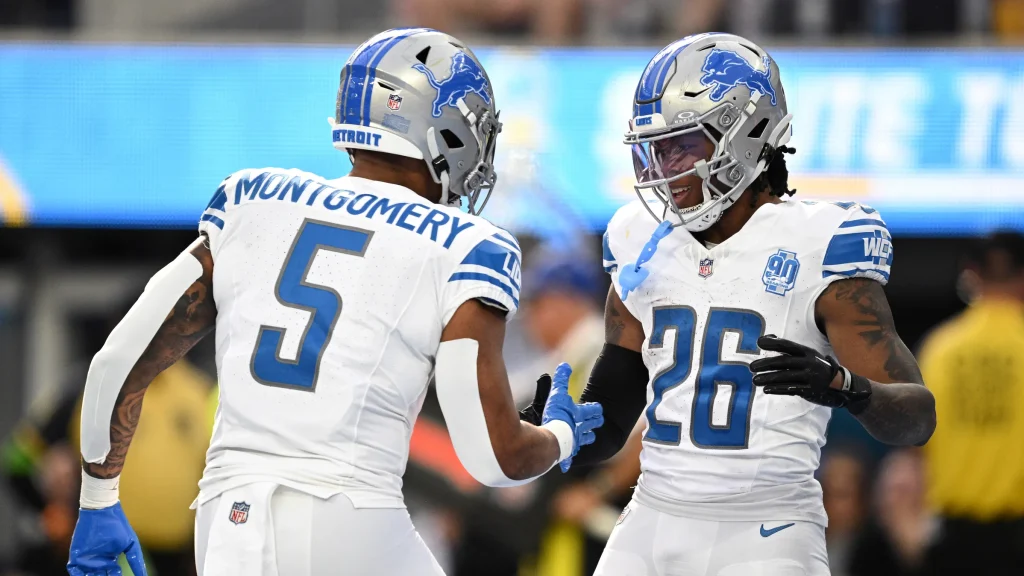
2025 Committee Backfields is a special feature that will be available in the 2025 Football Diehards magazine and was written by guest analyst Andrew Hall. Be sure to grab your copy on newsstands today! 2025 Committee Backfields by Andrew Hall “Change is the only constant.” – Heraclitus If you’ve read anything I’ve written before (and odds are you haven’t), you’d know that I hate making predictions on future events. I get that it’s part of the job as a fantasy analyst, but I think it’s the part of the job that every analyst enjoys the least. Not only are you wrong more often than you’re right, even when you end up being right, people will just tell you that you got lucky. This is why most fantasy analysts are still fantasy analysts and not retired on a beach somewhere sipping Mai-Tais after winning the lottery. All that aside, I do like to look for trends with data and try to use whatever limited information we have available to try to extrapolate what I think might happen next. If something has happened 10 times in the past, there’s a good chance of it happening an 11th time. If it’s only ever happened once, predicting exactly when it will happen a second time will be risky. This is all a long-winded way of saying that I really prefer analyzing situations and using that analysis to make the best guess that I can about what will come next. For me, one of the hardest things to predict is which teams will use a running back by committee (RBBC) each year. Not only is it almost impossible to predict injuries (which can force teams into a situation no one predicted), but there are also so many different variables that change from one season to the next. Teams get new coaches, they change offensive schemes, they add new players, etc. Very little, if anything at all, stays the same year over year. That’s where that phrase from the Greek philosopher Heraclitus comes in. If the only constant is change, then nothing truly stays the same. Our job is to take what data we have and see what we can learn from it. Therefore, the best way for me to predict what will happen with the RBBC landscape in 2025 is to look back at last year and see if I can find anything that might be “sticky” to help inform my opinions. All this data is open to interpretation, but follow along as I walk you through my thought process to try to decipher what 2025 will hold. Looking at the RBBC Landscape in 2024 When evaluating the running back by committee options for last year, I decided to look at three main stats to break things down. The first was that both running backs needed to have at least 110 carries on the season, just under six and a half carries per game. Anything lower and I don’t consider it a true committee, but more of a spot use scenario. The only team that didn’t have a single RB meet this threshold was Cleveland, which had both Jerome Ford and Nick Chubb receive 104 and 102 carries, respectively. Chubb’s injuries really made a large impact on their usage, and the low volume could lead to questionable results, so I excluded them from the study. The remaining list included 41 players who had at least 110 carries. Of those 41 players, 21 were the only players on their team to make the list. This means that they didn’t classify as a committee as they were the dominant back on their team. The remaining 20 players played for one of 10 teams, all of which were true committees for these purposes. Once we had the list, I wanted to look at the total snap share each of these backs got for the year. The lowest snap share at RB that any of the 20 backs got was 24%. This means that each RB listed was used about a quarter of the time, minimum, making them a part of a true committee. I think we’re on to something here. Last, I made sure that the players who got the carries did something with them, so I looked at fantasy points per game for each back on the list. I used PPR scoring, and of the 10 committees I identified, all 20 RBs had 5.8 PPR points per game or more on average. This isn’t a lot of points, but that kind of output could be flex-worthy in some weeks. So, with all that, here’s how things broke down for the 10 committee backfields from last year. Tier 1 No surprise, but the Detroit Lions had the best-rated RBBC last year. They deployed Jahmyr Gibbs and David Montgomery to the tune of 250 and 185 attempts, respectively. Gibbs finished as the RB1 in PPR scoring while Montgomery finished as RB18. No other tandem had both players finish in the top 20 in scoring. Both Gibbs and Montgomery averaged over 15 PPG in PPR scoring, making them reliable starters week in and week out. If you had either of these players on your roster, you were probably happy with their output. The Tampa Bay Buccaneers had a dynamic duo of Bucky Irving and Rachaad White run their committee in 2024. Irving got 207 carries to White’s 144, but White saw a higher snap percentage than Irving. This would lead us to believe that White was in the lineup more, but Irving was more likely to get the ball when he was in the lineup. The two averaged 14.4 and 12.5 PPR points per game, finishing as RB13 and RB22, respectively. For all the trash talk about White in fantasy circles, he was still a solid RB2 most weeks. Granted, Irving was better, but White was not terrible if you started him. Lastly, the Seattle Seahawks utilized Zach Charbonnet and Kenneth Walker III as their committee at running back.
Running Back Regression After Leading the NFL in Rushing
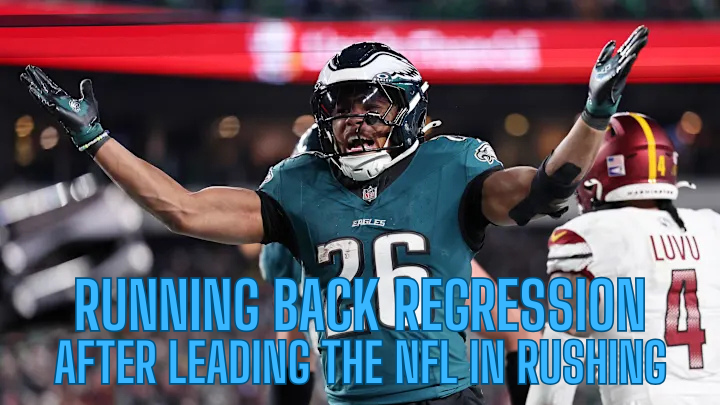
Running Back Regression After Leading the NFL in Rushing Leading the NFL in rushing is a career highlight for most running backs. It also leads to banner fantasy football totals. However, most RBs see a precipitous decline in production the season after topping the league in rushing yards. This running back regression after leading the NFL in rushing has happened in 22 of the past 25 seasons and paints a worrisome fantasy outlook for the league’s reigning rushing king. Many different factors can lead to a sudden dropoff. As my friend Gary Davenport first divulged in his Curse of 370 and revisited for 2025, heavy usage is a key contributor to predicting running back regression. Other variables like coaching changes, strength of schedule, supporting cast, and age also play a role. Before I take a deep dive back through the past 25 seasons, let’s recap all the running backs that have led the NFL in rushing this century and find some key takeaways. NFL Rushing Leaders 2000-2025 Over the past 25 seasons, 20 different running backs led the NFL in rushing yards. Only LaDainian Tomlinson, Adrian Peterson, Ezekiel Elliott, and Derrick Henry have done it more than once. You could also doff your proverbial cap to Edgerrin James, who ascended the leaderboard in 1999, becoming the first player since Eric Dickerson (1983-1984) to lead the league in his first two pro campaigns. In all, league-leading backs averaged 340 carries for 1,716 rushing yards (4.98 yards per carry) and scored 15.7 total touchdowns. That averaged out to just under 349 fantasy points (PPR), or 21.9 points per game. The splits were 15 rushing champs from the AFC, while 10 represented the NFC. The NFC East produced five, while the NFC South is the only division that has not had an NFL rushing champ in the last 25 years, nor has there ever been one from that division. The Saints’ George Rogers led the league with 1,674 yards back in 1981, but New Orleans was then part of the NFC West. Leading the league in rushing is more than an individual honor. Coaching, schemes, quarterbacking, and the offensive line all play a pivotal role. There are also numerous other elements that play a role in a team’s ability to manufacture a rushing leader. Contributing Factors for Success Health One of the most important factors for posting big numbers is staying healthy. From 2000-2015, no running back who led the league in rushing missed a single game. Even the backs who missed one were rested by their team in the season finale. Derrick Henry is the only running back in the last 25 years to lead the league in rushing but miss a game due to injury. Henry missed Week 16 of the 2019 season with a hamstring injury and returned to action in the season finale to rush for a season-high 211 yards to top the league. Every other running back in the past 25 seasons to lead the league in rushing has stayed healthy for every game or sat out the regular-season finale to rest for the playoffs. Winning Team Speaking of playoffs, teams that produced the leading rusher averaged 9.96 wins versus 6.2 losses, making the postseason in 18 of the 25 seasons (72%). However, only three of those teams made the Super Bowl, and the only squad to win is the reigning champions, the 2024 Philadelphia Eagles. Having a winning record also leads to more friendly game scripts for the rushing attack. Teams nursing second-half leads tend to rely on their lead backs to grind down the clock. Age The wear and tear that NFL running backs accumulate takes a toll. 20 of the 25 (80%) rushing leaders were under 28 entering the season in which they finished first. Looking at the averages, RBs had a mean age of 25.4 in those seasons. They also averaged 4.6 years of experience. Only two backs (Curtis Martin in 2004, Adrian Peterson in 2015) were older than 28. No rusher who was 29 when the season started has led the NFL in rushing since Barry Sanders did it back in 1997. NFL RUSHING LEADER AGE DISTRIBUTION AGE OCCURANCES RATE 21-23 6 24% 24-26 10 40% 27-28 7 28% 29+ 2 8% Skill Set & Fantasy Production Volume is king in fantasy, and rushers who accumulate enough touches to post elite numbers are typically three-down workhorses. 24 of the 25 RBs posted top-5 fantasy finishes. The only back who did not, Adrian Peterson in 2008, caught only 21 passes for 125 yards in 16 games. In the other 24 seasons tracked, running backs averaged 44 receptions annually. Derrick Henry is an outlier, but part of the formula for RB success in today’s high-octane NFL is to stay on the field on passing downs. However, the inability to do just that, stay on the field, is one of the main reasons we see noteworthy running back regression the year after they lead the league in rushing yards. Immediate Regression in the Next Season While winning a rushing crown is a notable accomplishment for a pro running back, there is usually a staggering dropoff in play the following season. 88% have seen an immediate dip in effectiveness, and it is usually a significant decline. Only three running backs since the 2000 season have posted better fantasy numbers the year after they led the NFL in rushing yards. As for the other 22, they averaged a 36.8% decline in fantasy points the following season. Notable Declines Running backs have always been a hot commodity on draft day. Particularly three-down workhorse backs coming off a rushing crown who finished the previous campaign at an average rank of RB 2.76. But fantasy draft history is loaded with first-round RB busts who stumbled after they broke out the previous season. Running Backs who led the league in rushing in 2000-2024 finished as the RB 2.7 in PPR leagues, but plummeted to an average of RB22.3 the following season.
High-Stakes Fantasy Football Strategy
High-Stakes Fantasy Football Strategy: Building a Champion By Adam Krautwurst Fantasy football in 2025 is a different beast than it was four to five years ago. The explosion of dual-threat quarterbacks, evolving backfield committees, and the increasing unpredictability of weekly