
Fantasy Baseball Auction Strategy
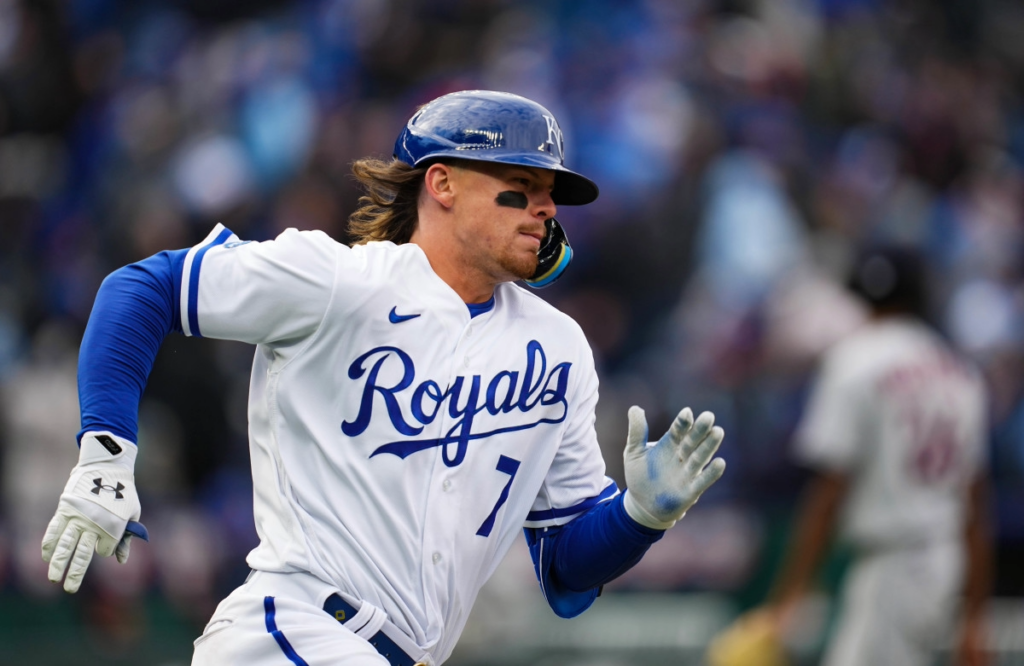
Fantasy Baseball Auction Strategy Shawn Childs is a legend in the fantasy baseball world and his advice is invaluable. A member of the NFBC Hall of Fame, Shawn has several top-5 finishes in the National Fantasy Baseball Championship as well as five NFBC auction championship titles under his belt. He also boasts several prominent in the high-stakes market and multiple huge DFS wins. Shawn’s process and evaluation are among the most thorough in the sport and his exclusive FPGscore metric is changing the game. This 2024 Fantasy Baseball Auction Strategy and insight are courtesy of the brilliant mind of one of the sport’s best. This Fantasy Baseball Auction Strategy is courtesy of Shawn Childs. Read Shawn’s expert fantasy analysis at his Substack. Also, check out Shawn’s detailed 2024 Fantasy Baseball Strategy Guide for the most thorough tips and advice that you will find anywhere. Auction Overview The fantasy baseball market has many formats and league sizes, especially in auctions. I’ve played in American and National League formats with 12 teams plus 15-team mixed leagues. Each setup could also have keepers (players held for more than one year) or trading, which changes all players’ value during the auction. Over the last 20+ seasons, I’ve played in the high-stakes fantasy market where there is no trading, which puts pressure on a fantasy manager to develop a winning plan before the auction. When doing an auction league with no trading, a fantasy manager has a small margin for error. No other team will be knocking on your door looking to take your third closer off your hands via a trade. If your roster is out of balance (strong in some categories and weak in others), you can’t trade hitting for pitching or even speed for saves. An auction can be won in many different ways, but many managers can lose the battle during the auction due to a questionable game plan or even a lack of foresight. Every year, the player pool will change slightly. The goal of a manager is to evaluate the inventory and develop a strategy that can be executed at the draft table. If I come away with enough pieces to the puzzle, I can manage my way to a championship. Whatever game plan I decide to use, I must be ready to adjust if I don’t get my key players. A fantasy manager can roster any player they want in an auction, but it comes with a price. In most baseball auction leagues, each team starts with $260 to buy 14 hitters and nine pitchers. The goal is to accumulate the most league points in five hitting (batting average, runs, home runs, RBIs, and steals) and five pitching (wins, ERA, WHIP, strikeouts, and saves) categories. In a 12-team league, a first-place finish in a category would be worth 12 points, second place is 11 points, and so on until reaching 12th place (one point). The winner of each league is determined by adding up all 10 categories. Calling Out Players to Improve Your Team-Building Chances A common mistake fantasy managers make is hoping the players they want don’t get called out early. It sounds good in principle, but the problem is that all the other good players are coming off the board while I sit back, holding my money. If I wait and miss on my targeted players, I will have fewer options to build my team. Getting my key players called out as quickly as possible is essential. For example, if I want a player in the auction and believe he is the key to building my foundation, I would like to call him out on my first opportunity. By doing this, I find out how much he will cost (higher or lower than my predicted price point) or if I need to start looking for someone else to develop my team around. The quicker I know where I stand on critical players, the better my chance of executing my plan or adjusting on the fly. For example, I wanted to build my team around Ronald Acuna, and I believed he could repeat a good portion of his 2023 stats (.337/149/41/106/73) with a target value of $55. If I miss on him, I will need to find another player with a step down in overall expectations. I should have a secondary plan to shift to another player with a similar skill set with less upside, but I would then save some of my spending budget. In this example, my next tier for power and speed could be Julio Rodriguez. If Acuna gets called out early and sells for more than I’m willing to pay, Rodriguez would be attainable if his salary falls within my expected budget and his targeted salary. Suppose Rodriguez gets called out first, and someone buys him for $41 while I sit on Acuna as my first key player. In that case, I will have a further drop-off in the player pool if Acuna is purchased by another manager above my budgeted salary target. The situation worsens if many top players get called out before Acuna, forcing me to shove all in, no matter the cost, or revamp the foundation of my build on the fly. This freelancing style could lead to an imbalance in roster construction in a non-trading format where a trade can’t fix a shortfall in a category. In this example, a detour off of Acuna may push me to Freddie Freeman, putting me in a weaker position in speed but a potentially high floor and ceiling in batting average. This decision would force me to find stolen bases differently and potentially look for another source of high-end power. If the drop-off from Acuna led me to Bobby Witt, I would set a high foundation in steals with 30+ home run power but only a neutral option for batting average. I would then focus on landing another high-average bat with one of my next two core hitters. Again,
Fantasy Baseball Strategy Guide

Fantasy Baseball Strategy Guide Shawn Childs is a legend in the fantasy baseball world and his advice is invaluable. A member of the NFBC Hall of Fame, Shawn has several top-5 finishes in the National Fantasy Baseball Championship as well as five NFBC auction championship titles under his belt. He also boasts several prominent in the high-stakes market and multiple huge DFS wins. Shawn’s process and evaluation are among the most thorough in the sport and his exclusive FPGscore metric is changing the game. This 2024 Fantasy Baseball Strategy Guide and insight are courtesy of the brilliant mind of one of the sport’s best. This Fantasy Baseball Strategy Guide is courtesy of Shawn Childs. Read Shawn’s expert fantasy analysis at his Substack. Fantasy Baseball Basics Fantasy baseball is a great game, especially for sports fans who love to watch baseball. A season covers about 180 days or about 26 weeks. Most of my experience in the fantasy baseball market has come in rotisserie-style leagues in the high-stakes market with no trading. Most formats have 10 categories to earn league points, with five for batters and five for pitchers. Roto Categories Batting Average (BA) – Each team adds up their total hits divided by at-bats by their starting hitters to create their overall team batting average. If you have the highest batting average in your league, your team earns first-place points in this category. (Note: The number of teams in each league or competition determines league points. For example, if there are 12 teams in a league, first place is worth 12 points. Second place is worth 11 points, and so on, with the last-place team earning only one point). In a 12-team league, fantasy managers trying to finish in the top 20% in batting average should set a goal of .2630 based on the high-stakes market results in 2023 (2,460 teams). Runs (R) – This is the total of all runs scored by the starting hitters on your team. The goal for runs should be about 1,125 runs in 12-team leagues or 80 runs per player in formats with 14 offensive players. Homeruns (HR) – Each team adds up the number of home runs by their starting hitters. A fantasy manager needed over 320 home runs to finish in the top three in the home run category in 12-team leagues (about 23 home runs per batter). Runs Batted In (RBI) – This is the total of all runs driven in by your starting lineup. In a 12-team league, the target number should be about 1,100 RBIs (about 79 RBIs per batter). Stolen Bases (SB) – Each team adds up the number of steals by their starting players. In 2022, a fantasy manager needed 134 steals to finish in the top 20% or nine steals per hitter. The change in the size of bases, pitch clock, and only two throws to a base led to a spike in stolen bases. The new target for steals for 2024 is 198 to finish in the top 20% (14 per hitter). Wins (W) – This is the total number of wins by your fantasy pitching staff (only players in the starting lineup). Typically, I try to manage my team to get enough starts in the year to earn four wins per week, 104 wins over a 26-week season. In 2023, 94 wins in the high-stakes market placed in the top 20%. Earned Run Average (ERA) – Each team adds up the number of earned runs allowed by their pitching staff divided by the total number of innings pitched times nine innings to determine their team ERA. The goal is to have the lowest ERA in the league. A fantasy team needed an ERA of 3.718 to finish in the top 20%. I typically use a 3.50 as my ERA target in a 12-team format. Walks + Hits/Innings Pitched (WHIP) – This is the trickiest stat for new fantasy managers to get a handle on. WHIP is a way to get the value of each pitcher’s skill set. All hits allowed are added to the total number of walks allowed divided by the total number of innings pitched by your starting pitching staff to come up with each team’s WHIP. The lowest WHIP earns the most league points. A fantasy manager needed a whip of 1.194 in 2023 in 12-team leagues to finish in the top 20%. Strikeouts (K) – Each team adds up the strikeouts from the pitchers in their starting lineup each week. Some pitchers have posted impressive strikeout totals over the last few seasons, raising the bar to compete in this category. In 12-team formats, a fantasy team needed 1,454 strikeouts to finish in the top 20% last year. Saves (SV) – Each team adds up the total number of saves by their pitching staff to compete in this category. A fantasy team will need about 78 saves to be competitive in saves in 12-team leagues. League Structure A standard 12-team Roto league will consist of about 30 rounds. Each team selects a player in each round while filling in their starting line-up, which includes 14 hitters and nine pitchers. The 14 batters consist of two catchers, one first baseman, one second baseman, one shortstop, one third baseman, one middle infielder (second base or shortstop), one corner infielder (first base or third base), five outfielders, and one utility (any batter). Most fantasy managers will draft seven starting pitchers and two closers (pitchers who pitch in close games that earn saves) for their starting pitching lineup. The seven bench spots can consist of any players you desire. In 12-team leagues, having a couple of extra starters and a third pitcher with a chance at saves would make sense. The last four bench slots could look like this: one upside young player with future playing time, one backup outfielder, one backup middle infielder, and one backup corner infielder. Player Pool Once a fantasy manager has a feel for each category on the
2024 San Francisco Giants Preview
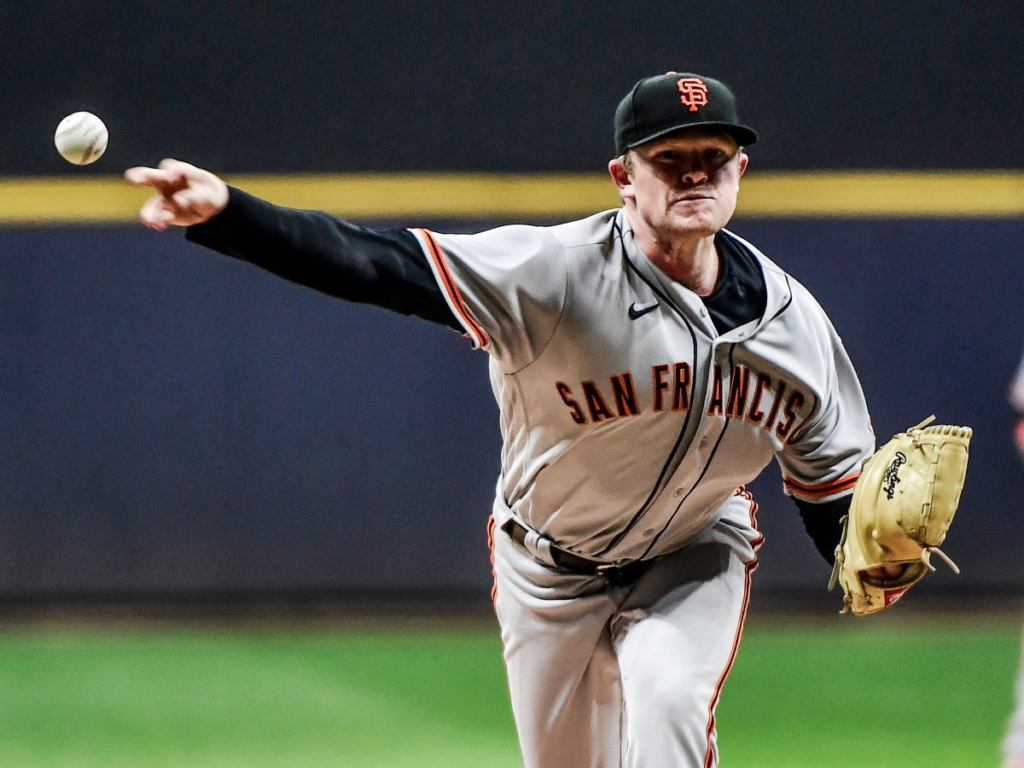
2024 San Francisco Giants Preview Shawn Childs is a legend in the fantasy baseball world and his advice is invaluable. A member of the NFBC Hall of Fame, Shawn has several top-5 finishes in the National Fantasy Baseball Championship as


2024 San Diego Padres Preview

2024 San Diego Preview Shawn Childs is a legend in the fantasy baseball world and his advice is invaluable. A member of the NFBC Hall of Fame, Shawn has several top-5 finishes in the National Fantasy Baseball Championship as well

2024 Los Angeles Dodgers Preview

2024 Los Angeles Dodgers Preview Shawn Childs is a legend in the fantasy baseball world and his advice is invaluable. A member of the NFBC Hall of Fame, Shawn has several top-5 finishes in the National Fantasy Baseball Championship as

2024 Colorado Rockies Preview

2024 Colorado Rockies Shawn Childs is a legend in the fantasy baseball world and his advice is invaluable. A member of the NFBC Hall of Fame, Shawn has several top-5 finishes in the National Fantasy Baseball Championship as well as five NFBC auction championship titles under his belt. He also boasts several prominent in the high-stakes market and multiple huge DFS wins. Shawn’s process and evaluation are among the most thorough in the sport and his exclusive FPGscore metric is changing the game. This 2024 team preview and insight are courtesy of the brilliant mind of one of the sport’s best. This 2024 Colorado Rockies Preview is courtesy of Shawn Childs. Read Shawn’s expert fantasy analysis at his Substack. The Rockies have five consecutive losing seasons while being miles away from the Dodgers in the NL West. They finished 168.5 games out of first place over this span (43 and 41 in 2022 and 2023). Colorado has five playoff appearances in the team’s 31-year history. In their only trip to the World Series, the Boston Red Sox swept them in four games in 2007. Colorado had the worst ERA (5.67) in baseball. They allowed the most hits (1,599), the second-most home runs (234), and the least strikeouts (1,129). Their bullpen had 31 wins, 33 losses, and 32 saves over 647.0 innings with a 5.41 ERA (30th) and 596 strikeouts. The Rockies finished 18th runs (721), 26th in home runs (163), and 20th in RBIs (685). They stole 76 bases on 101 attempts (75.2%). In the offseason, they signed C Jacob Stallings, OF Bradley Zimmer, and SP Dakota Hudson. Colorado acquired SP Cal Quantrill for C Kody Huff. The Rockies moved on from SP Chase Anderson, SP Chris Flexen, RP Brent Suter, and C Austin Wynns. With no pitchers with even league-average ability, it will be another long year for Rockies’ fans. They are projected to have a bottom-three starting rotation and bullpen with no stars moving through their system. Their offensive dreams lie in the hands of OF Nolan Jones and SS Ezequiel Tovar. Colorado hopes 1B Kris Bryant can have a pulse for one season and 2B Brendan Rodgers can stay healthy. The rest of the lineup will be in flux, with a rotation of player looking to make their major league mark. Starting Lineup OF Charlie Blackmon Over his last four seasons, Blackmon hit .275 with 224 runs, 43 home runs, 238 RBIs, and 13 stolen bases over 1,624 at-bats. He finished 98th (-1.01) and 90th (-0.66) in FPGscore for hitters in 2021 and 2022. His walk rate (9.4) was the best of his career last year while being the most challenging to strike out (13.3%). In 2022, Blackmon hit .241 over his first 166 at-bats last year with 23 runs, seven home runs, and 23 RBIs. He regained his form over the next two months (.296/28/9/36 over 203 at-bats). Unfortunately, his bat lost value in August and September (.248 with nine runs, no home runs, and 19 RBIs over 161 at-bats). Blackmon’s only issue late in the season was a hamstring injury in August (four missed games) and a torn meniscus in his left knee (he sat out the final eight contests). He missed about two months last season with a broken right hand. Over his first 211 at-bats, Blackmon hit .265 with 34 runs, five home runs, and 26 RBIs. Other than batting average (.297), his bat was quiet after returning from his hand injury (23 runs, three home runs, 14 RBIs, and four steals). Despite his fading games, Colorado signed him to a one-year deal for $13 million with some incentives. His RBI rate (17) has been favorable over the previous five seasons, but Blackmon has never had more than 382 RBI chances in any year. He lost his momentum with his average hit rate (1.580) over the past five seasons, which was well below his success in power from 2016 to 2019 (1.772). In addition, his contact batting average (.330) over the past three seasons fell well below his previous four years (.418, .370, .391, and .379). His HR/FB rate (6.5) remains well below his peak seasons (between 16.2 and 19.6). Blackmon had an improved flyball rate (40.3). He finished with a weaker exit velocity (86.4) and hard-hit rate (31.5) while only barreling 39 balls in 2022 and 2023. Fantasy Outlook: The days of being an edge in runs with plenty of power and RBIs are nothing more than a dream. Blackmon will be the Rockies DH this year, potentially leading to more at-bats and a healthier season. His ADP (439) in late February puts him in the free-agent pool in the National Fantasy Baseball Championship. With 500 at-bats, Blackmon looks like a .270/75/15/65/5 player. SS Ezequiel Tovar Tovar signed with the Rockies at age 16, making him one of the youngest players at each level of the minors. Coming out of the COVID-19 season, his bat showed growth at A Ball (.309/60/11/54/21 over 298 at-bats). Tovar walked only 14 times (4.3%) while being challenging to strikeout (11.7). He stalled at High A (.239/19/4/18/3 over 134 at-bats) in 2021. His bat showed more potential at AA in 2022 (.318 over 264 at-bats with 39 runs, 13 home runs, 47 RBIs, and 17 stolen bases). His walk rate (8.5) beat the league average with a step back in his strikeout rate (21.7). Tovar went 7-for-21 in his brief time at AAA (three runs, one home run, and two RBIs), and he had 33 at-bats (.212/2/1/2) with the Rockies. Colorado gave him his AAA development year in the majors last year. His volume at-bats led to competitive stats in four categories (79/15/73/11), but Tovar battled his approach all year (strikeout rate – 27.4 and walk rate – 4.1). As a result, his batting average (.253) was a liability. He struggled in April (.214 with 10 runs, no home runs, and eight RBIs) while helping fantasy teams with his combined stats in May, June, and
2024 Arizona Diamondbacks Preview
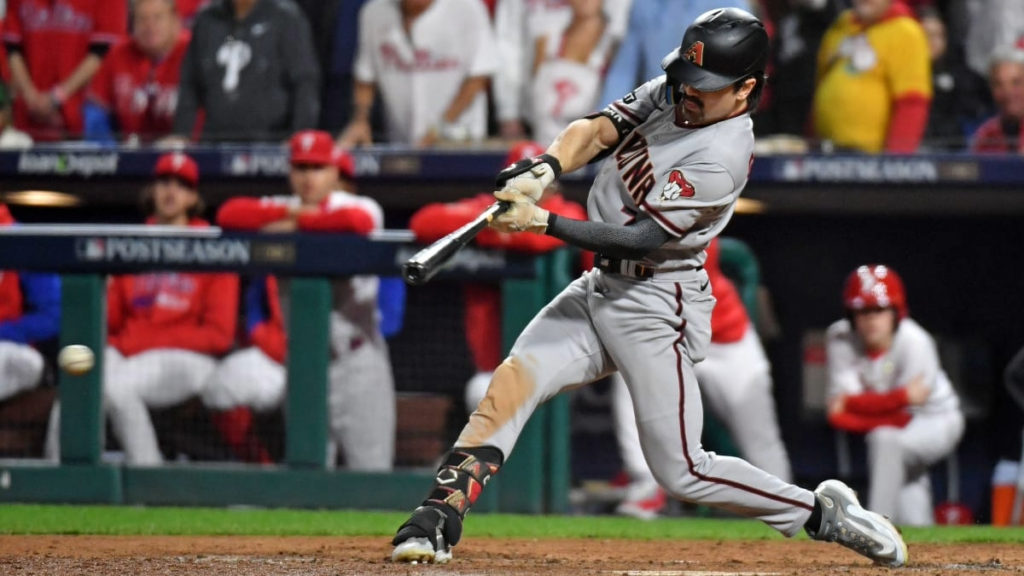
2024 Arizona Diamondbacks Shawn Childs is a legend in the fantasy baseball world and his advice is invaluable. A member of the NFBC Hall of Fame, Shawn has several top-5 finishes in the National Fantasy Baseball Championship as well as

2024 St. Louis Cardinals Preview

2024 St. Louis Cardinals Preview Shawn Childs is a legend in the fantasy baseball world and his advice is invaluable. A member of the NFBC Hall of Fame, Shawn has several top-5 finishes in the National Fantasy Baseball Championship as

2024 Pittsburgh Pirates Preview

2024 Pittsburgh Pirates Preview Shawn Childs is a legend in the fantasy baseball world and his advice is invaluable. A member of the NFBC Hall of Fame, Shawn has several top-5 finishes in the National Fantasy Baseball Championship as well

2024 Milwaukee Brewers Preview

2024 Milwaukee Brewers Preview Shawn Childs is a legend in the fantasy baseball world and his advice is invaluable. A member of the NFBC Hall of Fame, Shawn has several top-5 finishes in the National Fantasy Baseball Championship as well
