
2025 NFL Scouting Combine | Fantasy Football Prospects to Watch
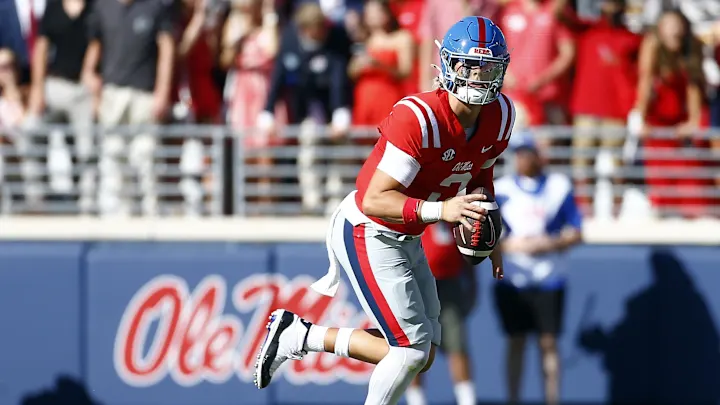
2025 NFL Scouting Combine | Fantasy Football Prospects to Watch The 2025 NFL Scouting Combine marks a pivotal moment in the NFL offseason. For fantasy football enthusiasts, it’s an early glimpse into the rookie class that could shape next season’s drafts. FullTime’s 2025 NFL Scouting Combine Fantasy Football Prospects to Watch showcases some of the incoming rookies for fantasy enthusiasts to monitor. While the combine’s drills—40-yard dashes, vertical jumps, and shuttle runs—don’t directly predict on-field success, they can elevate a prospect’s draft stock, landing them in favorable NFL situations that boost their fantasy value. With a draft class noted for its depth at positions like running back and tight end, but lacking some of the star power of previous years, this year’s combine offers a chance to spot hidden gems and confirm top talents. Here are some prospects to keep an eye on over the next few days, each with the potential to make a fantasy impact in 2025. Also, check out our 2025 Dynasty Rookie Rankings. Quarterbacks Cam Ward (Miami) – Ward enters the combine as one of the top quarterback prospects, alongside Colorado’s Shedeur Sanders. His arm talent and improvisational skills have drawn comparisons to dynamic NFL playmakers. In 2024, he threw for over 4,000 yards and 36 touchdowns at Miami. Ward’s decision on whether to participate in throwing drills will be critical. A strong session could solidify him as a top-10 pick, potentially landing him with a team like the Tennessee Titans or New York Giants, where he’d have Malik Nabers to boost his fantasy value. Look for his arm strength and accuracy in intermediate throws—his bread and butter. Shedeur Sanders (Colorado) – Sanders is a polished pocket passer with elite accuracy and poise, throwing for 3,926 yards and 35 touchdowns in 2024. His pedigree as Deion Sanders’ son adds intrigue. However, his stats speak for themselves. He’s a near-lock for a high draft pick, making him a prime fantasy QB2 candidate. Sanders isn’t expected to run a blazing 40. But his accuracy and timing will appeal to the QB-needy teams near the top of the 2025 NFL Draft order. A true leader with the ‘clutch’ gene and bravado, Sanders is likely to start immediately in the NFL. However, Sanders will not throw at the 2025 NFL Scouting Combine. Interested fantasy managers must wait to see what occurs at Colorado’s Pro Day. Sleeper Jaxson Dart (Ole Miss) – Dart showcased elite talent in his final college season, throwing for 4,279 yards, 29 touchdowns, and just six interceptions. His dual-threat ability shone with 452 rushing yards and four scores, making him a dynamic playmaker. Dart’s arm strength, quick release, and mobility highlight his potential as a top 2025 NFL Draft prospect. In fantasy football, his high-volume passing and rushing upside mirror quarterbacks like a young Dak Prescott, offering significant fantasy potential. With experience in Lane Kiffin’s explosive offense, Dart’s fantasy stock is rising. Running Backs Ashton Jeanty (Boise State) – Jeanty is the consensus RB1, racking up an absurd 2,497 rushing yards and 29 touchdowns in 2024. His blend of power, speed, and receiving ability (43 catches) screams three-down back, a fantasy goldmine. Jeanty’s opting out of workouts, but his resume speaks for itself. A first-round landing spot with a run-heavy team like the Las Vegas Raiders, Chicago Bears, or Dallas Cowboys would make him a top-12 fantasy RB as a rookie. Omarion Hampton (North Carolina) – Hampton’s explosiveness (1,863 yards, 15 TDs in 2024) and home-run ability make him a tantalizing prospect. He’s not Jeanty, but he’s a strong RB2 candidate with plenty of upside. Also, he’s a solid pass-catcher who reeled in 38 grabs last fall. With Jeanty sitting out, Hampton has a chance to shine. A good 40 time and effort in agility drills showcasing his burst could lock him into Round 1, boosting his fantasy stock. Cam Skattebo (Arizona State) – Skattebo’s rugged, downhill style (1,582 yards, 19 TDs) and surprising agility for his 5-11, 225-pound frame make him a sleeper. Also, his 52 receptions in 2024 add PPR appeal. A strong showing in the three-cone drill and broad jump could elevate him from a Day 3 pick into Day 2. A landing spot with a creative offensive coordinator could unlock his fantasy potential. Bhayshul Tuten (Virginia Tech) – Tuten’s 1,371 yards and 17 TDs in 2024, plus 37 catches, make him a PPR sleeper if he lands in a zone-blocking scheme. Enjoy the last few days of Bhayshul Tuten being a fantasy sleeper before he lights up the NFL combine! 🚀🔥pic.twitter.com/8joR6Otf1x https://t.co/FrR4fVxmWg — Matt FF Dynasty 🏈 (@MattFFDynasty) February 24, 2025 UPDATE: Tuten blew away the Combine, posting an insane Speed Score of 118.3🔥. Wide Receivers Tetairoa McMillan (Arizona) – Tetairoa McMillan, Arizona’s standout wide receiver, declared for the 2025 NFL Draft after a stellar junior season, amassing 84 receptions, 1,319 yards, and eight touchdowns. At 6-5 and 210 pounds, his size and 3,423 career receiving yards make him a matchup nightmare. McMillan’s back-to-back 1,300+ yard seasons and 35 catches of 20+ air yards highlight his deep-threat ability. In fantasy football, his size, catch radius, and red-zone prowess project him as a WR1 with top-12 dynasty potential. Especially if landed by a pass-heavy NFL offense. Expect immediate impact from this likely top-15 pick. Luther Burden (Missouri) – Burden’s electric after-catch ability (725 yards, 7 TDs in 2024 despite QB struggles) and quick-twitch moves make him a PPR machine. His 2023 (1,212 yards) shows his ceiling. Running a sub-4.0 short shuttle time could remind scouts of his sophomore dominance, boosting him into Round 1. A spot with a pass-heavy team like the Chargers or Buccaneers could yield WR2 numbers. However, Burden’s reliance on short passes at Mizzou is a red flag. Can a strong Combine ease those concerns? Emeka Egbuka (Ohio State) – Egbuka’s well-rounded game (720 yards, nine touchdowns in 2024) and blazing speed make him a reliable fantasy option. He’s not
2025 Fantasy Baseball: Auction Pitching Strategy
2025 Fantasy Baseball: Auction Pitching Strategy This Fantasy Baseball Strategy Guide is courtesy of Shawn Childs. Read Shawn’s expert fantasy analysis at his Substack. Pitching is the most challenging part of fantasy baseball. It’s easy to overspend in an auction, aiming to build a strong foundation in ERA, WHIP, and strikeouts. A solid pitching base provides a margin for error in the back end of your rotation, but the downside is a weakened offense due to limited resources. our 2025 Fantasy Baseball: Auction Pitching Strategy provides the ideal game plan to win this season. Unlike other formats, you can’t trade pitching for hitting in high-stakes leagues, making budget balance crucial. It’s difficult to finish in the middle of all five pitching categories, let alone earn 66% of the needed points to be competitive. Given the high injury rates and unpredictability, pitching is the most frustrating part of roster construction. If fantasy managers had their way, they’d allocate most of their budget to hitting and minimizing pitching investments. This should always be the pre-auction plan. Finding Value in Pitching When evaluating the pitching pool, I look for under-the-radar buying opportunities. This could mean targeting a setup reliever poised to take over a closer role early in the season or identifying a $10 starter who could deliver the value of a $20 pitcher. The key is determining whether I can construct a quality pitching staff for less than expected and if my targets will be available at my price points. Managing Saves Most teams will buy one closer, but a single 35-save reliever may only secure four points in saves in a 12-team AL or NL Roto league. That’s a minimal return on a $15+ investment. Typically, a team needs 50+ saves to finish in the top third of the category, which is why many managers either buy saves cheaply or punt the category altogether. Spending 30% of your pitching budget for limited gains isn’t ideal. Before the auction, I decide on my approach to saves: Is there a closer worth a top-tier investment? Are there discounted options that could provide elite value? Is there a reliever with a strong chance of earning the job midseason? While I never fully punt saves, I prefer grabbing a couple of potential closers in the reserve rounds at no cost to my auction budget. Saves can be the deciding factor in winning or losing a league. My goal is to maximize saves per dollar spent, increasing my competitive edge. Top-tier closers contribute more than just saves, and if the price is right, I won’t hesitate to invest. In early fantasy baseball years, elite closers cost close to $30, but the market corrected itself, with top options now around $20. If I’m comfortable paying $15, I need to be ready to pounce if a premier closer stalls in bidding before $20. Building an Ace Foundation Once I set my strategy for saves, I need a strong starting pitching core. This phase of an auction is a great equalizer—big investments in an ace limit flexibility elsewhere unless I commit a larger budget to pitching. When Pedro Martinez was in his prime, I could spend $40+ on him and dominate pitching categories due to his massive ERA, WHIP, and strikeout advantages. But in today’s game, does a $40+ investment in Paul Skenes or Tarik Skubal provide the same edge over the field? Would I be better off with two $20 pitchers instead? Could I build a strong rotation with four solid starters for around $50? Should I prioritize accumulating 200, 400, or 750 high-quality innings? The answers depend on the depth of each year’s pitching pool. In some seasons, there’s a clear drop-off in pitching talent; in others, there’s enough depth to spread investments. After analyzing the player pool, I pinpoint two or three pitchers I want as my staff’s foundation. Like with hitters, I track actual auction prices to see if my targets fit within my budget. If I plan to spend $60 on two starters and a closer, I need to confirm those prices align with my strategy. If a specific pitcher is critical to my plan, I might nominate him early to see if I can land him. Pitching Budget Allocation Most fantasy teams allocate between $60 and $80 to pitching. My goal is to establish a strong base with three key pitchers for $60, then round out my staff with cost-effective arms. The back half of my rotation often determines whether I win or lose. Discipline is essential. If I spend $8 early on a mid-tier pitcher, I might lose the flexibility to grab two $4 pitchers I prefer later. Timing is just as important as price. In some leagues, managers try to dominate pitching by spending $100+. When this happens, it inflates prices for top-end starters. But if everyone targets second-tier aces instead, elite pitchers may come at a relative discount. My pitching strategy dictates my hitting budget. It’s often easier to skimp on pitching and load up on offense, but some years provide opportunities to invest more in arms. In certain seasons, fading ERA and WHIP while maximizing wins, strikeouts, and saves can still earn 50% of the pitching points. Developing a Winning Plan Every fantasy manager must craft a strategy that gives them the best shot at winning. In non-trading auction leagues, investing in core players is key. Research the player pool for value opportunities. Enter the auction with both an early strategy and a contingency plan. Stay disciplined to secure impact players late in the auction. Here are the top 30 pitchers from 2024, ranked by FPGscores: (Note: These FPGscores are based on 12-team mixed leagues. Player values will vary slightly in 15-team leagues, AL- or NL-only leagues, and non-trading formats in the National Fantasy Baseball Championship.) Three of the top seven pitchers in 2024 were closers. Emmanuel Clase ranked first due to his elite performance and strong pre-season price. Ryan Helsley was the best draft-day value closer, while Kirby Yates
2025 NFL Draft Board & Draft Capital for All 32 Teams

2025 NFL Draft Board & Draft Capital for all 32 Teams Every year, interest in the NFL Draft grows and 2025 is no different. Dynasty football fans will watch the draft to see where this year’s rookie prospects land. But before Round One kicks off, we thought it would be helpful to present our 2025 NFL Draft Board. Also, knowing the 2025 NFL Draft Team Needs is useful for draft enthusiasts looking to compile the most accurate mock draft. Keep in mind these needs are fluid and can change as teams sign veteran free agents. Check out our 2025 NFL Free Agent Tracker Finally, we have broken down all 32 teams’ overall draft capital and picks by each round, including all compensatory selections. Enjoy the 2025 NFL Draft! 2025 NFL Draft Board 2025 NFL Draft Picks by Team Teams 1-16 Tennessee Titans: 1.01, 2.03, 4.01, 4.18, 5.03, 5.29, 6.02, 7.23 Cleveland Browns: 1.02, 2.01, 3.03, 3.30, 4.02 ,5.26, 6.02, 6.16, 6.24, 6.38 (Compensatory), 6.39 (Compensatory), 7.39 (Compensatory) New York Giants: 1.03, 2.02, 3.01, 4.03, 4.33 (Compensatory), 5.16, 7.03, 7.30 New England Patriots: 1.04, 2.06, 3.05, 3.13, 4.04, 5.06, 7.01, 7.04, 7.22 Jacksonville Jaguars: 1.05, 2.04, 3.06, 3.24, 4.05, 4.24, 5.04, 6.06, 6.18, 7.05 Las Vegas Raiders: 1.06, 2.05, 3.04, 3.09, 4.06, 5.05, 6.04, 6.36 (Compensatory), 6.40 (Compensatory), 7.06 New York Jets: 1.07, 2.10, 3.28, 4.08, 5.07, 5.18, 6.10, 6.32 Carolina Panthers: 1.08, 2.25, 3.10, 4.09, 4.12, 5.02, 5.08, 5.25, 7.11 New Orleans Saints: 1.09, 2.08, 3.07, 3.29, 4.10, 4.29, 6.08, 7.36 (Compensatory) Chicago Bears: 1.10, 2.07, 2.09, 3.08, 5.10, 6.19, 7.17, 7.24 San Francisco 49ers: 1.11, 2.11, 3.11, 3.35 (Compensatory), 4.11, 4.37 (Compensatory), 4.38 (Compensatory), 6.11, 7.10, 7.14, 7.37 (Compensatory) Dallas Cowboys: 1.12, 2.12, 3.12, 5.11, 5.31 (Compensatory), 5.33 (Compensatory), 5.35 (Compensatory), 6.12, 6.33 (Compensatory), 7.32 Miami Dolphins: 1.13, 2.16, 3.34 (Compensatory), 4.14, 4.34 (Compensatory), 5.12, 5.17, 7.08, 7.15, 7.34 (Compensatory) Indianapolis Colts: 1.14, 2.13, 3.16, 4.15, 5.13, 6.13, 7.16 Atlanta Falcons: 1.15, 2.14, 4.16, 7.26 Arizona Cardinals: 1.16, 2.15, 3.14, 4.13, 5.14 Teams 17-32 Cincinnati Bengals: 1.17, 2.17, 3.17, 4.17, 5.15, 6.17 Seattle Seahawks: 1.18, 2.18, 3.18, 4.36 (Compensatory), 5.34 (Compensatory), 6.09, 6.34 (Compensatory), 7.18 Tampa Bay Buccaneers: 1.19, 2.21, 3.20, 4.19, 5.19, 7.19 Denver Broncos: 1.20, 2.19, 3.21, 4.20, 6.15, 6.21, 6.32 Pittsburgh Steelers: 1.21, 2.20, 3.19, 4.21, 5.24, 7.07, 7.13, 7.29 Los Angeles Chargers: 1.22, 2.23, 3.22, 4.23, 5.20, 5.38 (Compensatory), 6.05, 6.23, 6.37 (Compensatory), 7.02 7.35 (Compensatory) Green Bay Packers: 1.23, 2.22, 3.23, 4.22, 5.21, 6.22, 7.21, 7.33 (Compensatory) Minnesota Vikings: 1.24, 3.33 (Compensatory), 5.01, 5.22 Houston Texans: 1.25, 2.26, 3.25, 4.26, 5.28, 7.25 Los Angeles Rams: 1.26, 3.26, 3.36 (Compensatory), 4.25, 6.14, 6.25, 6.26 Baltimore Ravens: 1.27, 2.27, 3.27, 4.27, 4.35 (Compensatory), 5.37 (Compensatory), 5.39 (Compensatory), 6.07, 6.27 6.25 (Compensatory), 7.27 Detroit Lions: 1.28, 2.28, 3.37 (Compensatory), 4.32, 6.20, 7.09, 7.12, 7.28 Washington Commanders: 1.29, 2.29, 3.15, 5.09, 6.29, 7.20, 7.32 Buffalo Bills: 1.30, 2.24, 2.30, 4.07, 4.30, 5.32 (Compensatory), 5.36 (Compensatory), 6.01, 6.28, 6.30 Kansas City Chiefs: 1.31, 2.31, 3.02, 3.31, 4.31, 7.38 (Compensatory) Philadelphia Eagles: 1.32, 2.32, 3.32, 4.28, 5.23, 5.27, 5.30 The 2025 fantasy football season is just getting started and you can get early access to the best help out there! All FullTime Fantasy members get exclusive access to our 24/7 Chat Room on Discord! All morning on Sunday, Senior Analyst Jody Smith will be standing by to answer all your crucial start/sit and keep you updated with all the latest news and injury updates. JOIN OUR MAILING LIST! GET THE LATEST ARTICLES AND UPDATES Subscribe to our FREE newsletter – Breaking Fantasy news & site updates! Like and share our new Facebook page! Be sure to pay attention to our giveaways for your shot at some sweet prizes!
2025 Fantasy Baseball Auction Strategy

2025 Fantasy Baseball Auction Strategy This Fantasy Baseball Strategy Guide is courtesy of Shawn Childs. Read Shawn’s expert fantasy analysis at his Substack. Fantasy baseball comes in various formats and league sizes, particularly in auctions. Over the years, I’ve competed in American League-only, National League-only, and mixed-league formats with 12 or 15 teams. Some leagues incorporate keepers (players held for multiple seasons) and trading, both of which significantly impact player values during an auction. However, in the high-stakes fantasy market—where I’ve played for over 20 seasons—trading isn’t allowed. This restriction places immense pressure on managers to construct a winning roster before the auction ends. Here’s my 2025 Fantasy Baseball Auction Strategy. The Challenges of a No-Trading Auction League In a no-trade auction league, the margin for error is razor-thin. No other team will bail you out by offering to trade for your surplus closer. If your roster is unbalanced—strong in some categories but weak in others—you can’t swap hitting for pitching or speed for saves. While there are multiple paths to winning an auction, many managers lose before the season even begins due to a flawed strategy or lack of foresight. Each year, the player pool shifts slightly, requiring managers to assess available talent and craft a plan they can execute at the auction table. Success hinges on assembling enough key pieces to manage the season effectively. Regardless of my approach, I must remain flexible. While an auction allows me to target any player, every acquisition comes at a cost. Auction Basics Most fantasy baseball auction leagues allocate each team a $260 budget to assemble a 23-player roster (14 hitters, nine pitchers). Scoring is based on 10 categories: Hitting: Batting average, runs, home runs, RBIs, and steals Pitching: Wins, ERA, WHIP, strikeouts, and saves In a 12-team league, first place in a category earns 12 points, second place gets 11, and so on down to one point for last place. The team with the highest cumulative score across all categories wins the league. Calling Out Players Strategically A common mistake fantasy managers make is waiting too long to nominate key players. While the idea of saving money for later bidding may seem smart, it often backfires. If I sit back while other elite players come off the board, I risk running out of viable options. Instead, I prefer to call out my priority players early. If I believe a particular player is essential to my team’s foundation, I want to know right away if I can get him at a reasonable price—or if I need to pivot to an alternative plan. The sooner I know my roster’s core, the better I can execute my strategy or adjust on the fly. Budgeting for Key Players Using my FPGscores after last season, Shohei Ohtani had a fantasy value of $62.91, contributing 19.55 league points on the hitting side in a 12-team mixed format. If my roster plan was to allocate $180 for hitting and $80 for pitching, Ohtani would be a cornerstone of my offense. Every manager has a different approach to budgeting. Some teams invest heavily in elite bats and “cheat” pitching, while others allocate $100+ to pitching, limiting their ability to compete for top-tier hitters. For example, if I aimed to build my team around Ohtani, expecting him to replicate a strong 2024 season (.310/134/54/130/59) with a $55 target value, I would need a backup plan if I missed out on him. My next tier of power-speed hitters might include José Ramírez (.279/114/39/118/41), who had a $43.66 fantasy value in 2024. If Ramírez gets nominated early and sells for $45 while I wait for Ohtani, I risk losing both. If Ohtani then exceeds my budget, I’m left scrambling for a replacement with fewer options remaining. This scenario forces me to adjust my plan on the fly. If Ohtani sells too high, my fallback could be Aaron Judge ($50.11 value in 2024)—but that weakens my stolen base potential. Alternatively, I could target Bobby Witt Jr. ($45.65 value) to lock in elite steals while maintaining power. The key is being prepared for multiple outcomes. If my top choices are taken, I must adapt while ensuring my team remains well-rounded. Overpaying vs. Letting Go One strategy to avoid missing out on key players is overpaying early, intending to recoup those extra dollars later in the auction. While this can work, it requires discipline to ensure later bargains offset early splurges. Executing a Game Plan A strong auction strategy involves executing my game plan early while ignoring how others are spending. My goal is to establish a solid foundation in hitting and pitching, spending up to $200 of my $260 on my key players. This aggressive approach means I may need to shut down spending mid-auction while waiting for value picks later. Many managers become frustrated when others hold onto their money, fearing late-stage overbidding. But once the auction progresses, everyone will still need players, and competition remains. A team with a large budget late in the auction won’t have unlimited power—they’ll still be competing with other managers for every player. Keeping an Open Mind Some of the best values emerge early in an auction. Recognizing player value in real-time is crucial, as hesitation can mean missing out on bargains. A $33 player may not seem like a steal, but if that same player goes for $38 a few rounds later, I’ve lost out on value. For example, if José Ramírez is nominated early and his price hovers in the mid-30s, it may be smart to buy rather than risk Ohtani and Judge going for premium prices. Avoiding the “Last Top Player” Trap A common mistake in auctions is waiting for the final top-tier player at a position. Late in the draft, managers hesitate to call out the last available elite player, hoping to get them cheap. When that player finally gets nominated, demand spikes, often leading to an overpay. I use this knowledge to my advantage. If I like multiple players at a position,
2025 Dynasty Football Stashes
2025 Dynasty Football Stashes Building a successful dynasty football roster takes effort. While other managers tune out in February, dynasty zealots are always active. One of the biggest advantages to be gained before the 2025 NFL Draft is via the waiver wire, where proactive dynasty managers can pick up the top 2025 Dynasty Football Stashes. Additionally, because some league mates are asleep at the wheel, these low-rostered stashes can often be added for free. Whether there is a pending free-agent departure, salary cap casualty, or just a young prospect in a favorable position to emerge next summer, targeting these players is integral to reinforcing a dynasty roster. Here are the top 2025 Dynasty Football Stashes to target this spring. Quarterbacks Tyrod Taylor (New York Jets) – We know Aaron Rodgers won’t be back in New York. The rebuilding Jets desperately need to find a franchise signal caller. However, both Cam Ward and Shedeur Sanders are expected to be gone by the time the club picks at No. 7. That would put Taylor in line to be the team’s opening-day starter. Even if the Jets land a rookie QB, Taylor can again be a bridge starter while the new regime develops the youngster. Taylor is a sneaky add in deeper Superflex formats. Aidan O’Connell/Gardner Minshew (Las Vegas Raiders) – The perpetually retooling Raiders will likely have an open competition between their two veteran incumbents. Additionally, I expect Vegas to be all in on the veteran free agents and possibly an early-round rookie. For now, O’Connell and Minshew are worth speculative adds in Superflex leagues, but I wouldn’t bid more than the minimum. Joe Milton (New England Patriots) – Milton isn’t beating out Drake Maye, but his arm looked outstanding in New England’s finale. Arm talent was never a concern for Milton at Michigan or Tennessee. It may also attract trade interest from other QB-needy teams. Running Backs Antonio Gibson (New England Patriots) – Rhamondre Stevenson’s fumble issues resulted in Gibson earning a bigger role down the stretch last season. With Mike Vrabel now in charge, New England’s backfield is wide-open. Therefore, Gibson could potentially emerge as the team’s starter this summer. Kimani Vidal (Los Angeles Chargers) – Vidal attracted attention as a sleeper last summer. However, Vidal never got more than eight touches in any game. That led to him being dropped in many dynasty leagues. However, with J.K. Dobbins hitting the open market, Vidal ascends the wide-open depth chart. Will Shipley (Philadelphia Eagles) – Kenneth Gainwell is an unrestricted free agent. If Gainwell departs, Shipley offers plus pass-catching ability as the potential change-of-pace option behind Saquon Barkley. Sincere McCormick (Las Vegas Raiders) – Everything will be up for grabs in Las Vegas, including the backfield. McCormick eventually emerged as the Raiders’ starter before incurring a season-ending injury. He averaged 4.7 yards per carry as a rookie. McCormick showed enough to earn some reps this summer, making him worthy of a stash in deeper leagues. With Pete Carroll now in town, McCormick will be given a fair chance to contend for the Raiders’ wide-open starting job. Dameon Pierce (Houston Texans) – Although he looked tremendous in a Week 18 spot start, Pierce wasn’t a good fit in Bobby Slowik’s zone scheme. Perhaps he’ll rekindle some of his rookie magic with Nick Caley now running the offense. Additionally, Pierce could be an attractive trade target after his impressive 176-yard performance to close out the regular season. Wide Receivers Malik Washington (Miami Dolphins) – As a rookie, Washington emerged as Miami’s WR3 down the stretch, averaging five weekly targets from Weeks 15-18. Also, Tyreek Hill is at odds with the team, and Odell Beckham was released. The 23-year-old ran a 4.47, making him a good fit in Mike McDaniel’s scheme. Noah Brown & Olamide Zaccheaus (Washington Commanders) – Washington improved to 17th in passing and 5th in scoring in Jayden Daniels’s first season. Brown (7.8 ppg) and Zaccheaus (7.6 ppg) both had decent showings as the team’s WR3. Both players are unrestricted free agents, but if either re-signs with Washington, they would be on the late-round flier list for 2025. Jordan Whittington (Los Angeles Rams) – For a couple of weeks Jordan Whittington looked like a legit prospect, catching 13-of-18 targets for 151 yards. But just as quickly as he emerged, the 6th-round rookie disappeared. Perhaps the pending departure of Cooper Kupp will lead to Whittington salvaging a role in the Ram’s new-look offense. Also, Tutu Atwell is worth rostering. Jalen Nailor (Minnesota Vikings) – The 2022 6th-rounder emerged as Minnesota’s WR3. Minnesota has ranked 6th, 5th, and 6th in passing in Kevin O’Connell’s three seasons at the helm. Digging Deeper Malik Heath (Green Bay) – Christian Watson will miss most, if not all of 2025 with a knee injury. Heath played 39 snaps and led the Packers in receiving (60) yards in their regular-season finale. He will have a chance to carve out a role this summer. John Metchie (Houston Texans) – An easy kid to root for, Metchie finally got some playing time down the stretch for the Texans. However, it took myriad injuries for him to earn it. With Tank Dell expected to miss 2025 and Stefon Diggs an unrestricted free agent, Metchie has a pre-draft path to a significant role. DeAndre Carter (Chicago Bears) – Keenan Allen is 32 and an unrestricted free agent. While Allen manned the slot over 54% of the time, Carter lined up inside on 69.1% of his snaps as Chicago’s WR4. If Allen departs, as anticipated, Carter could move into the slot full-time. Digging even deeper, teammate Tyler Scott also played predominantly in the slot. Scott also checks the #thirdyearbreakout box. Tight Ends Noah Gray (Kansas City Chiefs) – There’s no denying that Travis Kelce is in decline and there is a chance he retires this offseason. If Kelce does, Gray would instantly contend for TE1 numbers in Kansas City. Theo Johnson (New York Giants) – A 2024 fourth-round selection, Johnson ranked fifth
2025 Fantasy Baseball: Auction Hitting Strategy

2025 Fantasy Baseball: Auction Hitting Strategy This Fantasy Baseball Strategy Guide is courtesy of Shawn Childs. Read Shawn’s expert fantasy analysis at his Substack. A fantasy manager must separate hitting from pitching when preparing for an auction. While each accounts for 50% of the game, finding a spending balance that fits your strategy is key. Here is my 2025 Fantasy Baseball: Auction Hitting Strategy. Core Batters Building a strong offensive foundation starts with identifying cornerstone players. Depending on your budget, your core may consist of three or four hitters. I typically begin with three: A high-average power hitter (.300/30/100). A balanced player with speed (.300/10/60/40). A well-rounded contributor (.300/20/80/20). The increased stolen bases in 2023 and 2024 have expanded the player pool and raised the target number needed to compete in that category. Shifting Batting Average Standards Pitching depth and injuries fluctuate each year, impacting offensive production. Fewer hitters now exceed a .300 average, affecting category targets. In 2024, MLB’s league-wide average was .243, down from .248 in 2023 and equal to 2022’s mark. By contrast, early 2000s averages were higher (.270 in 2000, .266 in 2004). Given this decline, a .280 hitter may now serve as the new “.300” in fantasy baseball. Hitting Budget Allocating your hitting budget effectively is crucial. My approach involves spending $90-$100 on three to four cornerstone batters and about $180 of my $260 total budget on offense. However, the player pool shifts yearly, requiring flexibility. Eight Foundation Bats In a single-league auction, your offensive core consists of a catcher, first baseman, second baseman, third baseman, shortstop, and three outfielders. These eight players form your team’s backbone. Each year, I analyze the player pool by position to identify my core targets, assess positional depth, and adjust my spending accordingly. This includes identifying breakout candidates and potential value picks. Understanding the Player Pool With 15 teams in both the AL and NL, there are 135 starting lineup spots across the league, divided among 12 fantasy teams (approximately 11-12 starting hitters per roster). Many real-life starters will be platoon players or unproven bats, creating gaps. Strategically, you can position your weaker spots in areas where depth or upside exists. Ideally, you’ll patch those holes through the waiver wire or bench. Core Spending Strategy A fantasy manager typically invests between $120 and $170 in their eight-core hitters. Patience is critical—finding full-time at-bats for minimal cost is the ultimate goal. The focus should be on at-bat volume and young players with upside rather than established part-timers. Rounding Out Your Roster Many managers hesitate to take zeros in their starting lineup, but sometimes, drafting an upside minor leaguer is better than grabbing a low-ceiling bench bat. For instance, in an NL-only league in 2025, rostering a prospect like 3B Matt Shaw or 1B Tyler Black could pay off if they get called up early. Instead of drafting a $1 low-upside middle infielder, I’d rather take a shot on a player with real growth potential. Similar part-time at-bats are often available on the waiver wire, making it wiser to gamble on a player who could earn regular playing time. I generally target three or four high-upside players for my bench while staying mindful of waiver wire opportunities to plug roster gaps. Understanding Player Value Auction success depends on preparation. Studying real-money auction drafts helps gauge market trends. The LABR auctions in early March provide insight into player valuations heading into the season. You should never be caught off guard by a player’s auction price. Top players will always draw heavy interest—if you want one, be ready to strike when their name is called. The 2025 NFL off-season is underway but you can still get access to the best help out there! All FullTime Fantasy members get exclusive access to our 24/7 Chat Room on Discord! All morning on Sunday, Senior Analyst Jody Smith will be standing by to answer all your crucial fantasy questions and keep you updated with all the latest news and injury updates. JOIN OUR MAILING LIST! GET THE LATEST ARTICLES & UPDATES Subscribe to our FREE newsletter – Breaking Fantasy news & site updates! Like and share our new Facebook page! Be sure to pay attention to our giveaways for your shot at some sweet prizes!
2025 Fantasy Baseball Strategy Guide

2025 Fantasy Baseball Strategy Guide This Fantasy Baseball Strategy Guide is courtesy of Shawn Childs. Read Shawn’s expert fantasy analysis at his Substack. Fantasy baseball is an exciting game, particularly for avid baseball fans who enjoy analyzing player performances. A full season spans approximately 180 days or 26 weeks. My primary experience in fantasy baseball comes from high-stakes, rotisserie-style leagues with no trading. Most formats feature 10 statistical categories—five for batters and five for pitchers—determining league points for this 2025 Fantasy Baseball Strategy Guide. 2025 Fantasy Baseball Basic Player Data Roto Categories Batting Average (BA) – This is calculated by dividing total hits by at-bats for a team’s starting hitters. The highest batting average in the league earns first-place points. For example, in a 12-team league, first place receives 12 points, second place gets 11, and so forth down to one point for last place. In a 12-team league, a .2573 batting average was needed to rank in the top 20% in 2024. Runs (R) – Total runs scored by the team’s starting hitters. A competitive goal in a 12-team league is around 1,100 runs, or 80 per player in a 14-offensive-player format. Home Runs (HR) – Total home runs hit by a team’s starting hitters. In 12-team leagues, over 309 home runs (about 22 per player) were required to finish in the top three in 2024. Runs Batted In (RBI) – Total runs driven in by the starting lineup. The target for a 12-team league should be approximately 1,075 RBIs (around 77 per batter). Stolen Bases (SB) – Total number of steals by starting players. Due to rule changes in recent years, stolen base totals have increased. A fantasy team needed 202 stolen bases to finish in the top 20% for 2025, compared to 198 in 2024. Pitching Categories Wins (W) – Total wins earned by the team’s starting pitchers. Managing a roster to secure four wins per week, or 104 across a 26-week season, is ideal. In high-stakes leagues, 94 wins were required to reach the top 20% in 2024. Earned Run Average (ERA) – Earned runs allowed divided by innings pitched, multiplied by nine. The goal is to have the lowest ERA. A 3.50 ERA was a strong target in 12-team leagues last season. Walks + Hits per Inning Pitched (WHIP) – A key metric for evaluating a pitcher’s effectiveness, calculated as (walks + hits) / innings pitched. A WHIP of 1.147 in 2024 ranked in the top 20% of 12-team leagues. Strikeouts (K) – Total strikeouts by starting pitchers. In 12-team leagues, 1,412 strikeouts were needed to finish in the top 20% in 2024. Saves (SV) – Total number of saves by the pitching staff. Over the past two seasons, around 78 saves were required to remain competitive in 12-team leagues. League Structure A standard 12-team rotisserie league typically consists of 30 rounds. Each team drafts 14 hitters and nine pitchers. The hitter lineup includes two catchers, one first baseman, one second baseman, one shortstop, one third baseman, one middle infielder, one corner infielder, five outfielders, and one utility player. Most fantasy managers select seven starting pitchers and two closers for their active lineup. Bench spots can vary, but having extra starters and a third closer is advisable. Additionally, managers often draft a young prospect, a backup outfielder, a backup middle infielder, and a backup corner infielder. Understanding the Player Pool Familiarizing yourself with player values is essential to constructing a winning team. Based on 2024 data, first base, third base, and outfield traditionally provide the most offensive production. However, shortstop has emerged as a premier position for three consecutive years. A balanced roster requires a mix of elite batters and pitchers, along with high-upside selections later in the draft. Relying solely on past-season stats can be misleading, as player performance varies year to year. Identifying rising stars who will be drafted earlier in future seasons is crucial. Draft Strategy and Building Blocks Early draft decisions shape the direction of a fantasy team. Managers selecting a power hitter like Mookie Betts may focus on acquiring speed later in the draft. Conversely, starting with a speedster like Bobby Witt Jr. necessitates prioritizing power-hitting outfielders or corner infielders in subsequent rounds. A balanced approach, like drafting Freddie Freeman, offers flexibility in roster construction. Offensive Foundations Building a solid offensive core involves selecting players who excel in multiple categories. After three rounds, targeting players who collectively contribute around 75 home runs and 75 stolen bases establishes a strong foundation. In the 2024 National Fantasy Baseball Championship (NFBC), the winning team secured 248 runs, 93 home runs, 248 RBIs, and 100 stolen bases from its first two draft picks. Key offensive archetypes: Elite Speed with Power and Average: Players like Corbin Carroll and Bobby Witt Jr. offer a unique blend of stolen bases, power, and average. High Average/Plus Power: Historically, players like Albert Pujols and Miguel Cabrera fit this mold. In 2024, Juan Soto was a prime example, excelling in runs, home runs, and RBIs. Balanced Players: Shohei Ohtani exemplified this by providing 50/50 power and speed potential, comparable to Ronald Acuña’s exceptional 2023 season. Pitching Strategy Effective roster construction requires understanding the value of top-tier pitchers. Securing an ace with 15+ wins, a sub-3.00 ERA, and 200+ strikeouts provides a competitive advantage. However, pitching carries significant injury risk, making roster depth critical. Understanding Closer Value In 2024, the top 12 closers averaged six wins, 32 saves, and 78 strikeouts, with a 2.214 ERA and 0.947 WHIP. Emmanuel Clase stood out with a 0.605 ERA, 0.659 WHIP, and 47 saves. Securing an elite closer early can be more valuable than drafting a second-tier SP2. Identifying an Ace Pitcher Using FPGscores, a fantasy manager can evaluate pitcher tiers: Ace baseline: 14+ wins, 2.847 ERA, 1.013 WHIP, 197+ strikeouts. SP2 baseline: 13 wins, 3.440 ERA, 1.118 WHIP, 187+ strikeouts. Drafting strategies depend on how pitchers and hitters are selected in the early rounds. In recent years, elite closers have risen to third and
2025 NFL Draft Order (Updated)

2025 NFL Draft Order Fantasy football has evolved into a 24/7, 365-day hobby. As one season ends, fantasy fanatics are already looking ahead to the next draft season. Knowing the 2025 NFL Draft Order is a good starting place before you begin prepping for the NFL Scouting Combine and dynasty draft season. Tennessee Titans Cleveland Browns New York Giants New England Patriots Jacksonville Jaguars Las Vegas Raiders New York Jets Carolina Panthers New Orleans Saints Chicago Bears San Francisco 49ers Dallas Cowboys Miami Dolphins Indianapolis Colts Atlanta Falcons Arizona Cardinals Cincinnati Bengals Seattle Seahawks Tampa Bay Buccaneers Denver Broncos Pittsburgh Steelers Los Angeles Chargers Green Bay Packers Minnesota Vikings Houston Texans Los Angeles Rams Baltimore Ravens Detroit Lions Washington Commanders Buffalo Bills Kansas City Chiefs Philadelphia Eagles Thanks for reading our 2025 NFL Draft Order! All FullTime Fantasy members get exclusive access to our 24/7 Chat Room on Discord! All morning on Sunday, Senior Analyst Jody Smith will be standing by to answer all your crucial start/sit and keep you updated with all the latest news and injury updates. JOIN OUR MAILING LIST! GET THE LATEST ARTICLES AND UPDATES Subscribe to our FREE newsletter – Breaking Fantasy news & site updates! Like and share our new Facebook page! Be sure to pay attention to our giveaways for your shot at some sweet prizes!
Super Bowl LIX Preview
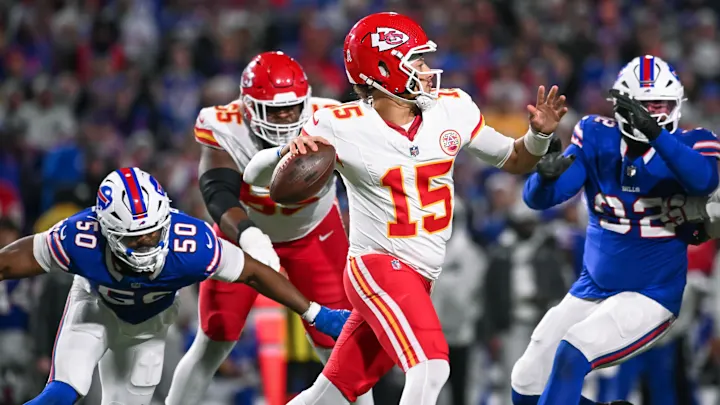
Super Bowl LIX Preview This is it—one final game in New Orleans. FullTime Fantasy‘s Super Bowl LIX breaks down the slate from a fantasy football and sports betting perspective for Sunday’s Eagles vs. Chiefs showdown. And just because the fantasy regular season has ended doesn’t mean the fun is over. FFWC Playoff Fantasy Football is a great way to extend the fantasy fun and win amazing prizes! Kansas City Chiefs (17-2) at Philadelphia Eagles (17-3) Time: 6:30 Eastern from New Orleans, LA Line: Chiefs -1 Total: 49.5 Money Line: Eagles EVEN, Chiefs -120 Chiefs Offense It felt like the Chiefs were sleepwalking through games for a chunk of the regular season. They infamously were one of only four teams to not score more than 30 points all season. The other three teams are all near the top of the 2025 NFL Draft. However, Kansas City’s defense stepped up, allowing the fourth-fewest points. Our RDA* projections for Patrick Mahomes are similar to the current Vegas lines. Vegas projects Mahomes to have 251.5 passing yards, three more than RDA*. There may be some value in the under 1.5 touchdown passes at (+142). Mahomes has been under in both playoff games and five of his last seven overall. Vegas only projects Isiah Pacheco to garner 21.5 rushing yards- an appallingly low total. Our RDA* projections have him over 45. On the other hand, we see a split backfield, with Kareem Hunt also projected to top 45 rushing yards. This is more in line with the Vegas totals, which have Hunt forecasted to top 52 scrimmage yards. Here are the projected Vegas receiving totals for the Chiefs’ wideouts: Xavier Worthy – 56.5, +165 to score a TD Hollywood Brown – 41.5, +270 DeAndre Hopkins – 32.5, +650(!) Finally, here are the RDA* projections: Xavier Worthy – 52.7, 39% Hollywood Brown – 45.3, 30% DeAndre Hopkins – 40.3, 30% Travis Kelce always comes up big. And there’s a chance this is his final Super Bowl and there will undoubtedly be plenty of media attention. Vegas has Kelce’s total at 61.5 yards and +135 to score. Our numbers are 60.1 yards with 43% TD odds. Eagles Offense Jalen Hurts played well against the Chiefs in Super Bowl LVII before a late fumble. His shot at redemption is here but it will be a much tougher Kansas City defense. The Chiefs are particularly potent against the run, which will force Hurts to go to the air. Hurts’ pass attempts prop of 27.5 is the highest it’s been since December 1. Only one running back rushed for more than 75 yards this season against Kansas City’s stout run D. However, Saquon Barkley exceeded 2,000 for the season and is no ordinary rusher. Still, his over/under of 110.5 rushing yards seems too high. Our RDA* projections are significantly lower, making the UNDER 110.5 one of the best values of this slate. A.J. Brown (6.4/86/.56) is our No. 1 wide receiver this week, and DeVonta Smtih (5.9/70.8/.44) comes in at No. 2. Conversely, the Chiefs were merely average defending wide receivers, allowing over 33 fantasy points per game to the position. Finally, at tight end, Dallas Goedert has an RDA* projection of four grabs for 45.3 yards and a solid 46% chance of scoring. The NFL season is almost over but it’s not too late to get access to the best help out there! All FullTime Fantasy members get exclusive access to our 24/7 Chat Room on Discord! All morning on Sunday, Senior Analyst Jody Smith will be standing by to answer all your crucial start/sit and keep you updated with all the latest news and injury updates. JOIN OUR MAILING LIST! GET THE LATEST ARTICLES AND UPDATES Subscribe to our FREE newsletter – Breaking Fantasy news & site updates! Like and share our new Facebook page! Be sure to pay attention to our giveaways for your shot at some sweet prizes!
Jody Smith’s Fantasy Football Rankings: SB LIX

Jody Smith’s Fantasy Football Rankings: SB LIX FullTime Fantasy has been synonymous with accurate fantasy football rankings for years. Our rankings have garnered numerous industry accolades, with several top-5 finishes in season-long, weekly, and even sports betting accuracy. This is

