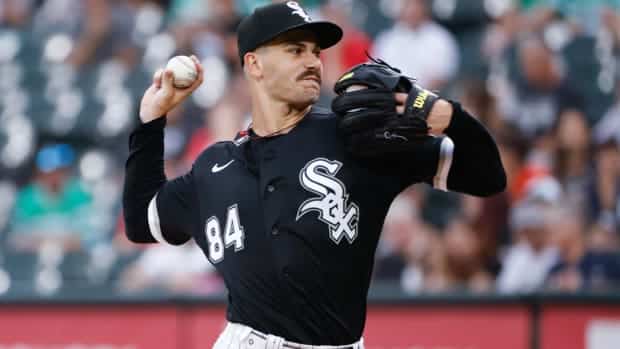
Legendary fantasy expert Shawn Childs will be breaking down all 30 teams ahead of the 2023 MLB season. This is the kind of deep-diving, advanced information you can only get from FullTimeFantasy. Next, Shawn’s 2023 Preview: Chicago White Sox

Also, check out Shawn’s extensive breakdown of his unique FPGscore, which gives you a huge edge over the competition. Plus, you’ll learn more about other advanced metrics like Average Hit Rate (AVH) and Contact Batting Average (CTBH.) 

2023 Chicago White Sox

After making strides to push toward the World Series in 2020 (35-25) and 2021 (93-69), the White Sox lost momentum with their hitting and pitching. They slipped to 81-81 due to regressing by 110 runs scored and allowing 81 more runs. Their last trip to the World Series came in 2005 (win). Chicago only has five postseason appearances since 1993.

The White Sox finished 15th in ERA (3.92) while having the 19th-ranked bullpen (29 wins, 22 losses, and 48 saves over 582.1 innings with a 4.00 ERA). They scored 686 runs (19th) with 144 home runs (23rd) and 654 RBIs (19th). Chicago has the least amount of caught stealings (10) in the majors, but they only picked up 58 stolen bases (24th). On the positive side, the White Sox had strength in their batting average (.256 – 5th).

Chicago signed OF Andrew Benintendi, OF Victor Reyes, and SP Mike Clevinger in the offseason. Their top loss to free agency was 1B Jose Abreu. SS Elvis Andrus remains unsigned, while SP Johnny Cueto, 2B Danny Mendick, OF AJ Pollock, SP Vince Velasquez, and OF Adam Engel found new homes. 

Injuries to SS Tim Anderson, OF Luis Robert, and OF Eloy Jimenez were the main reasons the White Sox fell in the offensive standings. Replacing Jose Abreu will be a tall task going forward. In addition, C Yasmani Grandal must regain his power stroke. 

SP Dylan Cease repeated his breakthrough success of 2021, giving the White Sox an ace at the top of their rotation. Lance Lynn and Lucas Giolito are coming off disappointing seasons. Chicago still has not seen the best of Michael Kopech, but his command isn’t where it needs to be at this point in his career. By adding Mike Clevinger, the White Sox hopes to offer competitive starts on most nights, helping them compete for the division title in the AL Central.

Their ninth-inning looks to be in flux, at least to start the season, due to Liam Hendriks batting a case of Non-Hodgkin’s Lymphoma. Chicago has other options to close, but no one that expects to knock down the door.

Starting Lineup

SS Tim Anderson

From 2019 to 2021, Anderson showed the power of having an elite contact batting average (.429, .424, and .400). He hit .258 over his first 1,564 at-bats in the majors with a much lower CTBA (.355). His improved ability to make hard contact led to a .322 batting average over a span of 1,233 at-bats with 220 runs, 45 home runs, 138 RBIs, and 40 steals. 

Last year, he hit .356 over his first 163 at-bats with 24 runs, five home runs, 19 RBIs, and eight stolen bases while repeating his previous resume in contact batting average (.406). After three weeks on the injured list with a groin injury, Anderson wasn’t the same at the plate (.249/26/1/6/5 over 169 at-bats), highlighted by a sharp decline in his contact batting average (.313) and dismal average hit rate (1.167). His season ended in early August due to a left-hand injury (torn ligament) that required surgery.

His strikeout rate (15.7) was the lowest of his career, but he continues to have a low walk rate (4.0 – 3.6 in his career). 

Anderson plays well vs. left-handed pitching (.328 with 30 home runs and 93 RBIs over 738 at-bats). However, his swing path produces a low fly-ball rate (20.9 – 22.0 in 2021 and 26.6 in his career), restricting his ceiling in power. 

Fantasy Outlook: Heading to the 2022 draft season, Anderson had a $30 price tag in mixed 15-team auction in the National Fantasy Baseball Championship with an ADP of 36. His drawing card is his edge in batting average, but he hasn’t posted more than 550 at-bats since 2018. After his down year, Anderson has an ADP of 95 in the NFBC as the 12th shortstop drafted. I expect him to regain his form this year, but I don’t see a difference-maker in runs, home runs, or RBIs. His launch angle (3.3 – 4.3 in 2021 and 6.7 in 2022) has declined in four straight seasons. Anderson has never been on base more than 185 times in any year in his career. Tempting, but his price point this season is more in his wheelhouse.

OF Andrew Benintendi

When at his best in 2017 and 2018 with the Red Sox, Benintendi hit .280 with 187 runs, 36 home runs, 177 RBIs, and 41 stolen bases. The luster of his bat faded over the past four seasons due to a slide in his average hit rate (1.509) and a sharp decline in production in stolen bases. 

Last year Benintendi had a rebound in his contact batting average (.365), highlighted by his play with the Royals (.304 with 54 runs, five home runs, 51 RBIs, and eight stolen bases over 461 at-bats). After his trade to the Yankees, his bat lost momentum (.254/14/2/12/4 over 114 at-bats). A right wrist injury that required surgery ended his season in early September.

His strikeout rate (14.8) was the best of his career while maintaining strength in his walk rate (10.0). Benintendi ranked about league average in exit velocity (89.2 – 148th) and hard-hit rate (38.7 – 175th). He ended 2022 with a career-low flyball rate (34.5) and HR/FB rate (3.8 – 8.6 in his career).

Fantasy Outlook: His ADP (219) in mid-January in the NFBC ranks him as the 129th hitter. He finished last season as the 117th-best batter by FPGscore (-1.84). Benintendi’s profile falls into the steady category, with his only trusted asset being his neutral to positive batting average. The chance of added steals looks real based on MLB changing the size of the bases. I’d start the bidding at .290 with 70 runs, 12 home runs, 70 RBIs, and 10 stolen bases and hope for 550 at-bats to help his counting stats.

OF Luis Robert

In 2019, Robert rocketed through the White Sox farm system. He hit .328 over 503 at-bats at High A, AA, and AAA, leading to 108 runs, 32 home runs, 92 RBIs, and 36 stolen bases. Robert finished his explosive year with an exceptional contact batting average (.441) and strength in average hit rate (1.903). 

Chicago gave him an entire season of playing time in 2020, but he looked overmatched at the plate based on his strikeout rate (32.2). Despite his struggles, his counting stats still piqued the interest of fantasy managers the following year (top 35 selection). Unfortunately, Robert suffered a hip injury in early May. After missing 86 games, he returned to the White Sox lineup on August 9th. Robert helped fantasy teams down the stretch by hitting .350 over 180 at-bats with 31 runs, 12 home runs, 35 RBIs, and seven stolen bases. In addition, his bat showed growth in his strikeout rate (20.6) and RBI rate (18) while posting an elite contact batting average (.435).

In 2021, Robert fell short of expectations over his first 59 games (.294 with 35 runs, eight home runs, 38 RBIs, and 11 stolen bases over 248 at-bats) while missing time in April (groin) and May (Covid-19). His contact batting average (.367) and average hit rate (1.466) came in well below his previous time with the White Sox (.408/1.743). He took a pitch to the head in July, costing 19 days of action. On August 12th, Robert sprained his left wrist, deeming him worthless for the remainder of the season (7-for-45 with three runs, no home runs, and no RBIs).

Fantasy Outlook: Robert’s only relevant data point from 2022 was his approach (strikeout rate – 19.2 and walk rate – 4.2). After two injury-plagued seasons, Robert will be on the avoid list for many fantasy drafters until he proves his worth. His ADP (45) in the NFBC ranks him as the 31st hitter selected. He has a high ceiling in five categories while priced well below his potential. With 550 at-bats, Robert should post a .280/100/30/25 type season. You can’t hit a home run unless you tee up the ball and swing the bat.

OF Eloy Jimenez


Jimenez missed over 218 games in his first four seasons with the White Sox. His bat broke through in September of 2019, leading to a .340 batting average over 100 at-bats with 19 runs, nine home runs, and 25 RBI. He handled himself well over 55 games the following year. In 2021, his season started with a torn left pectoral injury. Jimenez didn’t play in his first game until July 26th. Last year, he landed on the injured list in late April for 11 weeks with torn hamstring tendon that required surgery.

His final 2021 stats projected well over an entire season other than runs (23 – 59 over 550 at-bats) and batting average (.249). Jimenez had a weaker contact batting average (.340) while playing well with runners on base (RBI rate – 18). His strikeout rate (24.7) and walk rate (6.9) trail the league average. 

His bat had more life in 2022, thanks to a higher contact batting average (.391) and plus RBI rate (20). His home run total (16) could have been higher if his average hit rate (1.698) did regress for the fourth consecutive season. Jimenez did finish with the best approach (strikeout rate – 22.0 and walk rate – 8.6) of his major league career.

His swing path led to a high groundball rate (50.4 – 49.4 in his career), but he did hit more flyballs (33.0%) last season at the expense of his line drive rate (16.5). Jimenez finished with a top-tier ranking in exit velocity (92.8 – 10th) and hard-hit rate (56.1 – 4th) while producing a shallow launch angle (7.4).

Over eight years in the minors, Jimenez hit .308 with 70 home runs, 292 RBIs, and 15 stolen bases over 1,687 at-bats. 

Fantasy Outlook: When pairing his improving approach with his potential to hit the ball hard and drive in runs, Jimenez has a beast feel with a much higher ceiling in home runs if he can hit more balls in the air. His last stolen base came in 2017, so the category has no hope of a pulse. Based on his potential, he has a favorable ADP (76) in the high-stakes market. His discounted price point is all about his inability to stay on the field. With 550 at-bats (which could be only a dream), Jimenez should hit .280+ with 85+ runs, 35+ home runs, and 110+ RBIs.

1B Andrew Vaughn

When reviewing Vaughn’s final stats from 2022, there isn’t anything that stands out to motivate someone to push him up draft boards. His contact batting average (.333) remains well below his glory days in college (.428) while offering a fading average hit rate (1.587). He had growth in his strikeout rate (17.3 – 21.5 in 2021), but he took fewer walks (5.6% in 8.7% in 2021).

Vaughn hit left-handed pitching well (.307) with empty power (one home run and 13 RBIs over 114 at-bats). His best play came before the All-Star break (.301 over 279 at-bats with 36 runs, 10 home runs, and 48 RBIs). He ranked high in exit velocity (90.8 – 48th) and hard-hit rate (48.6 – 27th), but his swing path led to too many groundballs (47.7%). Vaughn must improve his launch angle (7.5) to have a jump in power.

Despite being in pro ball since 2019, Vaughn has never played a game at AA, with only seven at-bats at AAA. His growth and learning curve has been on the White Sox. His college resume paints a player with an elite approach and much more upside in home runs.

Fantasy Outlook: This draft season, in the high-stakes contests, Vaughn should be in more of the conversation as a corner infielder than a foundation power bat at first base. His ADP (149) in the NFBC ranks him as the 12th first baseman. His future lies in the middle of the White Sox starting lineup, but he could hit second or below fifth in 2023. Ultimately, for those willing to read between the lines, Vaughn is on the verge of great things. He is a possible .300 hitter with the swing to hit well over 25 home runs with plenty of help in runs and RBIs. 

3B Yoan Moncada

Since his best season in 2019, Moncada has hit .238 with 141 runs, 32 home runs, 136 RBIs, and five stolen bases over 1,117 at-bats. His strikeout rate (26.8) over this span has been better than his career average (29.2) while continuing to have strength in his walk rate (11.3).

Last year, he started the year on the injured list with an oblique issue, followed by multiple minor injuries (leg, quad, hamstring, and foot) for the remainder of the season. As a result, Moncada offered minimal value (.197 with 28 runs, seven home runs, and 40 RBIs over 294 at-bats) over his first 80 games. Even with a slight uptick in September (.252 with 13 runs, five home runs, 11 RBIs, and two stolen bases over 103 at-bats). 

His exit velocity (88.7 – 166th) and hard-hit rate (37.5 – 197th) remain well below his success in 2019 (93.1/47.9). Moncada finished with a career-best launch angle (15.7) of his career, leading to a new top in his flyball rate (43.5 – 36.3 in his career) but a career-low in HR/FB rate (9.8 – 13.0 in 2021 and 13.9 in his career). 

Fantasy Outlook: This season, Moncada has a much higher ADP (287) than 2021 (89th) in the NFBC in mid-January. He’ll step to the plate in 2023 in the prime of his career (age 27) while still looking to establish his floor and potential ceiling. It’s hard to believe Moncada stole 49 and 45 bags in two different seasons in the minors but attempted only 43 steals over 2,424 at-bats in the majors. Despite his negatives, I expect him to outperform his price point just by staying on the field for over 500 at-bats. Call me intrigued if I can build my team to cover his batting average.

C Yasmani Grandal

Last year Grandal got on base 113 times, but he made it to home plate on only 15 occasions. His contact batting average (.266), average hit rate (1.333), and RBI rate (10) were the worst of his career by a wide margin. 

Over his first 173 at-bats, Grandal hit .185 with six runs, two home runs, and 15 RBIs. The White Sox lost him for the following 40 days due to a back injury. In August, he missed some time with a left knee injury. Grandal finished the season with more empty stats over his final 154 at-bats (.221/9/3/12).

His strikeout rate (21.0) was his lowest since 2015, with repeated strength in his walk rate (12.0 – 14.6 in his career). Grandal barreled up fewer balls (4.8% – 13.3 in 2021 and 9.9 in his career) while still having a high exit velocity (90.0 – 90.3 in his career).

Fantasy Outlook: Grandal has a long resume in power and tends to outperform the backend of the catching pool in runs due to his ability to take walks. His batting average risk is not going away. In the NFBC in mid-January, he ranks 20th at catcher with an ADP of 287. I expect him to rebound with 20+ home runs and about 110 combined runs and RBIs. His slide in drafts appears to be an overcorrection (ADP of 106 in 2021 – HR/FB rate – 5.6 – 28.4 in 2021 and 17.9 in his career).

OF Gavin Sheets

Over five seasons in the minors, Sheets hit .282 with 175 runs, 39 home runs, 225 RBIs, and five stolen bases over 1,369 at-bats. In 2021, he delivered 22 home runs and 80 RBIs between AAA and the majors. In addition, Sheets showed the ability to take walks (10.2 percent) in the minors while minimizing the damage in strikeouts (17.8 percent).

Chicago gave Sheets platoon starts in 2022 against right-handed pitching (.250 with 15 home runs and 47 RBIs over 336 at-bats). Unfortunately, he only had seven hits over 41 at-bats vs. lefties with no home runs and six RBIs. In 2021 at AAA, his stats (.229 over 83 at-bats with two home runs and 17 RBIs) had a similar weakness against left-handed pitching.

His exit velocity (88.6 – 171st) and hard-hit rate (36.1 – 217th) ranked poorly. Sheets has a flyball swing path (44.7%), highlighted by his launch angle (14.8).

Over his final 167 at-bats, he hit .264 with eight home runs and 31 RBIs. Sheets finished with a league-average strikeout rate (21.0). 

Fantasy Outlook: The White Sox will give every chance to earn 450 at-bats in 2023, with most nights off vs. left-handed pitching. His ADP (484) in the NFBC puts him in the free-agent pool in most redraft formats. He is a possible matchup player in deep formats, but there are signs that he is not ready to offer 20+ home runs.

2B Romy Gonzalez

Over four seasons in the minors, Gonzalez hit .258 with 156 runs, 46 home runs, 159 RBIs, and 50 stolen bases over 1,048 at-bats. The White Sox gave him 105 at-bats last season (.238 batting average with 15 runs, two home runs, and 11 RBIs), despite a limited and underwhelming resume at AAA (.198/15/4/10/5 over 121 at-bats). His strikeout rate (28.0) in the minors says he is not ready for a major league job.

Fantasy Outlook: The White Sox won’t go into 2023 with the current crop of options to start at second base, making Gonzalez only a placeholder for Chicago over the winter. The combination of his power and speed shown in 2021 (24 home runs and 24 steals) is enough to follow in spring training, but I don’t expect him to be a factor this season.

2B Jose Rodriguez

Since the year off in 2020 (Covid-19), Rodriguez showed growth with his bat at High A (.361/19/5/19/10 over 119 at-bats) and AA (.278/77/11/68/40 over 454 at-bats). His strikeout rate (13.7) in 2022 was a plus while walking 7.6% of the time. He has 70 steals over his last 909 at-bats.

Chicago doesn’t have a clear option to start at second base. Rodriguez should start the year at AAA while being a phone call away from the majors. He doesn’t project as an elite prospect, but his game continues to improve. His approach gives him a chance to surprise in his rookie season.

3B Jake Burger

After a three-season break from minor league baseball, Burger emerged as a viable bench power option for the White Sox in 2022. He hit .268 over 456 at-bats at AAA in 2021 and 2022 with 68 runs, 23 home runs, and 70 RBIs. His strikeout rate (24.6) came in just above the league average while posting a neutral walk rate (8.3).

Chicago gave Burger 51 games last season to prove his worth. Over 168 at-bats, he hit .250 with 20 runs, eight home runs, and 26 RBIs. 

Fantasy Outlook: This season, Burger will compete for a bench role on the White Sox. He needs improvement in his strikeout rate (30.7) to stay in the majors, but he did handle left-handed pitching (.326/3/12 over 43 at-bats) in his limited exposure. 

OF Victor Reyes

Over the last four seasons, Reyes hit .274 with 112 runs, 15 home runs, 95 RBIs, and 24 stolen bases over 1,002 at-bats. His average hit rate (1.456) shows the weakness in his power. His strikeout rate (22.4) ranks just above the league average with minimal walks (3.9%).

He has a low fly-ball swing path (31.4 – 27.7 in his career), leading to a minimal HR/FB rate (4.0 – 6.3 in 2021). 

Reyes hit .290 over 2,464 at-bats in the minors with 26 home runs, 330 RBIs, and 96 stolen bases over nine seasons.

Fantasy Outlook: Reyes can hit for average while lacking impact power or speed. However, he has had times in the majors with hot steaks, giving him replacement value. No draftable excitement, so Reyes will be found in the free-agent pool again in 2023.

OF Oscar Colas

This Cuban defector signed with Chicago last January for $2.7 million. In his first season in the minors at age 24, Colas hit .314 over 481 at-bats with 81 runs, 23 home runs, 79 RBIs, and three steals while seeing time at High A, AA, and AAA. His contact batting average (.418) held form at all three levels. He finished with a strikeout rate (22.8) and a walk rate (7.2) that ranked just below the league average.

His previous season in pro ball came in 2019 in Japan, where Colas hit .302 over 252 at-bats with 36 runs, 11 home runs, and 46 RBIs. 

Fantasy Outlook: The White Sox should start him out at AAA until they need help in the outfield. He may work as a possible insurance card for Luis Robert and Eloy Jimenez. If Chicago decides to use Jimenez in more games at DH to keep him healthy, there is a chance Colas could steal the starting right-field job in 2023. Colas should be an unknown commodity this spring, but his bat should draw attention in spring training. 

Starting Pitching

SP Dylan Cease

Coming into last season, Cease had questionable command, inviting WHIP risk. He finished 2022 with significant growth in his ERA (2.20) and WHIP (1.109) despite a slight fade in his wake rate (3.8 – 78 walks led the American League). His FPGscore (6.18) ranked ninth for pitchers compared to 40th in 2021 (0.84). 

Over each of his four seasons with the White Sox, his batting average against improved each year (.271, .234, .223, and .190). Cease dominated right-handed batters (.163 with 129 strikeouts over 343 at-bats). Lefties hit .219, but he issued more walks (44 over 320 at-bats) to them with success in batting average (.219).

Cease has two disaster starts (13 runs, 18 baserunners, and four home runs over seven innings). From June 14th to August 11th, over 11 starts, he went 8-2 with a 0.82 ERA, 0.959 WHIP, .176 BAA, and 85 strikeouts. Cease didn’t allow more than one run in any of these games. His walk rate came in at 3.0 over this stretch. Over his final nine games, he had a 2.77 ERA and 53 strikeouts despite allowing between three and four runs in four games. All of his double-digit strikeout games (4) came before July, leading to a much better strikeout rate over the first half (13.4 – 9.3). 

He pitched at least six innings in 16 of his 32 starts while throwing 100 or more pitches in 15 games, including a stretch of nine starts from May 9th to July 12th. Over his final 23 starts, Cease had a 1.51 ERA over 137.1 innings with a 1.041 WHIP and a 3.9 walk rate.

His average fastball (96.9) was a tick higher than in 2021 (96.8). Last year, he threw his slider 42.9% of the time, up from 30.8 the previous season. Cease had less success with his curveball (.253 BAA – .188 in 2021) and his low-volume split-finger pitch (.364 BAA – .200 in 2021). Batters had no chance vs. his slider (.127 BAA and .208 SLG), with improvement in his four-seamer (.234 BAA). 

Fantasy Outlook: Pitchers with high-usage sliders tend to work their way to TJ surgery at some point in their careers. Cease is a two-plane pitcher with gas and an elite swing-and-miss slider. For him to have a 3.0 walk rate, he would have needed to shave off about 17 strikeouts from his 2022 stats. If Cease accomplished this feat, he would be that much tougher to hit with potentially another 40 to 60 strikeouts while tossing a minimum of 20 more innings. His ADP (36) at the NFBC ranks him seven for starting pitchers. In 2023, he has a range of the best arm in baseball or a season-ending injury. I like him more than in 2022, but any regression walks and strikeout rate in spring training would be a signal to avoid.

SP Lucas Giolito

After a successful three seasons (29-21 with a 3.47 ERA and 526 strikeouts over 427.2 innings), Giolito lost his way in 2022 (4.90 ERA and 1.435 WHIP). His walk rate (3.4) was much higher than in 2021 (1.4) while being much easier to hit (.272 BAA – .208 from 2019 to 2021). 

Giolito appeared to be on track for a winning season after his first seven starts (3-1 with a 2.63 ERA, .241 BAA, and 51 strikeouts over 37.2 innings). Over his next 10 starts, he had five disastrous showings, leading to a 6.88 ERA, 1.584 WHIP, .309 BAA, and 1.8 HR/9 over 53.2 innings. Giolito finished the season with a 4.55 ERA and 69 strikeouts over 65.1 innings due to three more poor showings (17 runs, 32 baserunners, and four home runs over 21.2 innings).

His failure came against right-handed batters (.312 with 17 home runs over 365 at-bats). In addition, Giolito was a lost puppy at home (6.08 ERA and 1.481 WHIP over 77 innings).

He had a regression in his average fastball (92.7 – 94.0 in 2021 and 94.2 in 2020). Giolito didn’t have one pitch of value (four-seamer – .279 BAA, changeup – .249 BAA, slider – .279 BAA, and curveball – .205 BAA). In 2021, his changeup (.209 BAA), slider (.168 BAA), and show-me curveball (.182 BAA) all offered difference-maker upside. 

Fantasy Outlook: When reviewing his change in flyball rate (36.8% – 42.3 in 2021), it appeared Giolito tried to keep the ball down more due to his struggles with home runs. His ADP (151) is in a range in the NFBC where drafters expect a bounce back in success. The loss of velocity is a concern, but the regression of all of his secondary pitches suggests that was more going on behind the scenes. For me to have any interest in him, Giolito has to show it on the field in spring training (more heat, strikes, and strikeouts).

SP Lance Lynn

Lynn showed improvement in his ERA in 2019 (3.67), 2020 (3.32), and 2021 (2.69 ERA), highlighted by his excellent walk rate (2.6) and strikeout rate (10.2). Last year, he finished with the best first-pitch strike rate (65), leading to an elite walk rate (1.4). However, Lynn finished with a notable fade in his HR/9 rate (1.4) and strikeout rate (9.2).

He left his final preseason start with a right knee injury that required surgery. Lynn didn’t make his 2022 major league debut until June 13th. Health was clearly the reason for his struggles over his first nine games (34 runs, 65 baserunners, and 10 home runs over 47.2 innings). He tried his best to correct his stats over his final 12 starts (2.43 ERA, 1.000 WHIP, .229 BAA, and 75 strikeouts over 74 innings). 

His average fastball (93.0) came in about one mph lower than his previous three seasons. Lynn had success with his four-seamer (.200 BAA), cutter (.228 BAA), slider (.233 BAA), and curveball (.200 BAA). In August and September, his four-seam fastball (.189 BAA), changeup (.200 BAA), and slider (.205 BAA) gained value.

Fantasy Outlook: Lynn continues to be a very good major-league arm at 35. His regression in 2022 was injury-induced, meaning he should be fine this season. In the NFBC in mid-January, he comes off the board as the 57th pitcher with an ADP of 139. For him to support his price point, Lynn must make 32 starts, something he hasn’t done over the past two years. I believe in his arm, but I’m not sure he fits my team builds unless he slides in the March drafts. 

SP Michael Kopech

Over five seasons in the minors, Kopech posted a 3.05 ERA with 514 strikeouts in 395.2 innings. His walk rate (4.4) was well below being major-league-ready, with strength in his strikeout rate (11.7). 

The White Sox used Kopech in relief in 2021, leading to a 3.90 ERA over 55.1 innings with 80 strikeouts. Over four short starts, he allowed three runs over 14 innings with 23 strikeouts. 

Last season, Kopech made 25 starts, but he pitched into the sixth inning in only 11 games. His season ended in mid-September with a right knee injury that required surgery while also battling a right shoulder issue. The White Sox gave him only eight starts in April and May (1.29 ERA and 39 strikeouts over 42 innings). Despite struggling with his walk rate (4.1), batters only had 17 hits (.122 BAA). 

After a poor showing on June 1st (five runs, 10 baserunners, and two home runs over three innings), Kopech left a game two starts later with his first hint of a right knee issue. Over his final 14 games, he battled walks (33) and home runs (13) over 67.2 innings, leading to a 4.79 ERA, 1.389 WHIP, and .240 BAA). 

His average fastball (95.0) lost about 2.5 mph after the move to the starting rotation for the White Sox. Kopech features a dominating slider (.210 BAA) and an electric four-seamer (.191 BAA), but he issued 44 of his 57 walks via the fastball. The usage of his curveball (.200 BAA) was much higher in 2022. He tossed a show-me changeup (.200 BAA). Kopech pitched more up in the strike zone (flyball rate – 48.5) last season.

Fantasy Outlook: The ceiling of Kopech is exciting, but he still has to prove that he can make 30 six-inning starts. His walk rate (4.4) and strikeout rate (7.9) will scare many away, but his step back in all areas came from his knee injury. His ADP (289) in the NFBC makes a lot of sense based on his upside. The trap with Kopech is fighting for him in drafts due to his unknown in his innings pitched. When no injury news in spring training, I would expect him to make a push to 160 innings with a sub-3.00 ERA and 175 strikeouts. Wins could be an issue unless he completes six innings in more games. He checks the first box when evaluating pitchers (challenging to hit).

SP Mike Clevinger

Clevinger gave Cleveland an excellent run from 2017 to 2019 when he went 38-18 with a 2.96 ERA and 513 strikeouts over 447.2 innings. However, a back injury led to 12 missed starts in 2019. 

In 2020, Clevinger suffered a left knee injury in February, but a late start to the year led to him being ready for his first start. He posted a 3.24 ERA over his first three starts over 16 innings, but something didn’t look right based on 10 walks and four home runs allowed. A Covid-19 issue led to three weeks on the injured list. Clevinger rebounded over his next 25 innings (2.88 ERA and 25 strikeouts), but a forearm issue late in September eventually led to TJ surgery in November.

After sitting out 2021, Clevinger battled home runs (20 over 114.1 innings) with fade in his strikeout rate (7.2 – 9.5 in his career), leading to a losing ERA (4.33) but serviceable WHIP (1.198). His season started on the injured list due to a right knee sprain. He had a second stint on the injured list in May with a triceps issue.

Over his first 12 games, Clevinger pitched well over his first 60.1 innings (3.13 ERA, .216 BAA, and 59 strikeouts). He crushed fantasy teams in September (6.52 ERA, 1.310 WHIP, and eight home runs over 29 innings).

His average fastball (93.4) was well below his peak in 2019 (95.5). Clevinger tried to add length to his arsenal last season, but too many options can be a negative. The addition of a cutter (.284 BAA) didn’t work. When at his best, he relied on a plus changeup, slider, and curveball. 

Fantasy Outlook: This spring, I’d like to see more velocity in Clevinger’s pitches before moving him up drafts boards. His ADP (338) in the NFBC takes out the risk factor. Over his career in pro ball, he pitched more than 130 innings in only two seasons (2015 – 158 and 2018 – 200). He should be a value but battled with home runs and his May triceps issue might be a hint of a second elbow injury.

SP Jonathan Stiever

Stiever finished his college career with a 10-11 record with a 3.56 ERA and 184 strikeouts over 217.2 innings. His walk rate (1.9) was a strength while seeing a bump in his strikeout rate (8.7) in 2018.

Over his first two seasons in the minors, Stiever posted a 3.59 ERA with 193 strikeouts over 173 innings while throwing the ball the best at High A in 2019 (6-4 with a 2.15 ERA and 77 strikeouts over 71 innings). Stiever struggled in 2021 after making a jump to AAA (5.84 ERA, 1.459 WHIP, and 88 strikeouts over 74 innings).

The White Sox gave him three appearances in the majors in 2020 and 2021. Stiever served up four home runs and 10 runs over 6.1 innings with four walks and three strikes. His average fastball (93.8) came in shorter than expected while offering a slider, changeup, and curveball. 

In 2022, Stiever pitched three shutout innings at AAA before having lat surgery that ended his season.

Fantasy Outlook: Stiever needs more time to develop at AAA. His lack of success in Chicago points to a rough ride early in his career.

SP Garret Crochet

Despite some crocked stats in college (4.64 ERA, 1.402 WHIP, and 149 strikeouts over 132 innings), the White Sox selected Crochet 11th overall in the 2020 MLB June Amateur Draft.

Chicago gave Crochet a relief role in 2021. His ERA (2.82) came in as an asset, while batters only hit .213 against him. He struggled with his command (4.5 walks per nine), but his strikeout rate (10.8) was an edge.

His average fastball (96.8) has a high ceiling despite batters drilling his four-seamer (.314 BAA). Crochet featured an electric slider (.132 BAA), and he didn’t allow a hit off his low-volume changeup (69 pitches – 7.2%).

Crochet had TJ surgery early last season after blowing out his left elbow in his final spring training start. 

Fantasy Outlook: Crochet should develop into a top-tier pitcher. His command needs work in and out of the strike zone. When he makes it back to Chicago in 2023, the White Sox expect him to pitch out of the bullpen.

Bullpen

CL Liam Hendriks

The status of Hendriks is unknown in 2023 due to battling Non-Hodgkin’s Lymphoma.

Over the first seven games, his stats were out of line due to allowing five runs, 14 baserunners, and two home runs over 7.1 innings with 12 strikeouts. Hendriks corrected numbers over his next 23.1 innings (1.16 ERA, 0.557, .093, and 33 strikeouts over 23.1 innings) but struggled in three straight games (five runs, eight base runners, and two home runs). He pitched at an elite level over his final 24 at-bats (1.88 ERA and 36 strikeouts),

His average fastball (97.7) remains elite. Batters had no answer for his four-seamer (.232 BAA), slider (.096 BAA), and curveball (.231 BAA). His fly-ball rate (46.5 percent) has been high over the past two seasons.

Fantasy Outlook: Hendriks had a high ADP in the NFBC before being diagnosed with cancer. He has an excellent closing arm, but with no timetable about his return date, drafters have to pump the breaks on his potential stats in 2023. I sense he will pitch for at least four months.

RP Kendall Graveman

Over his first four seasons with the A’s, Graveman went 22-24 with a 4.11 ERA and 259 strikeouts over 411.2 innings. His strikeout rate (5.8) didn’t have a pulse, but he threw strikes (walk rate – 2.6). Graveman went 19-12 with a 2.65 ERA and 185 strikeouts over 271.1 innings in the minors.

Graveman battled a right shoulder injury in 2017, followed by TJ surgery in July of 2018. In 2021, Seattle gave him save chances over the first six weeks, leading to 16.2 shutout innings with 17 strikeouts and five saves. However, a battle with Covid-19 cost him the next 26 days. Graveman earned three wins and five saves over his next 16.1 innings with 17 strikeouts. His season ended with a setup role (3.13 ERA over 23 innings with 27 strikeouts) for the Astros.

In 2022, he pitched well before the All-Star break (3-1 with a 2.21 ERA and 39 strikeouts over 40.2 innings). Graveman had too many down days over his final 24.1 innings (4.81 ERA and 1.521 WHIP). 

His average fastball (96.7) was a career-high, but he lost the feel for his sinker (.313 BAA with 15 walks over 99 at-bats). Graveman throws a plus slider (.211 BAA) with a fading changeup (2.55 BAA).

Fantasy Outlook: The White Sox need Graveman to regain his command if he is going to be a ninth-inning option in 2023. His low flyball rate (23.8) minimizes the damage in home runs, but more groundballs may get through the infield this season. His ADP (377) moved up about 140 picks over the past two weeks (1/3 to 1/17) in the NFBC. I do not respect him as much as in 2021, but a save is a save if Chicago opens up the season with him pitching in the ninth inning.

RP Reynaldo Lopez

After losing momentum as a starter in 2019 and 2020 (5.52 ERA and 1.479 WHIP over 210.1 innings with 193 strikeouts), the White Sox transition him to the bullpen over the previous two seasons. In 2022, he has the best season (2.76 ERA and 0.949 WHIP over 65.1 innings with 63 strikeouts) of his career with Chicago, thanks to an elite walk rate (1.5 – 3.2 in his career). 

Lopez shined at home (3-1 with a 1.57 ERA, three walks, and 36 strikeouts over 34.1 innings).

His average fastball (97.1) had more zip, with batters hitting .236 against his four-seamer. Lopez had a plus slider (.197 BAA), followed by two low-volume pitches (curveball – .167 BAA and changeup – no hits allowed over 46 pitches).

Fantasy Outlook: Lopez doesn’t have a major league save on his resume, but his arm is trending toward the ninth inning. His ADP (489) puts him in the free-agent pool in most redraft formats. However, he has a short sample size of success, requiring drafters to follow his progress in spring training to see if his closing dart has a chance to hit the board.


JOIN OUR MAILING LIST! GET THE LATEST ARTICLES & UPDATES


Like and share our new Facebook page! Be sure to pay attention to our giveaways for your shot at some sweet prizes!